Zhuo Xiqian, Liu Zhongshan, Aishajiang Reyida, Wang Tiejun, Yu Duo
Department of Radiotherapy, The Second Affiliated Hospital of Jilin University, Changchun 130062, China.
Pharmaceutics. 2023 Sep 7;15(9):2293. doi: 10.3390/pharmaceutics15092293.
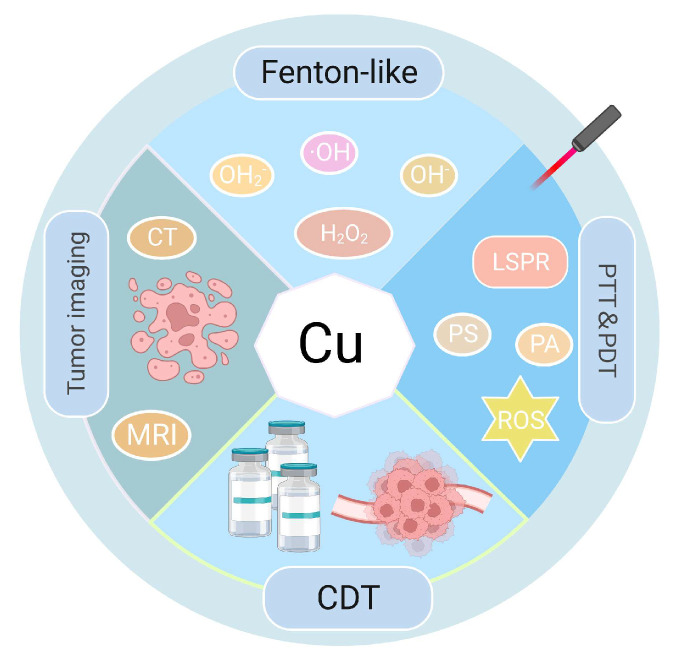
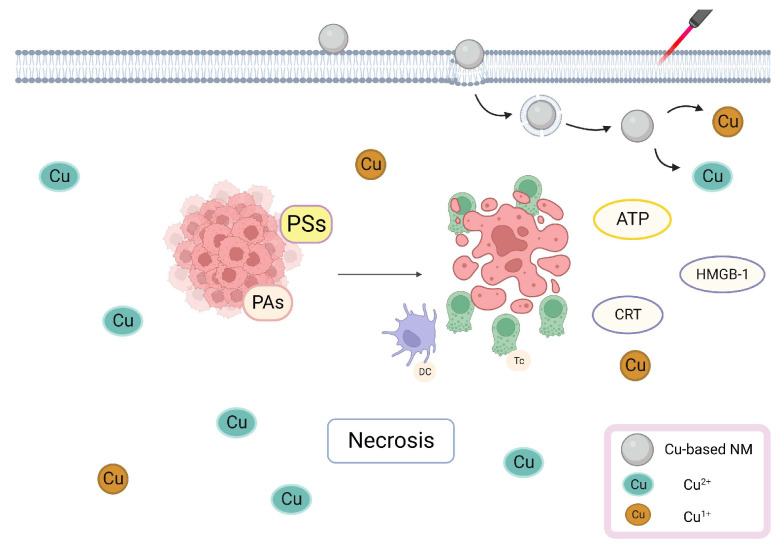
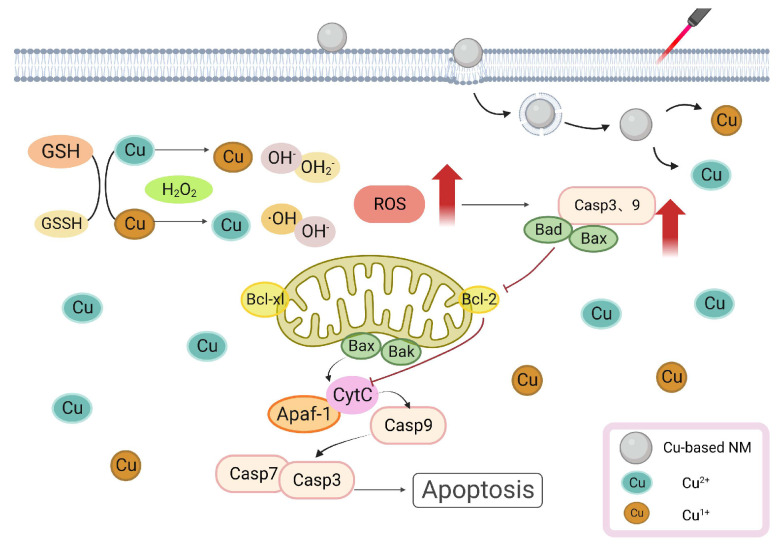
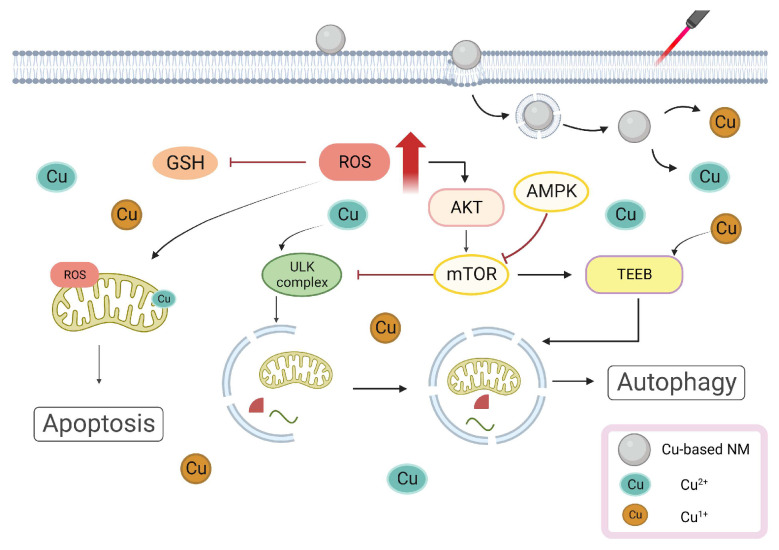
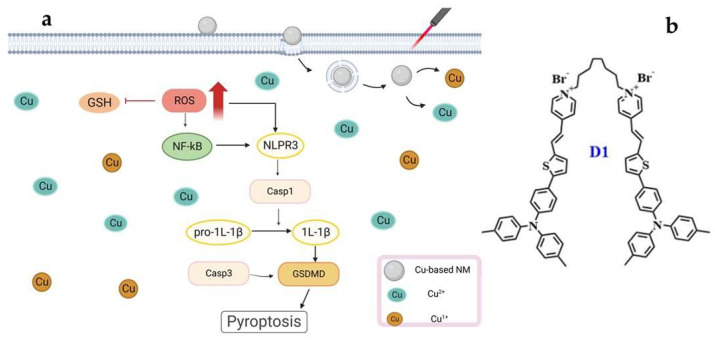
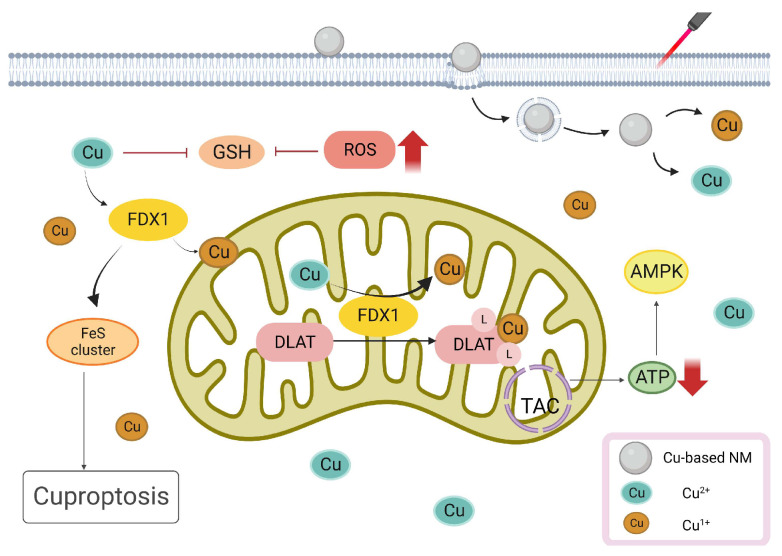
Nanotechnology, an emerging and promising therapeutic tool, may improve the effectiveness of phototherapy (PT) in antitumor therapy because of the development of nanomaterials (NMs) with light-absorbing properties. The tumor-targeted PTs, such as photothermal therapy (PTT) and photodynamic therapy (PDT), transform light energy into heat and produce reactive oxygen species (ROS) that accumulate at the tumor site. The increase in ROS levels induces oxidative stress (OS) during carcinogenesis and disease development. Because of the localized surface plasmon resonance (LSPR) feature of copper (Cu), a vital trace element in the human body, Cu-based NMs can exhibit good near-infrared (NIR) absorption and excellent photothermal properties. In the tumor microenvironment (TME), Cu combines with HO to produce O that is reduced to Cu by glutathione (GSH), causing a Fenton-like reaction that reduces tumor hypoxia and simultaneously generates ROS to eliminate tumor cells in conjunction with PTT/PDT. Compared with other therapeutic modalities, PTT/PDT can precisely target tumor location to kill tumor cells. Moreover, multiple treatment modalities can be combined with PTT/PDT to treat a tumor using Cu-based NMs. Herein, we reviewed and briefly summarized the mechanisms of actions of tumor-targeted PTT/PDT and the role of Cu, generated from Cu-based NMs, in PTs. Furthermore, we described the Cu-based NMs used in PTT/PDT applications.
纳米技术是一种新兴且有前景的治疗工具,由于具有光吸收特性的纳米材料(NMs)的发展,它可能会提高光疗(PT)在抗肿瘤治疗中的有效性。肿瘤靶向光疗,如光热疗法(PTT)和光动力疗法(PDT),将光能转化为热能并产生活性氧(ROS),这些ROS在肿瘤部位积累。ROS水平的升高在致癌过程和疾病发展过程中诱导氧化应激(OS)。由于铜(Cu)这种人体必需微量元素具有局域表面等离子体共振(LSPR)特性,基于铜的纳米材料可表现出良好的近红外(NIR)吸收和优异的光热性能。在肿瘤微环境(TME)中,铜与过氧化氢结合生成超氧阴离子,超氧阴离子被谷胱甘肽(GSH)还原为铜,引发类似芬顿反应,减轻肿瘤缺氧,同时产生活性氧,与光热疗法/光动力疗法协同消除肿瘤细胞。与其他治疗方式相比,光热疗法/光动力疗法可精确靶向肿瘤位置以杀死肿瘤细胞。此外,多种治疗方式可与光热疗法/光动力疗法联合,使用基于铜的纳米材料治疗肿瘤。在此,我们回顾并简要总结了肿瘤靶向光热疗法/光动力疗法的作用机制以及基于铜的纳米材料产生的铜在光疗中的作用。此外,我们描述了用于光热疗法/光动力疗法应用的基于铜的纳米材料。