Dittfeld Claudia, Winkelkotte Maximilian, Scheer Anna, Voigt Emmely, Schmieder Florian, Behrens Stephan, Jannasch Anett, Matschke Klaus, Sonntag Frank, Tugtekin Sems-Malte
Department of Cardiac Surgery, Carl Gustav Carus Faculty of Medicine, Technische Universität Dresden, Heart Centre Dresden, Fetscherstr. 76, 01307, Dresden, Germany.
Fraunhofer Institute for Material and Beam Technology IWS, Dresden, Germany.
J Biol Eng. 2023 Sep 28;17(1):60. doi: 10.1186/s13036-023-00377-1.
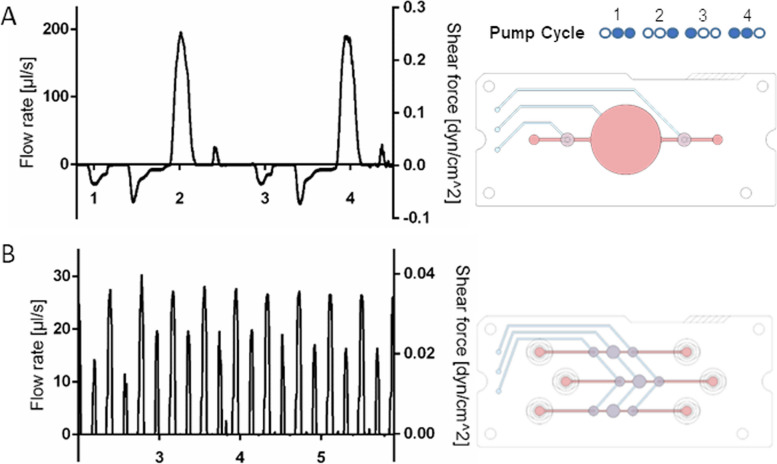
Calcific aortic valve disease (CAVD) causes an increasing health burden in the 21 century due to aging population. The complex pathophysiology remains to be understood to develop novel prevention and treatment strategies. Microphysiological systems (MPSs), also known as organ-on-chip or lab-on-a-chip systems, proved promising in bridging in vitro and in vivo approaches by applying integer AV tissue and modelling biomechanical microenvironment. This study introduces a novel MPS comprising different micropumps in conjunction with a tissue-incubation-chamber (TIC) for long-term porcine and human AV incubation (pAV, hAV).
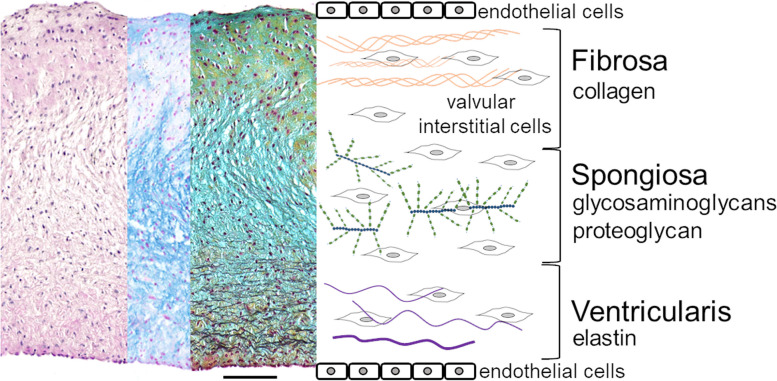
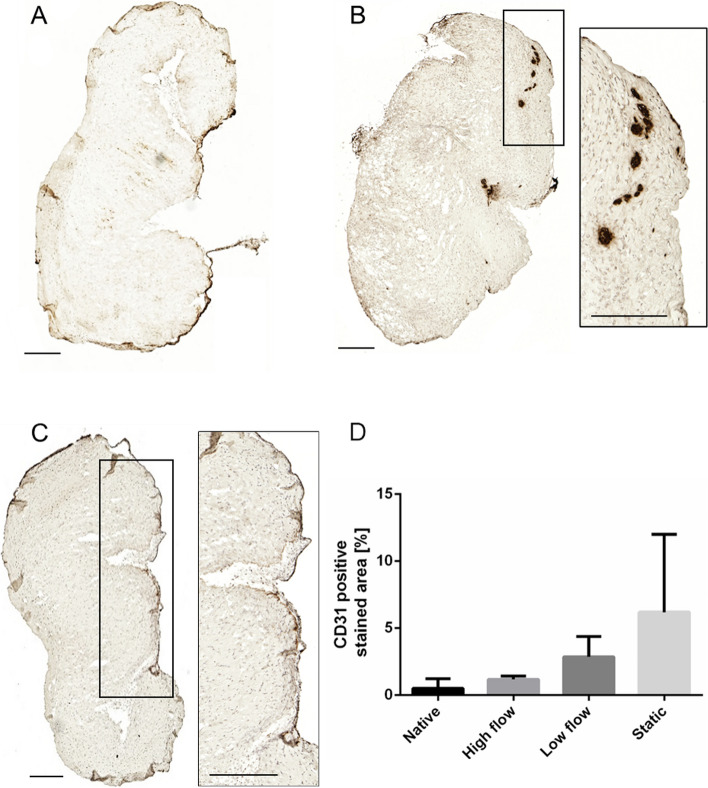
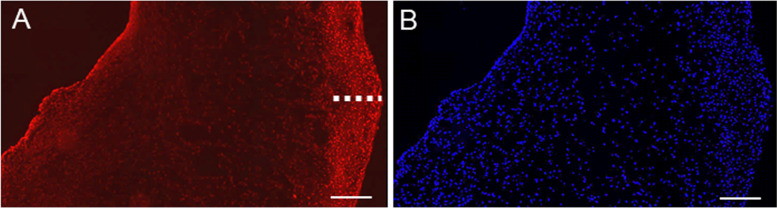
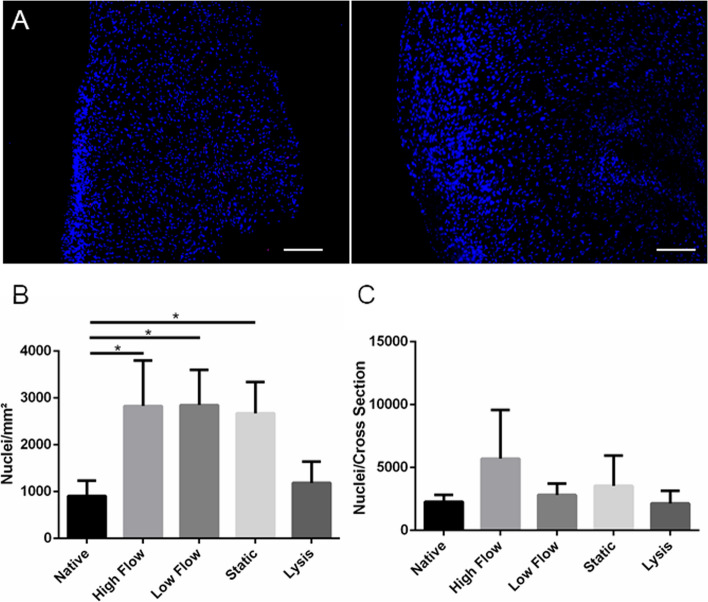
Tissue cultures in two different MPS setups were compared and validated by a bimodal viability analysis and extracellular matrix transformation assessment. The MPS-TIC conjunction proved applicable for incubation periods of 14-26 days. An increased metabolic rate was detected for pulsatile dynamic MPS culture compared to static condition indicated by increased LDH intensity. ECM changes such as an increase of collagen fibre content in line with tissue contraction and mass reduction, also observed in early CAVD, were detected in MPS-TIC culture, as well as an increase of collagen fibre content. Glycosaminoglycans remained stable, no significant alterations of α-SMA or CD31 epitopes and no accumulation of calciumhydroxyapatite were observed after 14 days of incubation.
The presented ex vivo MPS allows long-term AV tissue incubation and will be adopted for future investigation of CAVD pathophysiology, also implementing human tissues. The bimodal viability assessment and ECM analyses approve reliability of ex vivo CAVD investigation and comparability of parallel tissue segments with different treatment strategies regarding the AV (patho)physiology.
由于人口老龄化,钙化性主动脉瓣疾病(CAVD)在21世纪给健康带来的负担日益加重。其复杂的病理生理学仍有待了解,以便制定新的预防和治疗策略。微生理系统(MPS),也称为芯片上的器官或芯片实验室系统,通过应用完整的主动脉瓣组织和模拟生物力学微环境,在弥合体外和体内方法方面显示出前景。本研究介绍了一种新型的MPS,它由不同的微型泵与组织培养腔室(TIC)相结合,用于长期培养猪和人的主动脉瓣(pAV,hAV)。
通过双峰活力分析和细胞外基质转化评估,对两种不同MPS设置中的组织培养进行了比较和验证。MPS-TIC组合被证明适用于14至26天的培养期。与静态培养相比,搏动动态MPS培养检测到代谢率增加,表现为乳酸脱氢酶(LDH)强度增加。在MPS-TIC培养中检测到细胞外基质的变化,如胶原纤维含量增加,这与组织收缩和质量减轻一致,在早期CAVD中也观察到,同时胶原纤维含量增加。糖胺聚糖保持稳定,培养14天后未观察到α-平滑肌肌动蛋白(α-SMA)或CD31表位的显著改变,也未观察到羟基磷灰石钙的积累。
所提出的体外MPS能够实现主动脉瓣组织的长期培养,并将用于未来CAVD病理生理学的研究,包括使用人体组织。双峰活力评估和细胞外基质分析证实了体外CAVD研究的可靠性,以及不同治疗策略下平行组织段在主动脉瓣(病理)生理学方面的可比性。