Department of Poultry Production, Faculty of Agriculture, Kafrelsheikh University, 333516 Kafrelsheikh, Egypt.
Animal Resource and Science Department, Dankook University, Cheonan 31116, Republic of Korea; Animal Production Research Institute (APRI), Agricultural Research Center (ARC), Ministry of Agriculture, Dokki, 12611, Egypt.
Poult Sci. 2023 Nov;102(11):103051. doi: 10.1016/j.psj.2023.103051. Epub 2023 Aug 22.
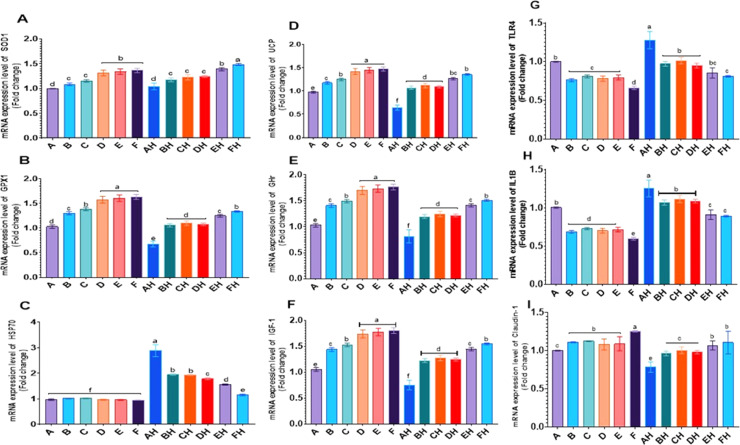
Global warming and climate changes have a detrimental impact on poultry production, causing substantial economic losses. This study investigated the effects of incorporating dietary betaine (BT) and organic minerals (OMs) on broilers' performance as well as their potential to mitigate the negative impacts of heat stress (HS). Six hundred 1-day-old Ross 308 chicks were randomly allocated to 12 experimental treatments with 5 replicates of 10 birds each (5 male + 5 female). The birds were provided with diets containing BT (0 and 2,000 ppm) and OMs (0, 250, and 500 ppm), either individually or in combination, under both thermoneutral and HS-inducing temperatures. The HS conditions involved exposing the birds to cyclic periods of elevated temperature (35°C ± 2°C) for 6 h daily, from 10:00 am to 4:00 pm, starting from d 10 and continuing until d 35. The exposure to HS deteriorated birds' growth performance; however, dietary BT and OMs inclusion improved the growth performance parameters bringing them close to normal levels. Carcass traits were not affected by dietary supplementation of BT, OMs, HS, or their interaction. Interestingly, while HS led to increased (P < 0.05) levels of total cholesterol, LDL-cholesterol, and hepatic malondialdehyde (MDA), these adverse effects were mitigated (P < 0.05) by the addition of BT and OMs. Moreover, dietary BT supplementation led to elevated serum total protein and globulin concentrations. Cyclic HS did not alter Mn, Zn, and Cu contents in the pectoral muscle. However, the incorporation of OMs at both levels increased concentrations of these minerals. Notably, the combination of 500 ppm OMs and 2,000 ppm BT improved Mn, Zn, Cu, and Fe digestibility, which has been compromised under HS conditions. Cyclic HS upregulated gene expression of interleukin-1β, heat shock protein 70, and Toll-like receptor-4 while downregulated the expression of claudin-1, uncoupling protein, growth hormone receptor, superoxide dismutase 1, glutathione peroxidase 1 and insulin-like growth factor 1. The aforementioned gene expressions were reversed by the combination of higher dietary levels of BT and OMs. In conclusion, the dietary supplementation of 500 ppm OMs along with 2,000 ppm BT yielded significant improvements in growth performance and mineral digestibility among broiler chickens, regardless of thermal conditions. Moreover, this combination effectively restored the expression of growth-related genes even under heat-stress conditions.
全球变暖和气候变化对家禽生产造成了不利影响,导致了巨大的经济损失。本研究探讨了在饲料中添加甜菜碱(BT)和有机矿物质(OMs)对肉鸡生产性能的影响,以及它们缓解热应激(HS)负面影响的潜力。将 600 只 1 日龄的 Ross 308 小鸡随机分配到 12 个实验处理中,每个处理有 5 个重复,每个重复有 10 只鸡(5 只雄性+5 只雌性)。鸡群分别给予含有 BT(0 和 2000 ppm)和 OMs(0、250 和 500 ppm)的饲料,在热中性和 HS 诱导温度下单独或组合使用。HS 条件涉及从第 10 天开始,每天上午 10 点至下午 4 点,对鸡群进行 6 小时的周期性高温(35°C±2°C)暴露。HS 降低了鸡群的生长性能;然而,添加 BT 和 OMs 可以改善生长性能参数,使其接近正常水平。胴体特征不受 BT、OMs、HS 或其相互作用的饲料补充的影响。有趣的是,虽然 HS 导致总胆固醇、LDL-胆固醇和肝丙二醛(MDA)水平升高(P<0.05),但添加 BT 和 OMs 减轻了这些不利影响(P<0.05)。此外,添加 BT 可提高血清总蛋白和球蛋白浓度。周期性 HS 不改变胸肌中 Mn、Zn 和 Cu 的含量。然而,两种水平的 OMs 都增加了这些矿物质的浓度。值得注意的是,500 ppm OMs 和 2000 ppm BT 的组合提高了 Mn、Zn、Cu 和 Fe 的消化率,而在 HS 条件下,消化率会受到影响。周期性 HS 上调了白细胞介素-1β、热休克蛋白 70 和 Toll 样受体-4 的基因表达,而下调了紧密连接蛋白-1、解偶联蛋白、生长激素受体、超氧化物歧化酶 1、谷胱甘肽过氧化物酶 1 和胰岛素样生长因子 1 的基因表达。在 HS 条件下,更高水平的 BT 和 OMs 的组合可逆转上述基因的表达。总之,无论热条件如何,饲料中添加 500 ppm OMs 与 2000 ppm BT 可显著提高肉鸡的生长性能和矿物质消化率。此外,这种组合甚至在热应激条件下有效恢复了与生长相关的基因表达。