Computer Science and Artificial Intelligence Lab, Massachusetts Institute of Technology, 32 Vassar St, Cambridge, MA 02139, USA; Liangzhu Laboratory, Zhejiang University, 1369 West Wenyi Road, Hangzhou 311121, China.
Computer Science and Artificial Intelligence Lab, Massachusetts Institute of Technology, 32 Vassar St, Cambridge, MA 02139, USA; The Broad Institute of MIT and Harvard, 415 Main Street, Cambridge, MA 02142, USA.
Cell. 2023 Sep 28;186(20):4422-4437.e21. doi: 10.1016/j.cell.2023.08.040.
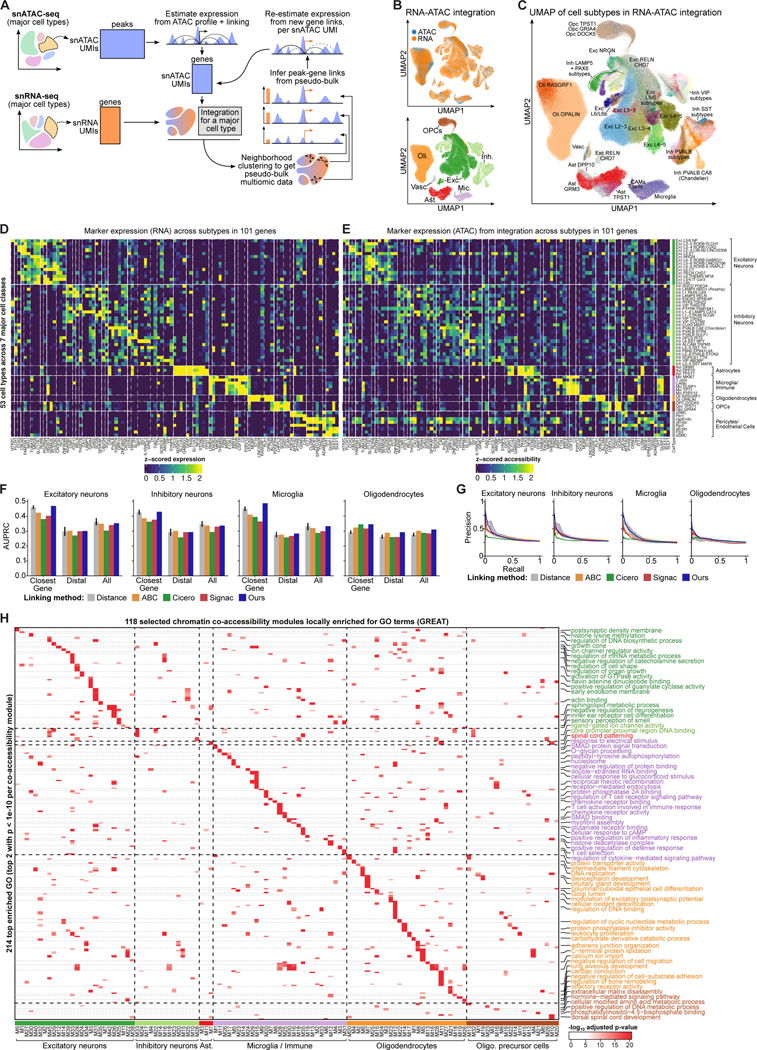
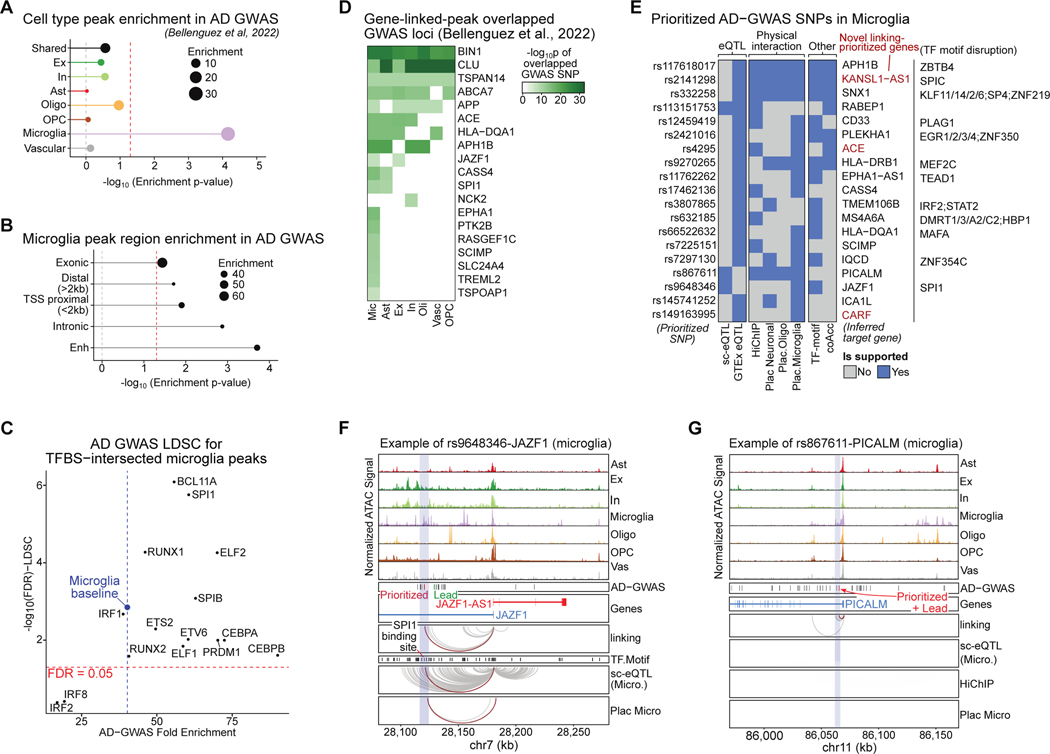
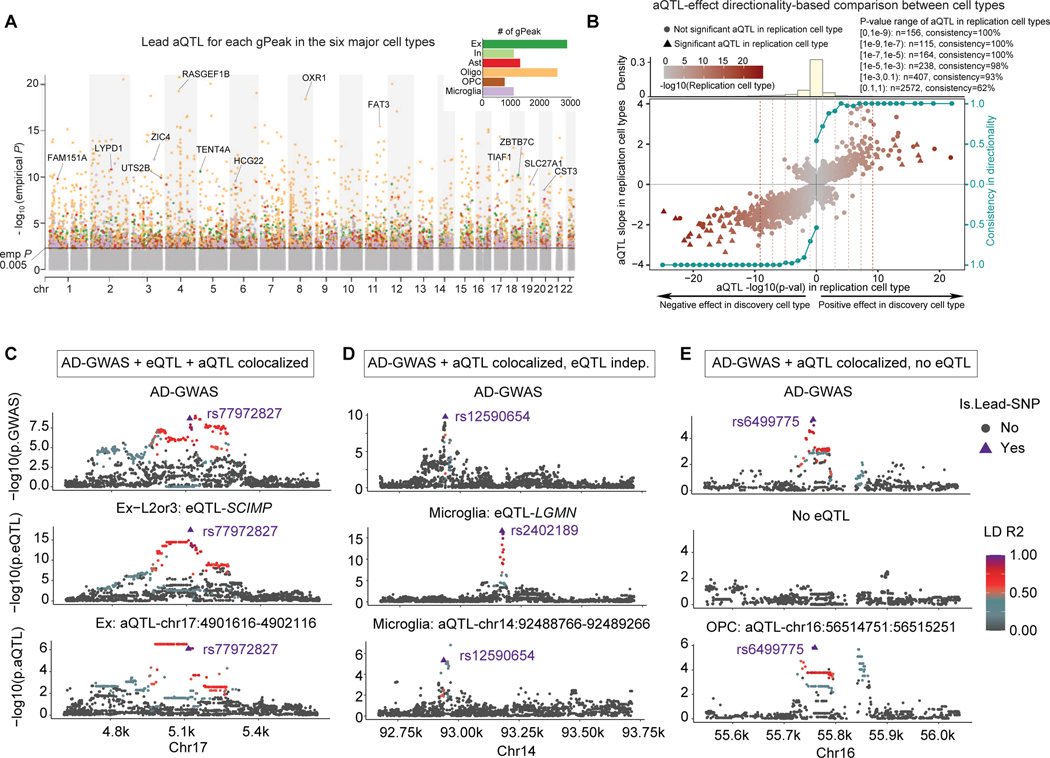
Recent work has identified dozens of non-coding loci for Alzheimer's disease (AD) risk, but their mechanisms and AD transcriptional regulatory circuitry are poorly understood. Here, we profile epigenomic and transcriptomic landscapes of 850,000 nuclei from prefrontal cortexes of 92 individuals with and without AD to build a map of the brain regulome, including epigenomic profiles, transcriptional regulators, co-accessibility modules, and peak-to-gene links in a cell-type-specific manner. We develop methods for multimodal integration and detecting regulatory modules using peak-to-gene linking. We show AD risk loci are enriched in microglial enhancers and for specific TFs including SPI1, ELF2, and RUNX1. We detect 9,628 cell-type-specific ATAC-QTL loci, which we integrate alongside peak-to-gene links to prioritize AD variant regulatory circuits. We report differential accessibility of regulatory modules in late AD in glia and in early AD in neurons. Strikingly, late-stage AD brains show global epigenome dysregulation indicative of epigenome erosion and cell identity loss.
最近的研究已经确定了数十个与阿尔茨海默病(AD)风险相关的非编码基因座,但这些基因座的作用机制和 AD 转录调控回路仍知之甚少。在这里,我们对 92 名 AD 患者和非 AD 患者的前额叶皮层中的 85 万个细胞核进行了表观基因组和转录组特征分析,构建了大脑调控组图谱,包括以细胞类型特异性的方式呈现表观基因组图谱、转录调控因子、共可及性模块以及峰到基因的连接。我们开发了多模态整合和使用峰到基因连接检测调控模块的方法。我们发现 AD 风险基因座富集在小胶质细胞增强子上,并且与特定的转录因子(包括 SPI1、ELF2 和 RUNX1)有关。我们检测到 9628 个细胞类型特异性的 ATAC-QTL 基因座,我们将其与峰到基因的连接整合在一起,以优先考虑 AD 变异的调控回路。我们报告了在 AD 晚期的胶质细胞中以及在 AD 早期的神经元中调控模块的差异可及性。引人注目的是,晚期 AD 大脑表现出全基因组表观基因组失调,表明表观基因组侵蚀和细胞身份丧失。