Biozentrum, University of Basel, Basel, Switzerland.
Department of Infectious Diseases/Virology, Section Viral Vector Technologies, Medical Faculty, Heidelberg University, Heidelberg, Germany.
Nat Commun. 2023 Sep 30;14(1):6116. doi: 10.1038/s41467-023-41769-7.
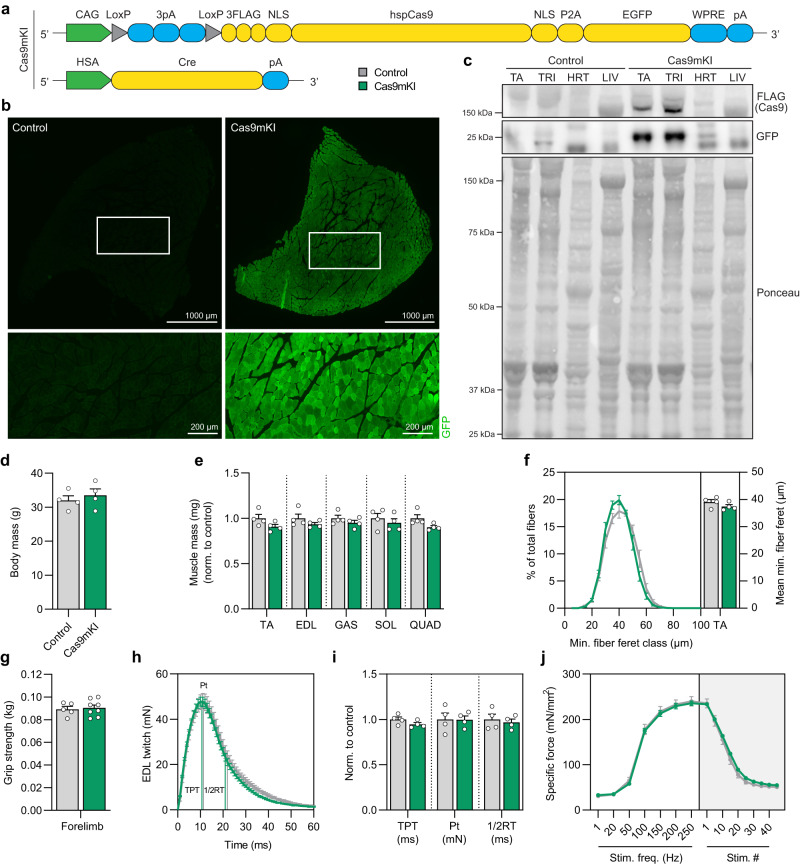
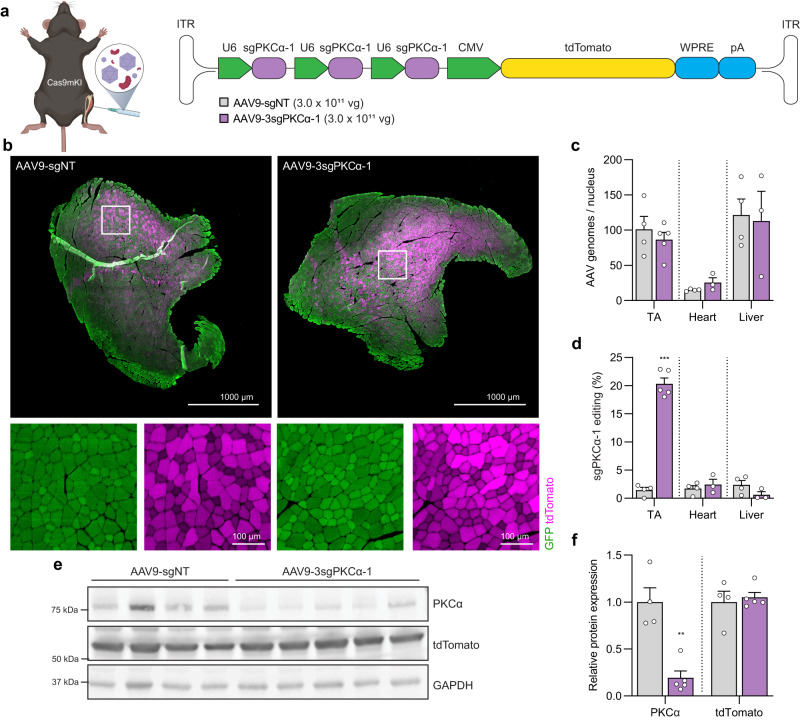
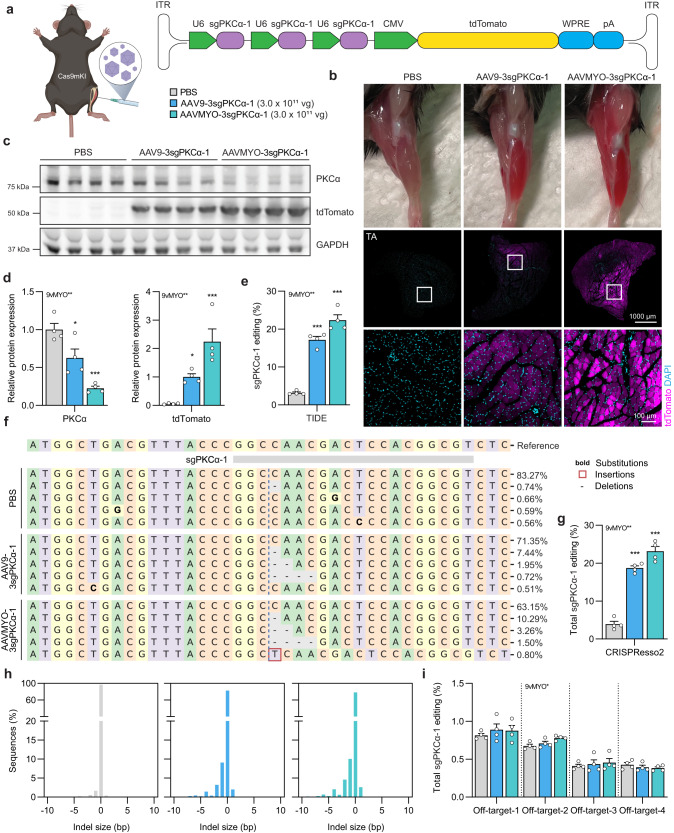
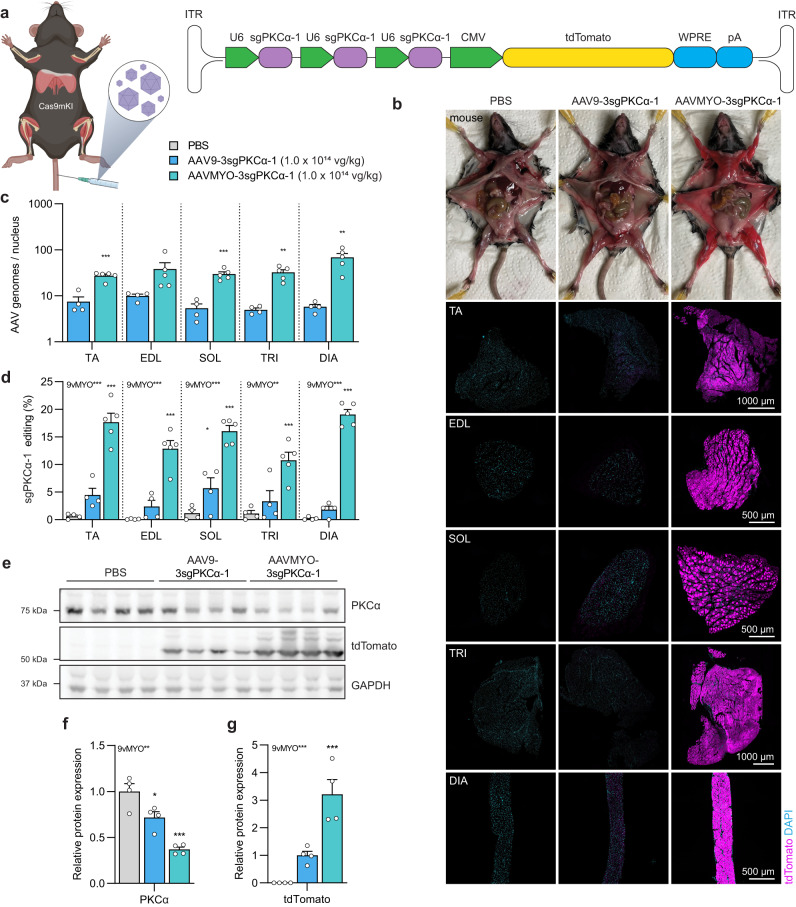
Molecular screens comparing different disease states to identify candidate genes rely on the availability of fast, reliable and multiplexable systems to interrogate genes of interest. CRISPR/Cas9-based reverse genetics is a promising method to eventually achieve this. However, such methods are sorely lacking for multi-nucleated muscle fibers, since highly efficient nuclei editing is a requisite to robustly inactive candidate genes. Here, we couple Cre-mediated skeletal muscle fiber-specific Cas9 expression with myotropic adeno-associated virus-mediated sgRNA delivery to establish a system for highly effective somatic gene deletions in mice. Using well-characterized genes, we show that local or systemic inactivation of these genes copy the phenotype of traditional gene-knockout mouse models. Thus, this proof-of-principle study establishes a method to unravel the function of individual genes or entire signaling pathways in adult skeletal muscle fibers without the cumbersome requirement of generating knockout mice.
比较不同疾病状态以鉴定候选基因的分子筛选依赖于快速、可靠和可多重检测的系统来检测感兴趣的基因。基于 CRISPR/Cas9 的反向遗传学是最终实现这一目标的有前途的方法。然而,对于多核肌肉纤维来说,这种方法非常缺乏,因为高效的核编辑是稳健地使候选基因失活的必要条件。在这里,我们将 Cre 介导的骨骼肌纤维特异性 Cas9 表达与肌源性腺相关病毒介导的 sgRNA 传递相结合,建立了一种在小鼠中进行高效体细胞基因缺失的系统。使用经过充分表征的基因,我们表明这些基因的局部或全身失活复制了传统基因敲除小鼠模型的表型。因此,这项原理验证研究建立了一种方法,可以在不繁琐地生成基因敲除小鼠的情况下,在成年骨骼肌纤维中阐明单个基因或整个信号通路的功能。