Stem Cells and Diabetes Laboratory, Institute of Molecular and Cell Biology (IMCB), Agency for Science, Technology and Research (A*STAR), Proteos, Singapore.
School of Biological Sciences, Nanyang Technological University, Singapore, Singapore.
Nat Commun. 2023 Sep 30;14(1):6119. doi: 10.1038/s41467-023-41860-z.
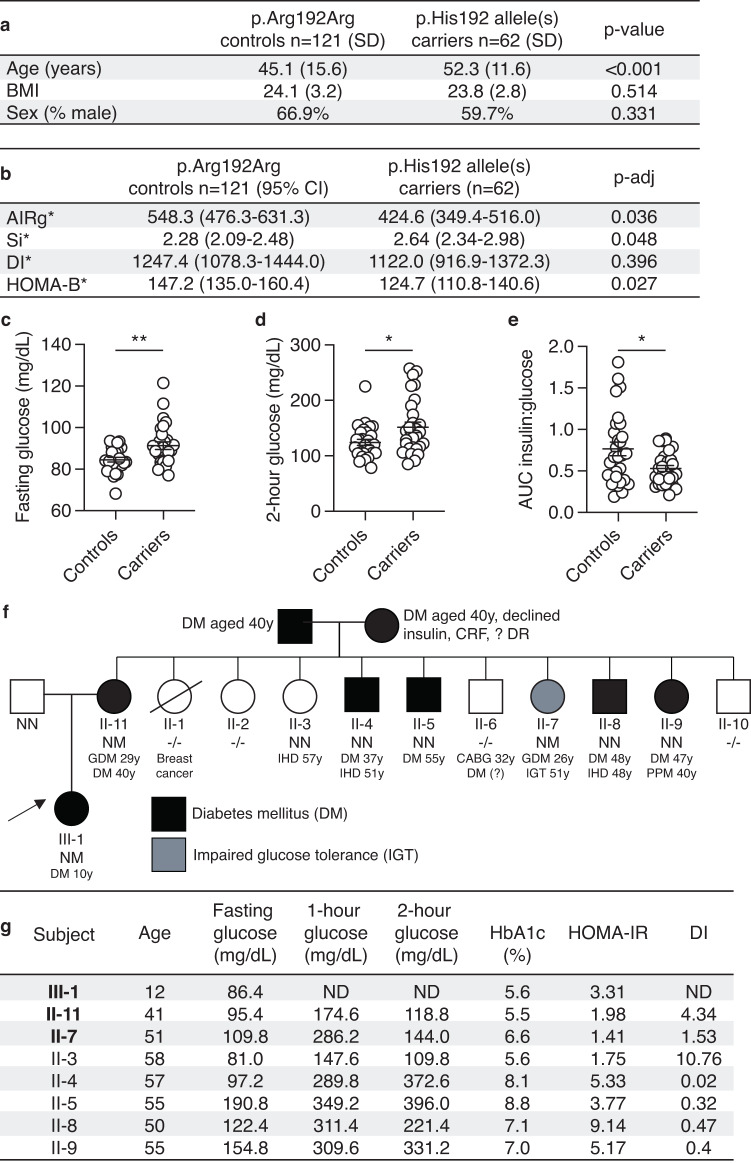
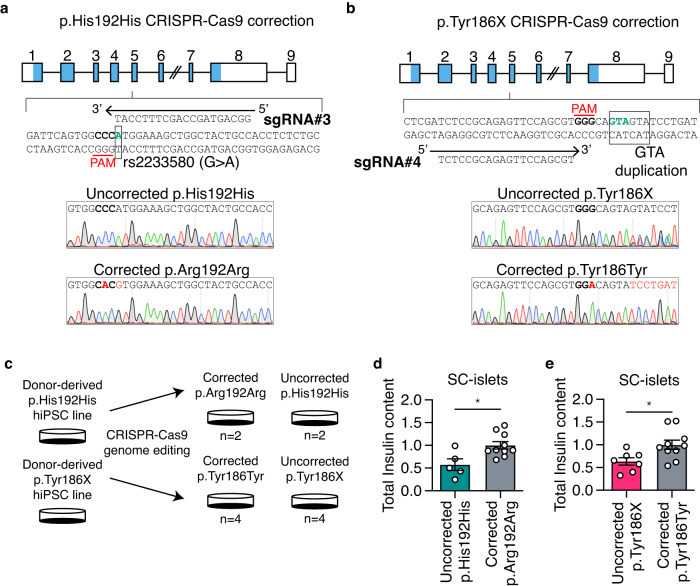
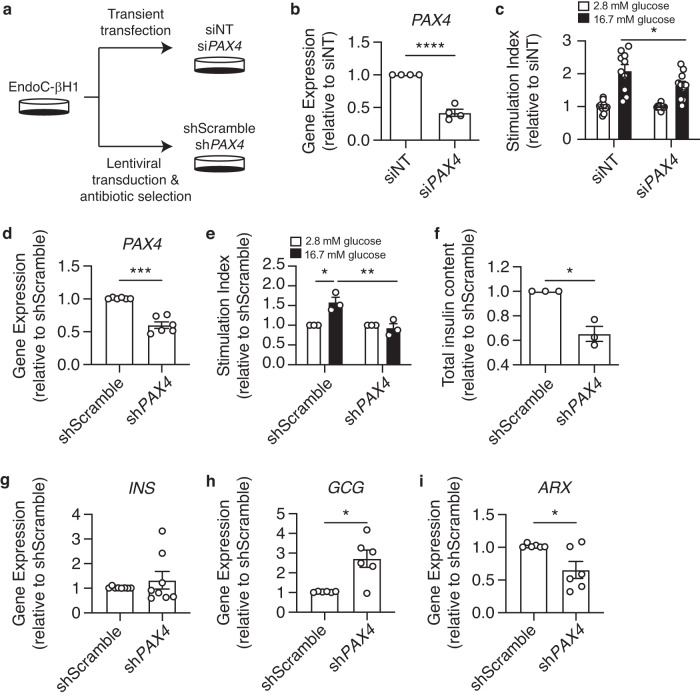
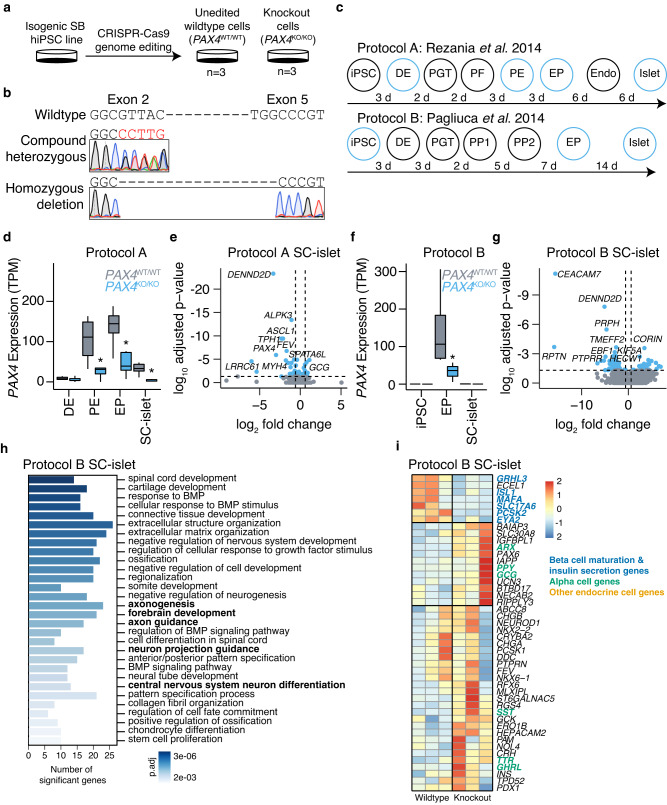
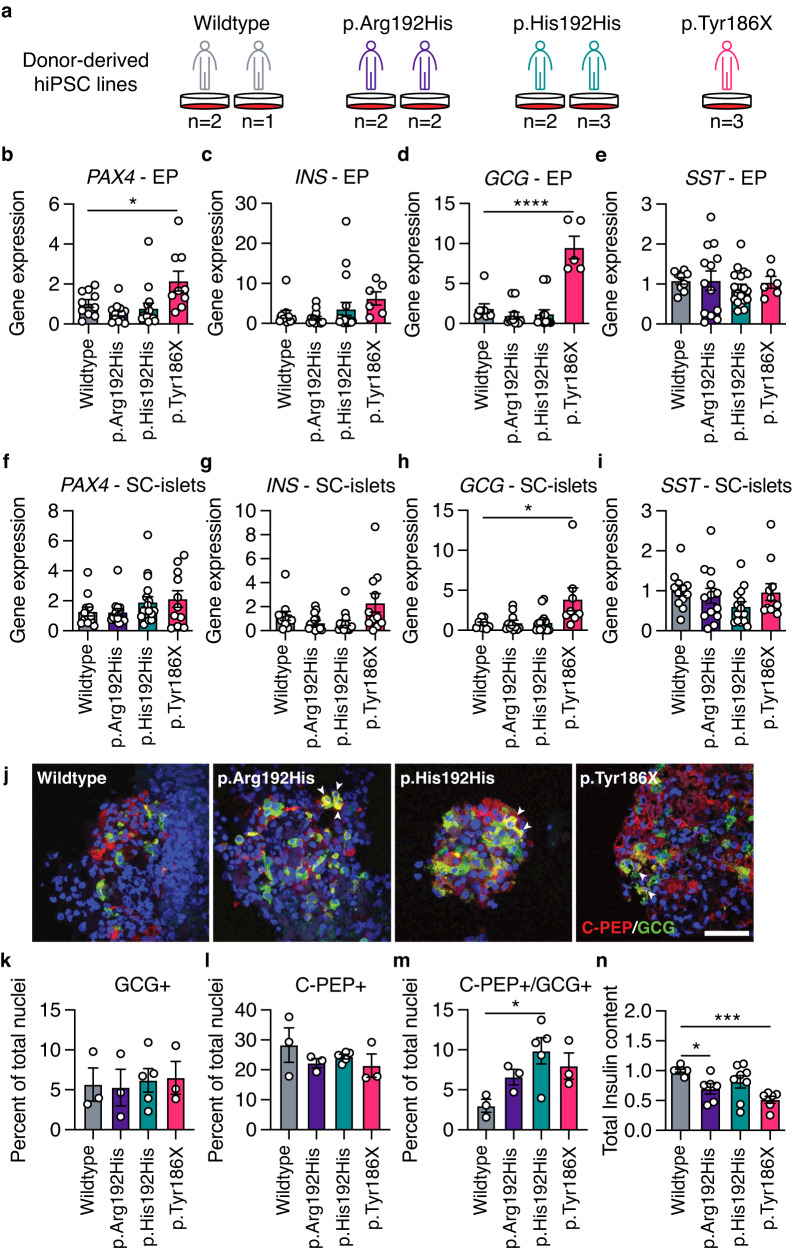
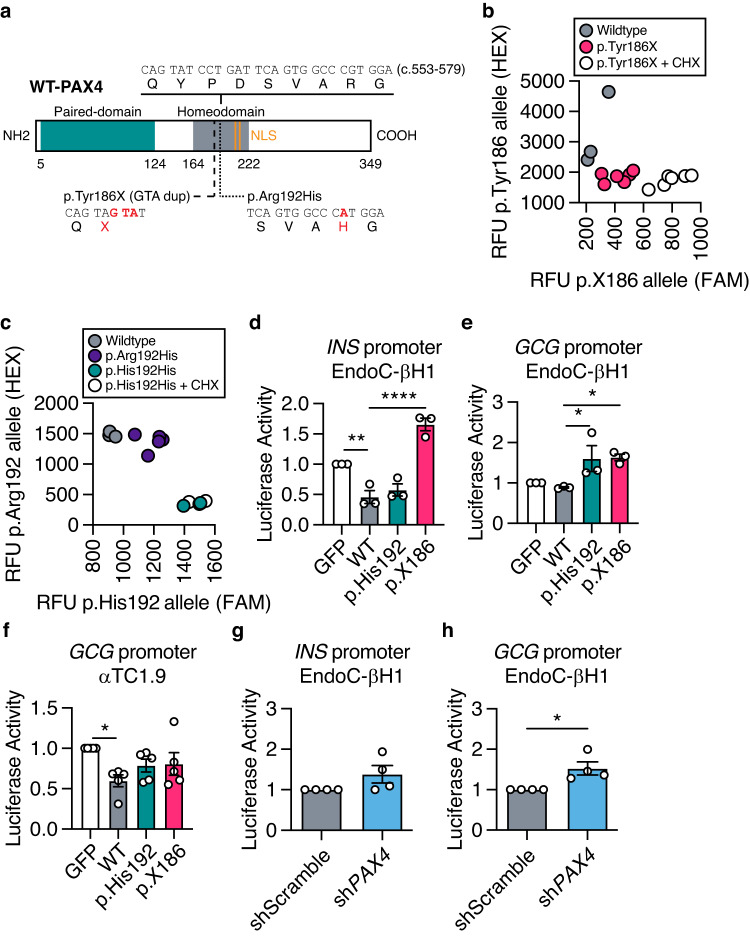
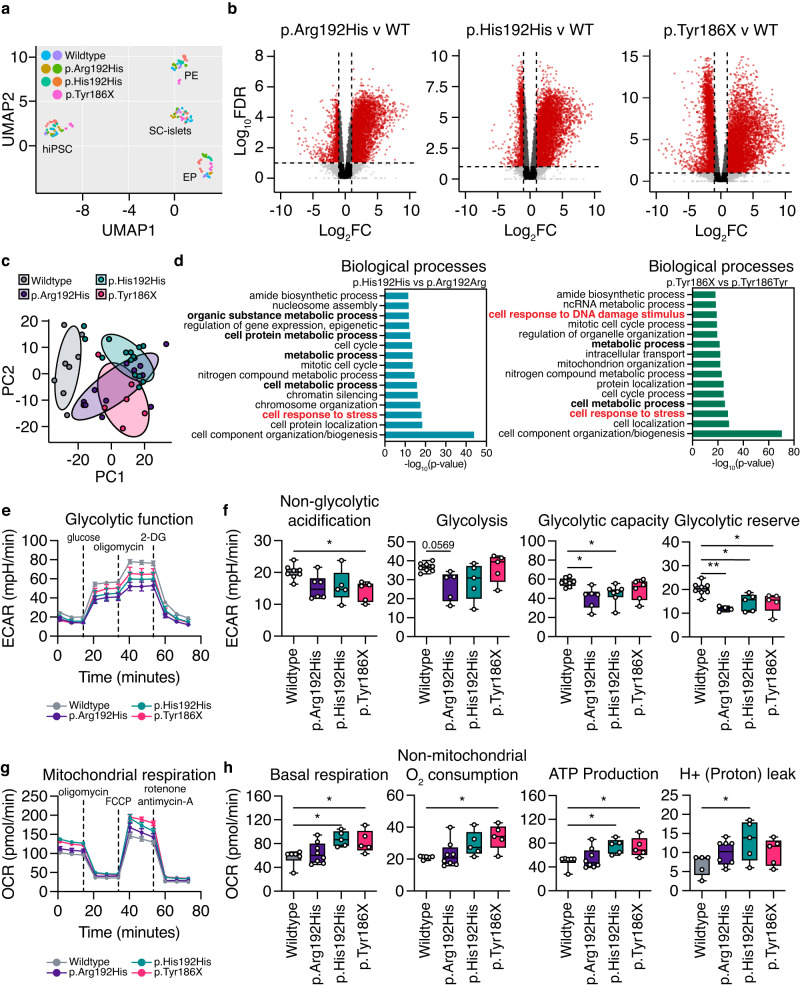
The coding variant (p.Arg192His) in the transcription factor PAX4 is associated with an altered risk for type 2 diabetes (T2D) in East Asian populations. In mice, Pax4 is essential for beta cell formation but its role on human beta cell development and/or function is unknown. Participants carrying the PAX4 p.His192 allele exhibited decreased pancreatic beta cell function compared to homozygotes for the p.192Arg allele in a cross-sectional study in which we carried out an intravenous glucose tolerance test and an oral glucose tolerance test. In a pedigree of a patient with young onset diabetes, several members carry a newly identified p.Tyr186X allele. In the human beta cell model, EndoC-βH1, PAX4 knockdown led to impaired insulin secretion, reduced total insulin content, and altered hormone gene expression. Deletion of PAX4 in human induced pluripotent stem cell (hiPSC)-derived islet-like cells resulted in derepression of alpha cell gene expression. In vitro differentiation of hiPSCs carrying PAX4 p.His192 and p.X186 risk alleles exhibited increased polyhormonal endocrine cell formation and reduced insulin content that can be reversed with gene correction. Together, we demonstrate the role of PAX4 in human endocrine cell development, beta cell function, and its contribution to T2D-risk.
转录因子 PAX4 中的编码变异(p.Arg192His)与东亚人群 2 型糖尿病(T2D)的风险改变有关。在小鼠中,Pax4 对于β细胞的形成是必需的,但其在人类β细胞发育和/或功能中的作用尚不清楚。在我们进行静脉葡萄糖耐量试验和口服葡萄糖耐量试验的横断面研究中,与携带 p.192Arg 等位基因的纯合子相比,携带 PAX4 p.His192 等位基因的参与者表现出较低的胰腺β细胞功能。在一名年轻起病糖尿病患者的家系中,有几个成员携带新鉴定的 p.Tyr186X 等位基因。在人类β细胞模型 EndoC-βH1 中,PAX4 敲低导致胰岛素分泌受损、总胰岛素含量减少和激素基因表达改变。在人诱导多能干细胞(hiPSC)衍生的胰岛样细胞中敲除 PAX4 导致α细胞基因表达的去抑制。携带 PAX4 p.His192 和 p.X186 风险等位基因的 hiPSC 的体外分化表现出多激素内分泌细胞形成增加和胰岛素含量减少,通过基因校正可以逆转。总之,我们证明了 PAX4 在人类内分泌细胞发育、β细胞功能及其对 T2D 风险的贡献中的作用。