Mlangeni Angstone Thembachako
Faculty of Life Sciences and Natural Resources, Lilongwe University of Agriculture and Natural Resources, Lilongwe, Malawi.
Toxicol Rep. 2023 Sep 25;11:295-306. doi: 10.1016/j.toxrep.2023.09.018. eCollection 2023 Dec.
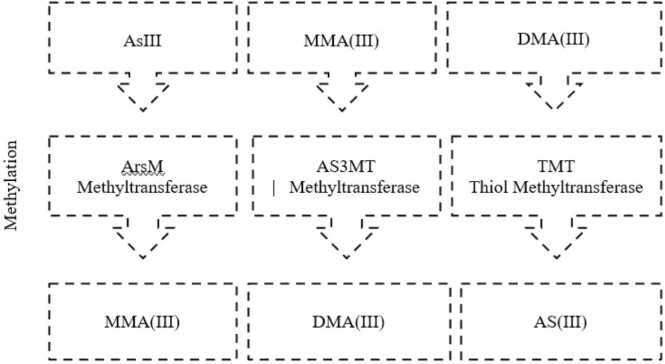
Arsenic contamination in rice poses a significant health risk to rice consumers across the globe. This review examines the impact of water source and type on the speciation and methylation of arsenic in rice. The review highlights that groundwater used for irrigation in arsenic-affected regions can lead to higher total arsenic content in rice grains and lower proportions of methylated arsenic species. The methylation of As in rice is influenced by microbial activity in groundwater, which can methylate arsenic that is taken up by rice plants. Reclaimed water irrigation can also increase the risk of arsenic accumulation in rice crops, although the use of organic amendments and proper water management practices can reduce arsenic accumulation. Different water management regimes, such as continuous flooding irrigation, alternate wetting and drying, aerobic rice cultivation, and subsurface drip irrigation, can affect the speciation and methylation of As in rice. Continuous flooding irrigation reduces methylation of As due to anaerobic conditions, while alternate wetting and drying and aerobic rice cultivation promote methylation by creating aerobic conditions that stimulate the activity of arsenic-methylating microorganisms. Subsurface drip irrigation reduces total arsenic content in rice grains and increases the proportion of less toxic methylated arsenic species. The review also discusses the complex mechanisms of As-methylation and transport in rice, emphasizing the importance of understanding these mechanisms to develop strategies for reducing arsenic uptake in rice plants and mitigating health risks. The review addresses the impact of water source and type on arsenic speciation and methylation in rice and highlights the need for proper water management and treatment measures to ensure the safety of the food supply as well as aiding future research and policies to reduce health risks from rice consumption. The critical information gaps that this review addresses include the specific effects of different water management regimes on As-methylation, the role of microbial communities in groundwater in As-methylation, and the potential risks associated with the use of reclaimed water for irrigation.
大米中的砷污染对全球大米消费者构成了重大健康风险。本综述探讨了水源和类型对大米中砷的形态和甲基化的影响。该综述强调,在受砷影响地区用于灌溉的地下水会导致米粒中总砷含量升高,而甲基化砷物种的比例降低。大米中砷的甲基化受地下水中微生物活动的影响,微生物可将水稻吸收的砷甲基化。再生水灌溉也会增加水稻作物中砷积累的风险,不过使用有机改良剂和适当的水管理措施可以减少砷的积累。不同的水管理方式,如持续淹灌、干湿交替、旱稻种植和地下滴灌,会影响大米中砷的形态和甲基化。持续淹灌由于厌氧条件会降低砷的甲基化,而干湿交替和旱稻种植通过创造有氧条件刺激砷甲基化微生物的活动来促进甲基化。地下滴灌可降低米粒中的总砷含量,并增加毒性较小的甲基化砷物种的比例。该综述还讨论了大米中砷甲基化和运输的复杂机制,强调了解这些机制对于制定减少水稻植株砷吸收和降低健康风险策略的重要性。该综述阐述了水源和类型对大米中砷形态和甲基化的影响,并强调需要采取适当的水管理和处理措施,以确保食品供应安全,同时有助于未来开展研究和制定政策,降低食用大米带来的健康风险。本综述所涉及的关键信息空白包括不同水管理方式对砷甲基化的具体影响、地下水中微生物群落在砷甲基化中的作用,以及使用再生水灌溉的潜在风险。