Department of Gastronomy Science and Functional Foods, Poznań University of Life Sciences, Poznań, Poland.
PORT, Polish Center for Technology Development, Wrocław, Poland.
Plant Foods Hum Nutr. 2023 Dec;78(4):748-754. doi: 10.1007/s11130-023-01107-0. Epub 2023 Oct 5.
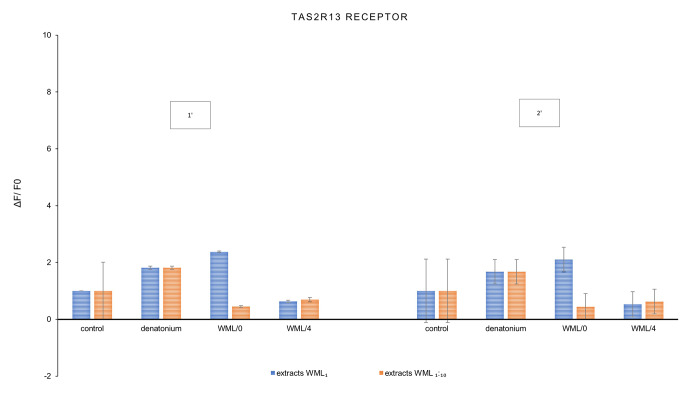
From the nutritional perspective, the main direction of the utilization of white mulberry (Morus alba L.) parts so far has been to produce dietary supplements or functional foods for individuals with diabetes or over-weight. Its leaves are widely known as a valuable source of bioactive compounds responsible for its antioxidant and antidiabetic effects, both in animals and humans. The authors found that processed leaves can also be investigated as potential bitter and/or sweet taste modulators-an important property of new functional foods. The study aimed to validate the inhibitory effect of Morus alba L. on the TAS2R3 and TAS2R13 bitter taste and TSA1R2/TSA1R3 receptors and determine the changes that the conditioning process caused in such receptors. The effect on the receptors was evaluated in specially transfected HEK293T cells, and the inhibition ratio was measured using the calcium release test. Moreover, the stability of phenolics in the simulated intestinal in vitro digestion process was determined. Results showed that the Morus alba leaf extracts were rich in gallic, chlorogenic and caffeic acids together with rutin and quercetin 3-(6-malonyl)-glucoside, while the conditioning process positively affected their amount. Most identified phenolics were reduced during in vitro digestion. In the taste receptors test, it was found that the phytochemicals from conditioned Morus alba leaf extract enhanced sweet taste, together with a reduction of bitter taste receptor activity in some cases. To conclude, the study has found that Morus alba, especially when conditioned for 4 h, seems to be a valuable modulator of taste, which should be considered in future research as a crucial reason for its new utilization.
从营养角度来看,迄今为止,对白桑(Morus alba L.)各部位的主要利用方向是为糖尿病或超重个体生产膳食补充剂或功能性食品。其叶子被广泛认为是具有生物活性化合物的有价值来源,这些化合物在动物和人类中具有抗氧化和抗糖尿病作用。作者发现,加工后的叶子也可以作为潜在的苦/或甜味道调节剂进行研究——这是新型功能性食品的一个重要特性。本研究旨在验证白桑(Morus alba L.)对 TAS2R3 和 TAS2R13 苦味和 TSA1R2/TSA1R3 受体的抑制作用,并确定加工过程对这些受体造成的变化。在专门转染的 HEK293T 细胞中评估对受体的影响,并使用钙释放试验测量抑制率。此外,还确定了模拟肠道体外消化过程中酚类物质的稳定性。结果表明,白桑叶提取物富含没食子酸、绿原酸和咖啡酸以及芦丁和槲皮素 3-(6-马来酰基)-葡萄糖苷,而调理过程对其含量有积极影响。大多数鉴定出的酚类物质在体外消化过程中减少。在味觉受体测试中,发现调理后的白桑叶提取物中的植物化学物质增强了甜味,同时在某些情况下降低了苦味受体的活性。总之,该研究发现,白桑,尤其是在调理 4 小时后,似乎是一种有价值的味觉调节剂,这在未来的研究中应被视为其新用途的一个关键原因。