USDA/ARS Children's Nutrition Research Center, Baylor College of Medicine, 1100 Bates Avenue Houston, TX 77030, USA; The University of Texas Health Science Center at Houston School of Public Health, 1200 Pressler Street, Houston, TX 77030, USA.
Division of Endocrinology, Diabetes, and Metabolism, Department of Medicine, Cedars-Sinai Medical Center, Los Angeles, CA 90048, USA.
Nutr Metab Cardiovasc Dis. 2023 Dec;33(12):2428-2439. doi: 10.1016/j.numecd.2023.08.002. Epub 2023 Aug 18.
To investigate associations between avocado intake and glycemia in adults with Hispanic/Latino ancestry.
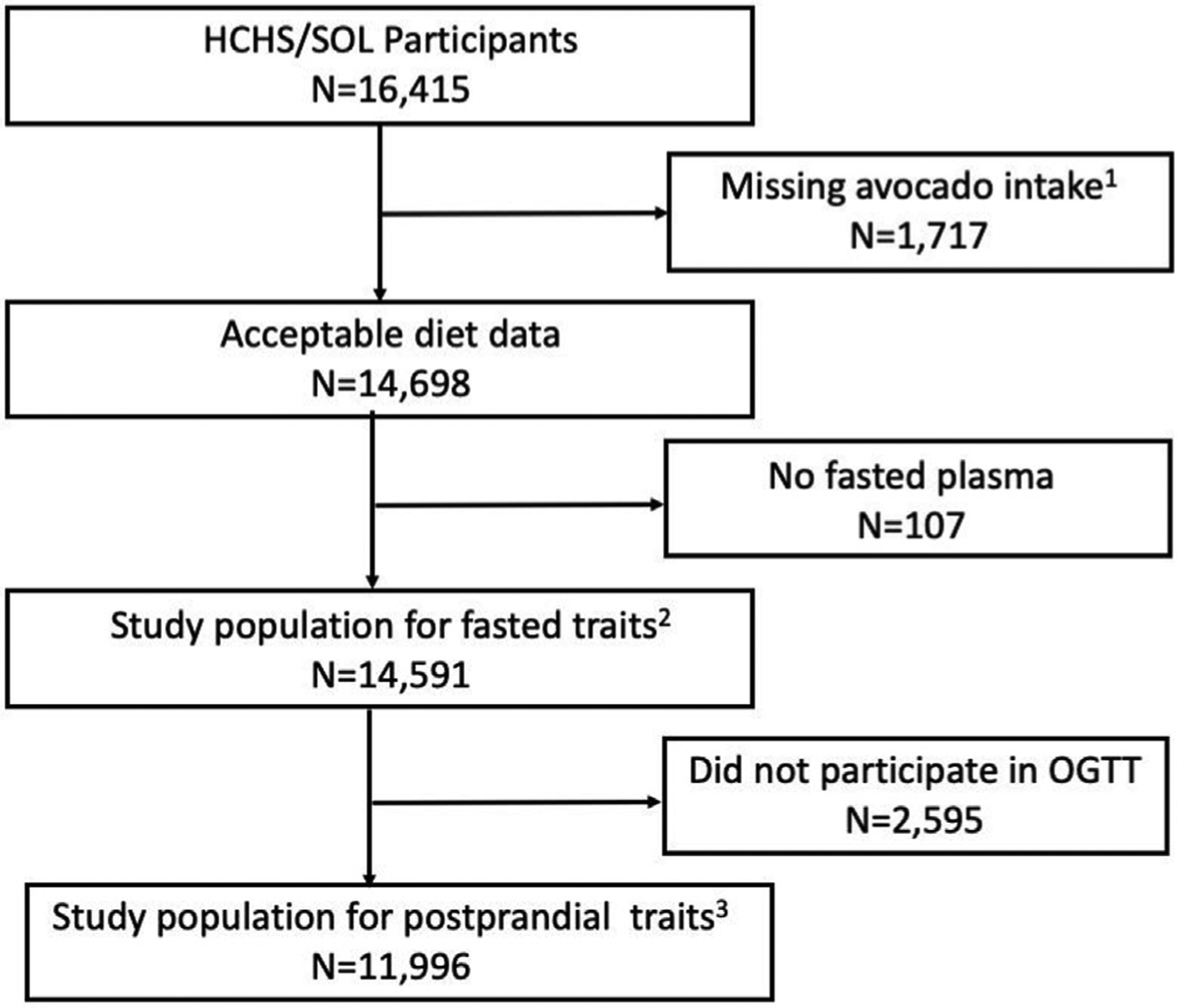
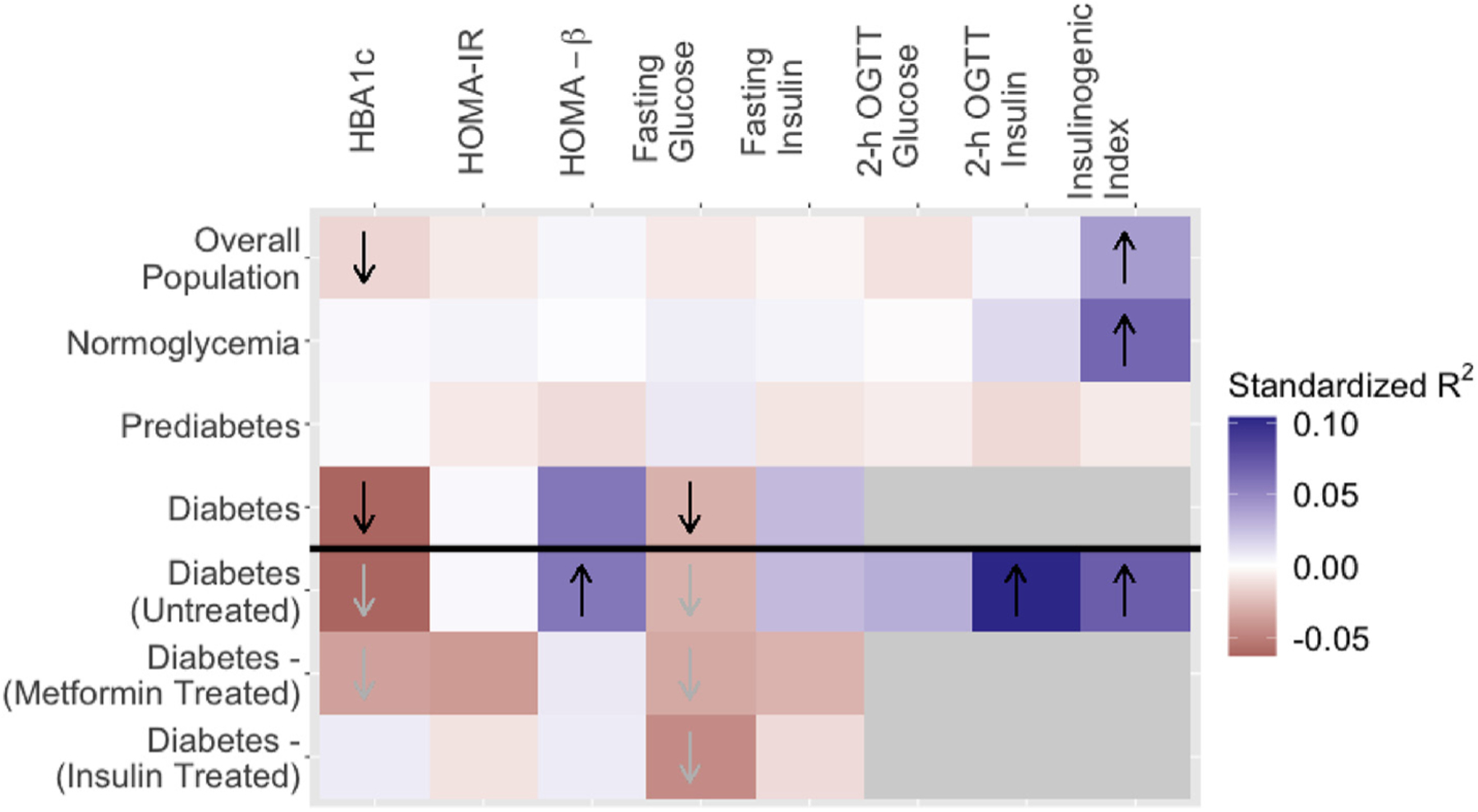
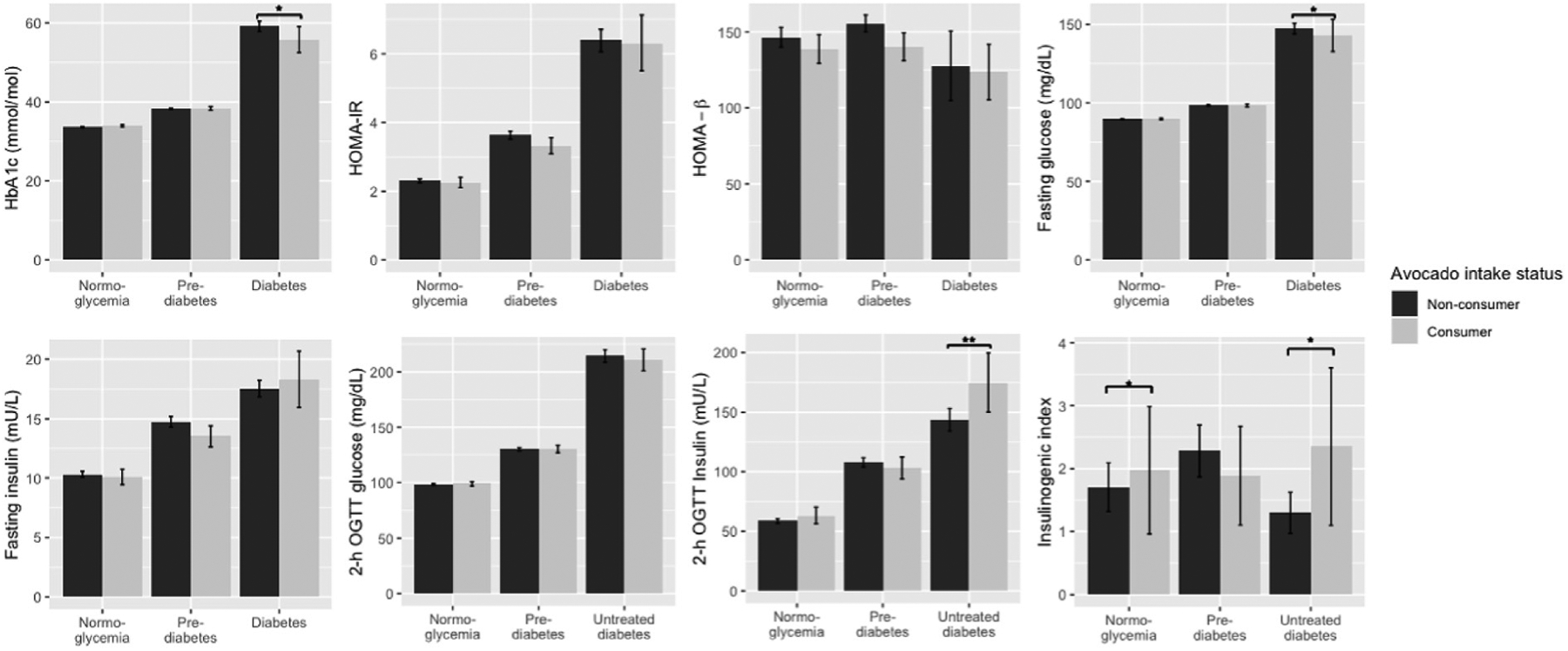
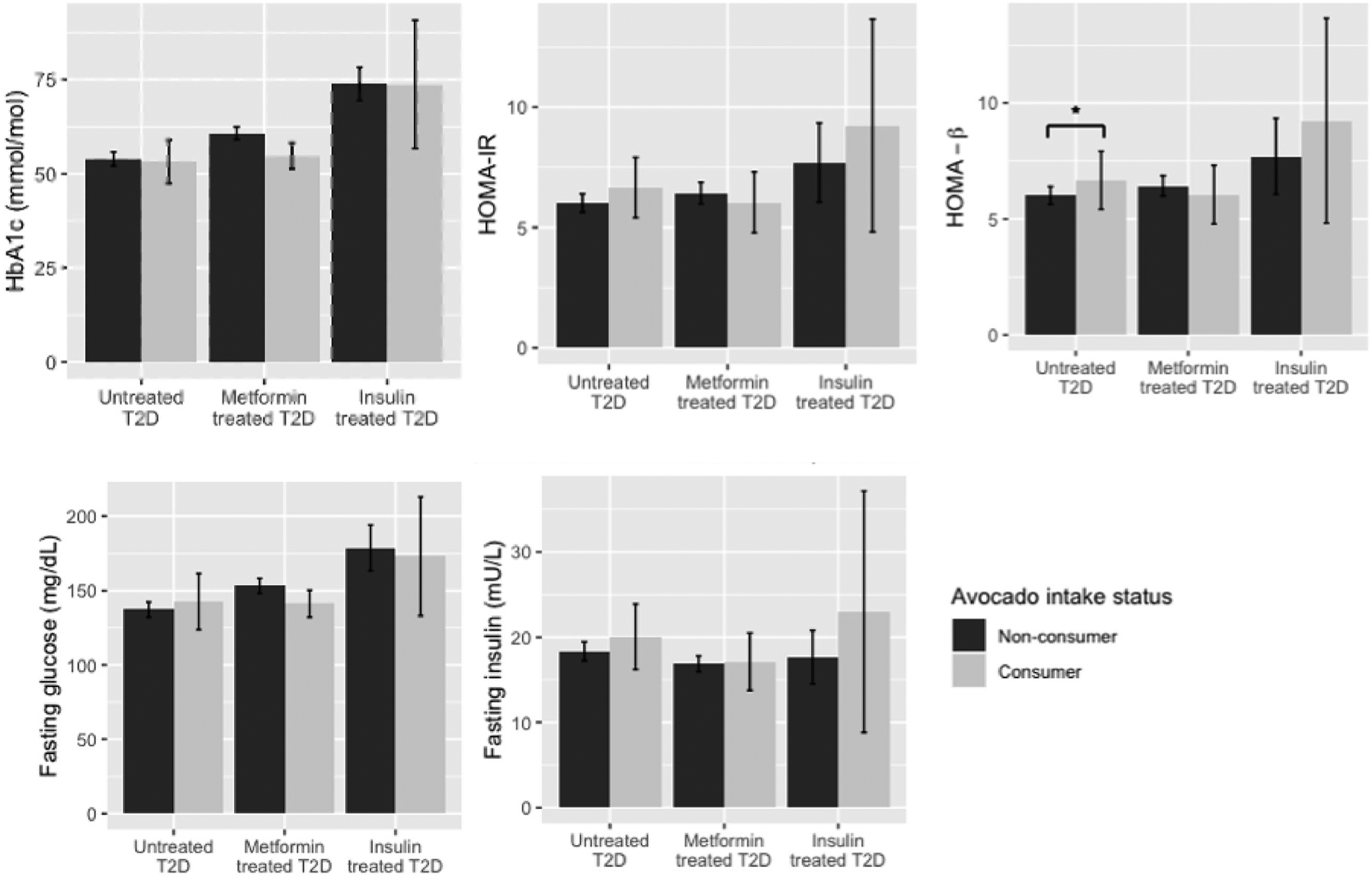
The associations of avocado intake with measures of insulin and glucose homeostasis were evaluated in a cross-sectional analysis of up to 14,591 Hispanic/Latino adults, using measures of: average glucose levels (hemoglobin A1c; HbA1c), fasting glucose and insulin, glucose and insulin levels after an oral glucose tolerance test (OGTT), and calculated measures of insulin resistance (HOMA-IR, and HOMA-%β), and insulinogenic index. Associations were assessed using multivariable linear regression models, which controlled for sociodemographic factors and health behaviors, and which were stratified by dysglycemia status. In those with normoglycemia, avocado intake was associated with a higher insulinogenic index (β = 0.17 ± 0.07, P = 0.02). In those with T2D (treated and untreated), avocado intake was associated with lower hemoglobin A1c (HbA1c; β = -0.36 ± 0.21, P = 0.02), and lower fasting glucose (β = -0.27 ± 0.12, P = 0.02). In the those with untreated T2D, avocado intake was additionally associated with HOMA-%β (β = 0.39 ± 0.19, P = 0.04), higher insulin values 2-h after an oral glucose load (β = 0.62 ± 0.23, P = 0.01), and a higher insulinogenic index (β = 0.42 ± 0.18, P = 0.02). No associations were observed in participants with prediabetes.
We observed an association of avocado intake with better glucose/insulin homeostasis, especially in those with T2D.
本研究旨在调查摄入鳄梨与具有西班牙裔/拉丁裔血统的成年人血糖之间的关联。
本研究采用横断面分析方法,纳入了多达 14591 名西班牙裔/拉丁裔成年人,使用平均血糖水平(糖化血红蛋白;HbA1c)、空腹血糖和胰岛素、口服葡萄糖耐量试验(OGTT)后血糖和胰岛素水平以及胰岛素抵抗的计算指标(HOMA-IR 和 HOMA-%β)和胰岛素生成指数来评估摄入鳄梨与胰岛素和葡萄糖稳态指标之间的关联。使用多变量线性回归模型评估关联,该模型控制了社会人口统计学因素和健康行为,并按糖代谢异常状态进行了分层。在血糖正常的人群中,鳄梨摄入与更高的胰岛素生成指数相关(β=0.17±0.07,P=0.02)。在患有 T2D(治疗和未治疗)的人群中,鳄梨摄入与糖化血红蛋白(HbA1c)降低(β=-0.36±0.21,P=0.02)和空腹血糖降低(β=-0.27±0.12,P=0.02)相关。在未接受 T2D 治疗的人群中,鳄梨摄入与 HOMA-%β 升高(β=0.39±0.19,P=0.04)、口服葡萄糖负荷后 2 小时胰岛素水平升高(β=0.62±0.23,P=0.01)和胰岛素生成指数升高(β=0.42±0.18,P=0.02)相关。在患有糖尿病前期的人群中未观察到关联。
我们观察到摄入鳄梨与更好的血糖/胰岛素稳态相关,尤其是在患有 T2D 的人群中。