EA 4245 Transplantation, Immunologie, Inflammation, Faculté de Médecine, Université de Tours, 10 boulevard tonnele, 37032, Tours Cedex 1, France.
Service d'Anatomie et Cytologie Pathologiques, CHRU de Tours, Tours, France.
Sci Rep. 2023 Oct 5;13(1):16745. doi: 10.1038/s41598-023-44036-3.
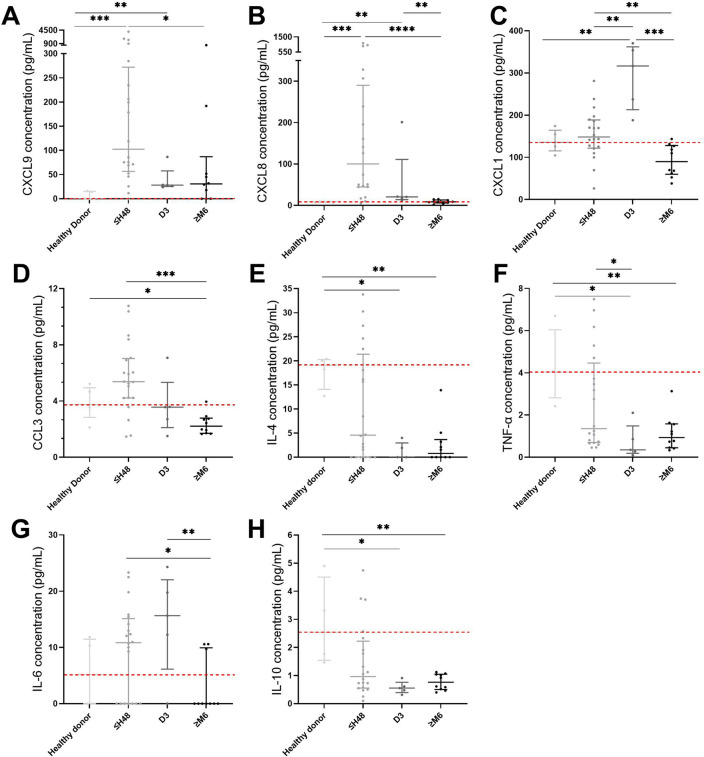
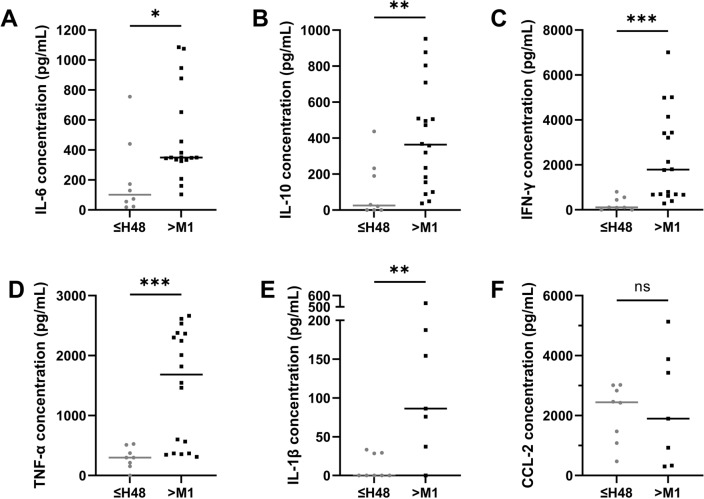
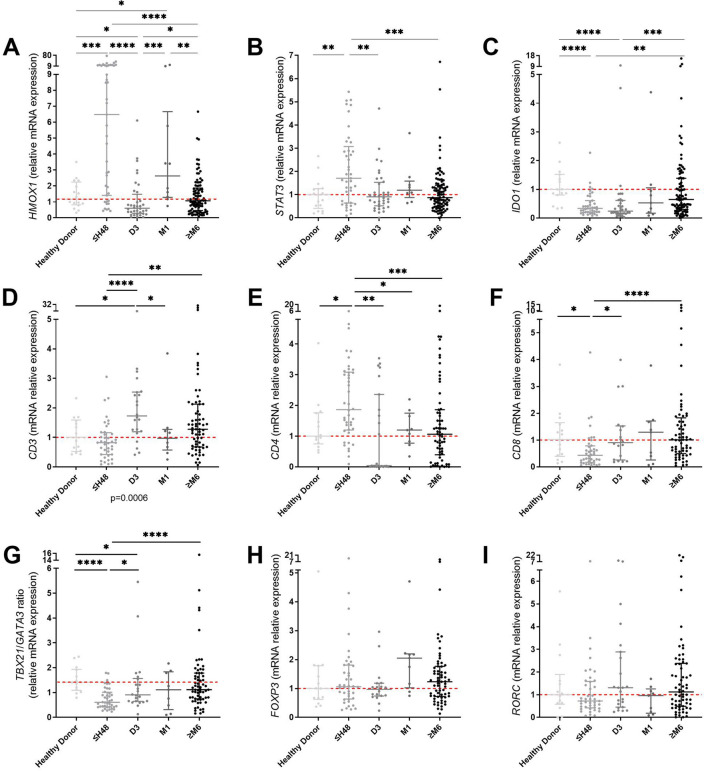
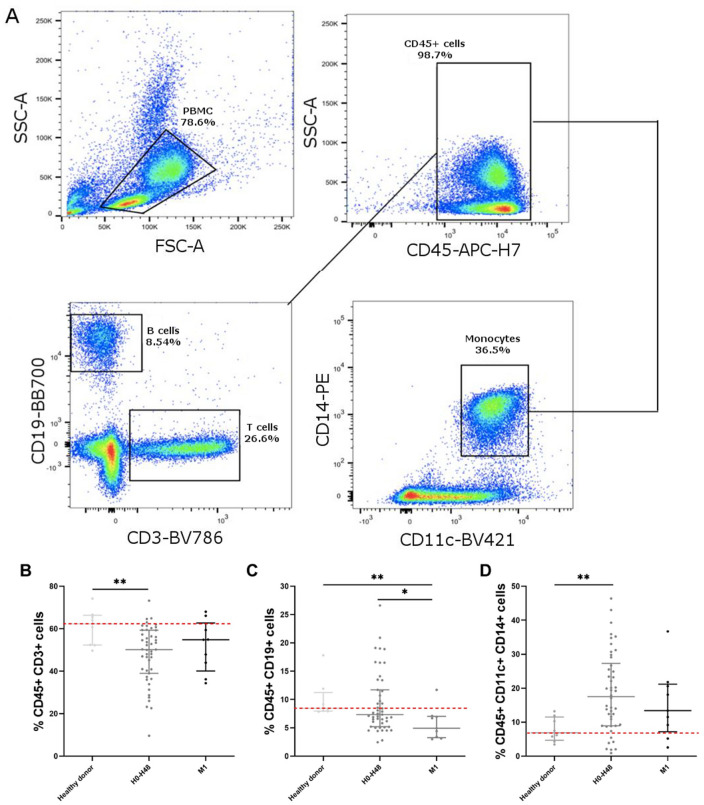
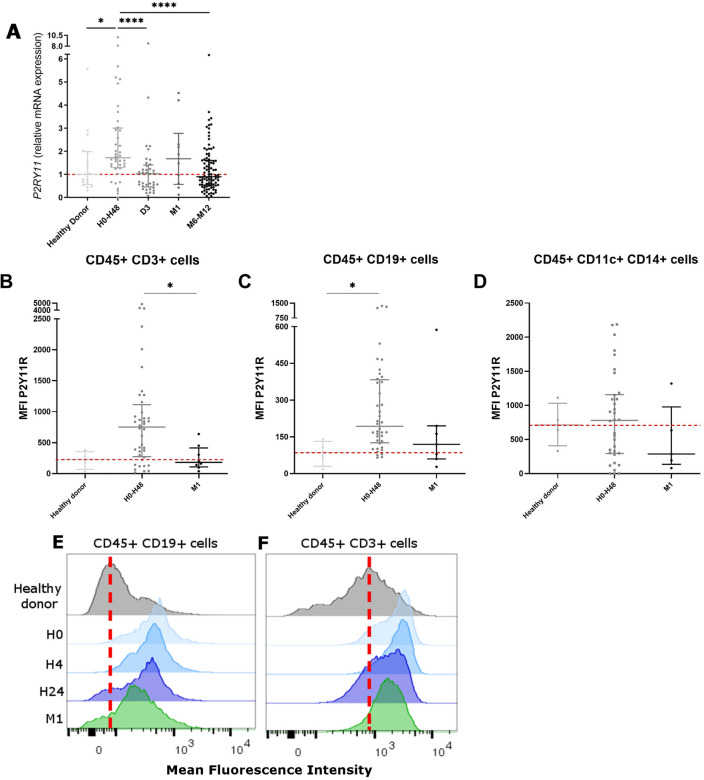
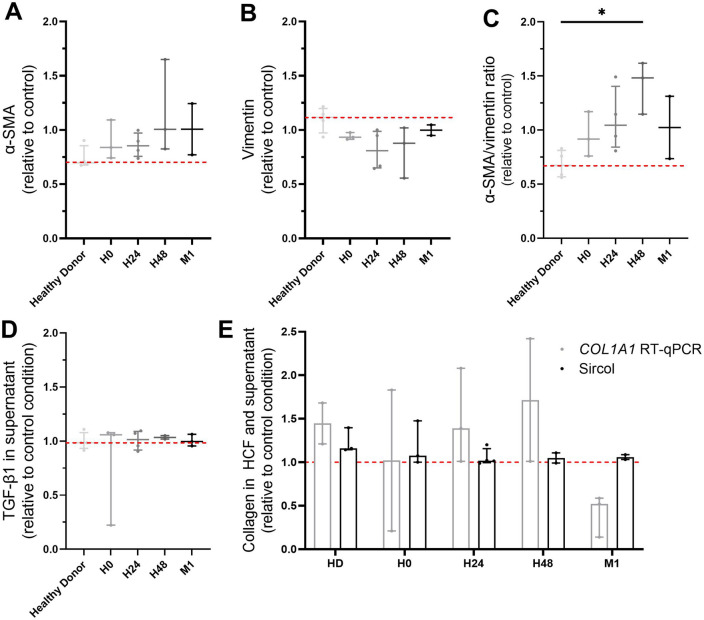
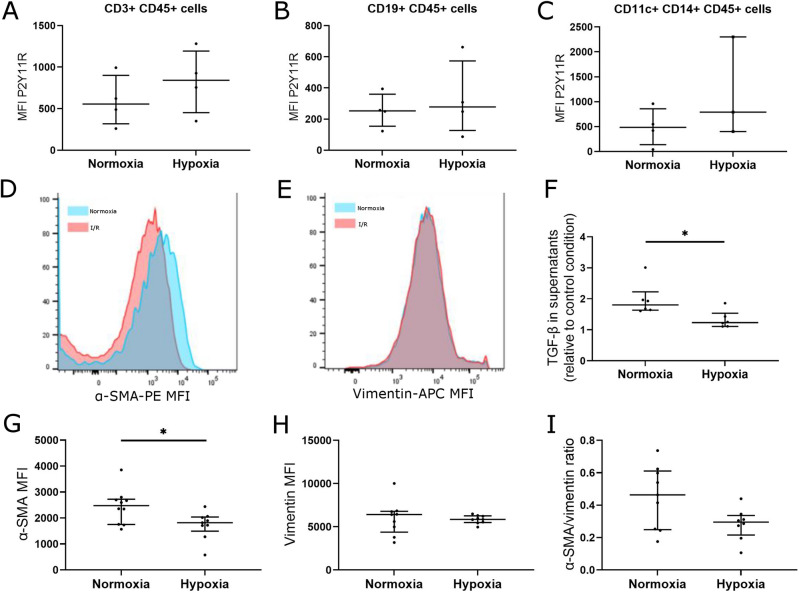
Pathophysiological response after acute myocardial infarction (AMI) is described as a three-stage model involving temporal phenotypic modifications of both immune cells and fibroblasts: a primary inflammatory phase, followed by a reparative phase and a fibrous scar maturation phase. Purinergic receptors, particularly the P2Y11 receptor, have been reported to be involved in the regulation of inflammation after ischemia and could act for the resolution of inflammation after AMI. For the first time, we characterized the immuno-inflammatory and P2Y11 expression profiles of peripheral blood mononuclear cells (PBMC) from AMI patients and analyzed the consequences of presenting these cells to cardiac fibroblasts in vitro. PBMC from 178 patients were collected at various times after reperfused ST-segment elevation AMI, from H0 to M12. Expression level of P2RY11 and genes involved in tolerogenic profile of dendritic cells and T cell polarization were evaluated by RT-PCR. P2Y11 protein expression was assessed by flow cytometry. PBMC and human cardiac fibroblasts (HCF) were cocultured and α-SMA/vimentin ratio was analyzed by flow cytometry. Within the first 48 h after AMI, expression levels of HMOX1, STAT3 and CD4 increased while IDO1 and TBX21/GATA3 ratio decreased. Concomitantly, the expression of P2RY11 increased in both T and B cells. In vitro, PBMC collected at H48 after AMI induced an increase in α-SMA/vimentin ratio in HCF. Our results suggest that human PBMC display an evolving inflammatory profile with reparative characteristics the first two days after AMI and secrete soluble mediators leading to the fibroblastic proteins modification, thus participating to myocardial fibrosis.
急性心肌梗死(AMI)后的病理生理反应被描述为一个三阶段模型,涉及免疫细胞和成纤维细胞的时间表型修饰:原发性炎症期,随后是修复期和纤维疤痕成熟期。嘌呤能受体,特别是 P2Y11 受体,据报道参与缺血后的炎症调节,并可能在 AMI 后发挥炎症消退作用。我们首次描述了 AMI 患者外周血单核细胞(PBMC)的免疫炎症和 P2Y11 表达谱,并分析了将这些细胞呈递给体外成纤维细胞的后果。在再灌注 ST 段抬高 AMI 后不同时间(从 H0 到 M12)从 178 名患者中采集 PBMC。通过 RT-PCR 评估 P2RY11 和参与树突状细胞耐受表型和 T 细胞极化的基因的表达水平。通过流式细胞术评估 P2Y11 蛋白表达。将 PBMC 和人心房成纤维细胞(HCF)共培养,并通过流式细胞术分析α-SMA/vimentin 比值。在 AMI 后 48 小时内,HMOX1、STAT3 和 CD4 的表达水平增加,而 IDO1 和 TBX21/GATA3 比值降低。同时,T 和 B 细胞中 P2RY11 的表达增加。在体外,AMI 后 H48 采集的 PBMC 诱导 HCF 中α-SMA/vimentin 比值增加。我们的结果表明,人类 PBMC 在 AMI 后前两天显示出具有修复特征的不断演变的炎症特征,并分泌可溶性介质导致成纤维蛋白的修饰,从而参与心肌纤维化。