State Key Laboratory of Drug Research, Shanghai Institute of Materia Medica, Chinese Academy of Sciences, Shanghai, 201203, China.
School of Pharmaceutical Science and Technology, Hangzhou Institute for Advanced Study, University of Chinese Academy of Sciences, Hangzhou, Zhejiang, 310024, China.
Mol Psychiatry. 2023 Sep;28(9):3955-3965. doi: 10.1038/s41380-023-02283-w. Epub 2023 Oct 5.
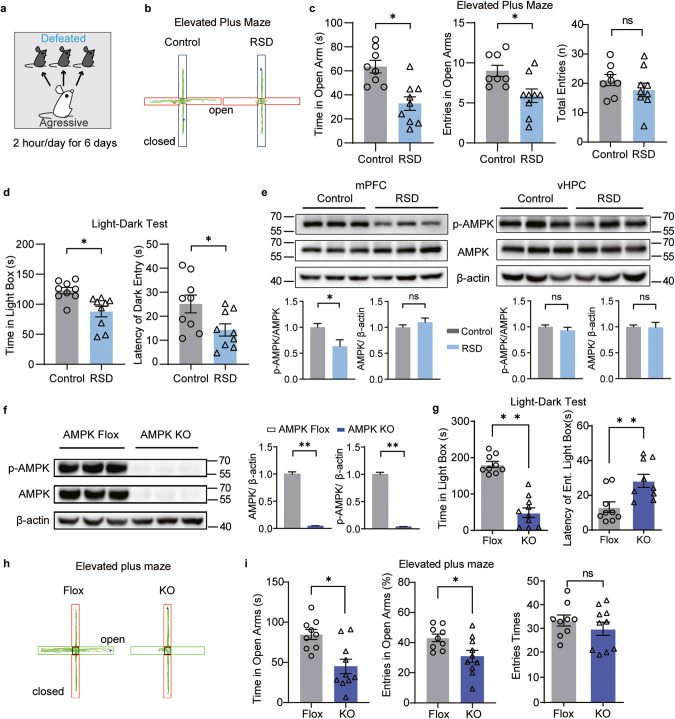
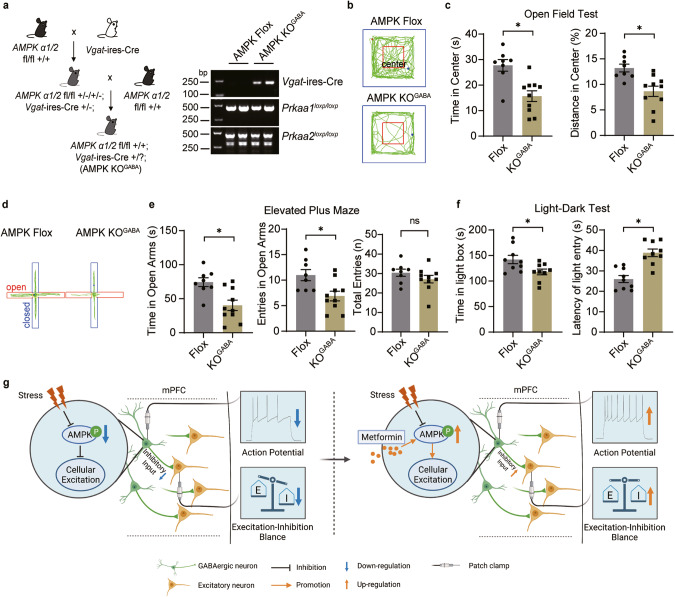
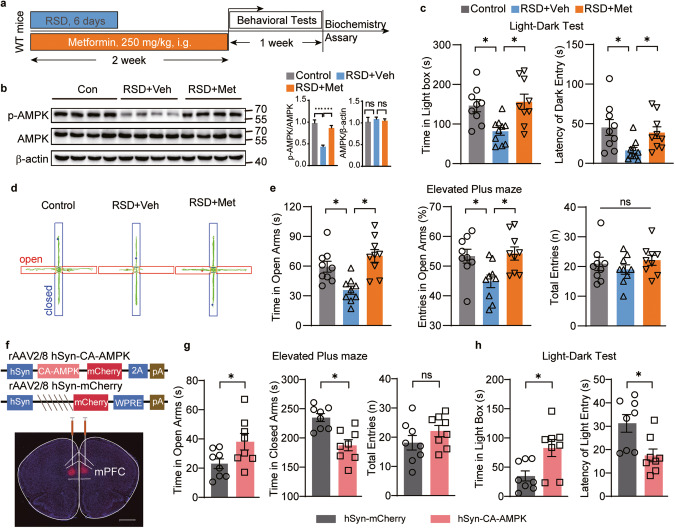
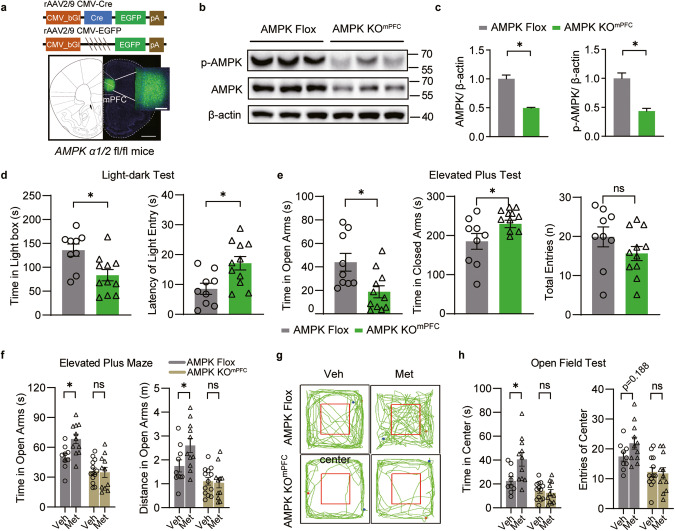
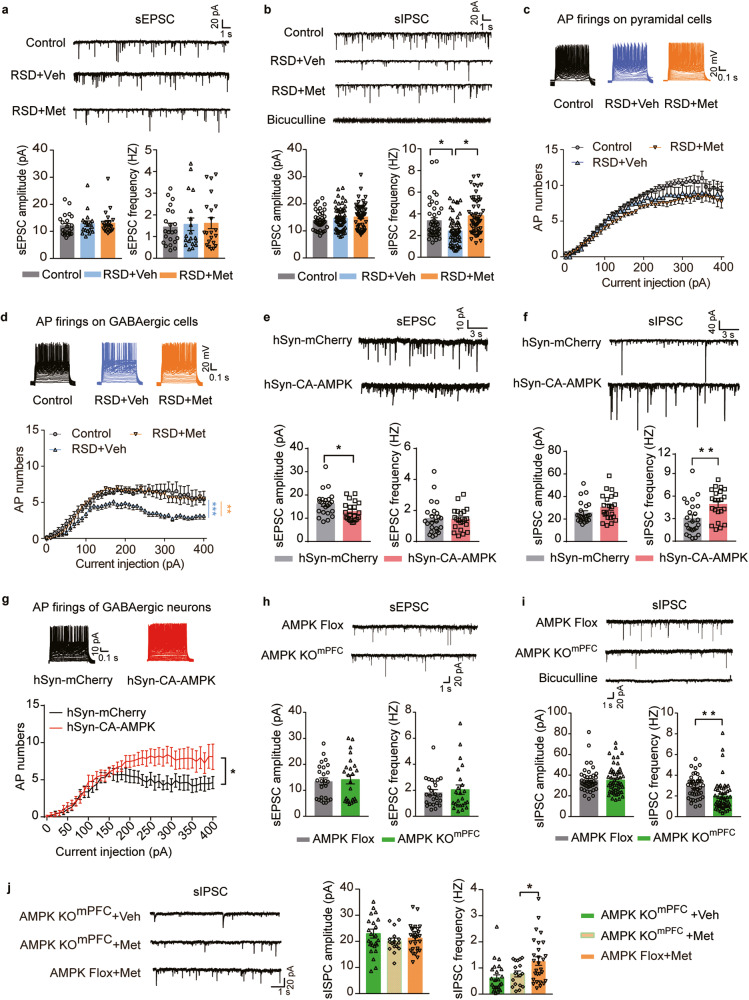
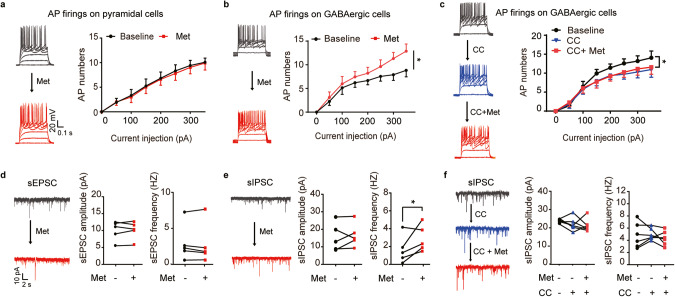
Diabetic patients receiving the antidiabetic drug metformin have been observed to exhibit a lower prevalence of anxiety disorders, yet the precise mechanism behind this phenomenon is unclear. In our study, we found that anxiety induces a region-specific reduction in AMPK activity in the medial prefrontal cortex (mPFC). Concurrently, transgenic mice with brain-specific AMPK knockout displayed abnormal anxiety-like behaviors. Treatment with metformin or the overexpression of AMPK restored normal AMPK activity in the mPFC and mitigated social stress-induced anxiety-like behaviors. Furthermore, the specific genetic deletion of AMPK in the mPFC not only instigated anxiety in mice but also nullified the anxiolytic effects of metformin. Brain slice recordings revealed that GABAergic excitation and the resulting inhibitory inputs to mPFC pyramidal neurons were selectively diminished in stressed mice. This reduction led to an excitation-inhibition imbalance, which was effectively reversed by metformin treatment or AMPK overexpression. Moreover, the genetic deletion of AMPK in the mPFC resulted in a similar defect in GABAergic inhibitory transmission and a consequent hypo-inhibition of mPFC pyramidal neurons. We also generated a mouse model with AMPK knockout specific to GABAergic neurons. The anxiety-like behaviors in this transgenic mouse demonstrated the unique role of AMPK in the GABAergic system in relation to anxiety. Therefore, our findings suggest that the activation of AMPK in mPFC inhibitory neurons underlies the anxiolytic effects of metformin, highlighting the potential of this primary antidiabetic drug as a therapeutic option for treating anxiety disorders.
接受抗糖尿病药物二甲双胍治疗的糖尿病患者表现出较低的焦虑障碍患病率,但这种现象背后的确切机制尚不清楚。在我们的研究中,我们发现焦虑会导致内侧前额叶皮质(mPFC)中 AMPK 活性的区域特异性降低。同时,具有大脑特异性 AMPK 敲除的转基因小鼠表现出异常的焦虑样行为。二甲双胍或 AMPK 的过表达治疗恢复了 mPFC 中正常的 AMPK 活性,并减轻了社交应激引起的焦虑样行为。此外,mPFC 中 AMPK 的特异性基因缺失不仅会引起小鼠的焦虑,还会消除二甲双胍的抗焦虑作用。脑片记录显示,应激小鼠中 GABA 能兴奋和由此产生的对 mPFC 锥体神经元的抑制性输入被选择性地减弱。这种减少导致兴奋-抑制失衡,而二甲双胍治疗或 AMPK 过表达可有效逆转这种失衡。此外,mPFC 中 AMPK 的基因缺失导致 GABA 能抑制性传递中出现类似缺陷,并导致 mPFC 锥体神经元的抑制不足。我们还生成了一种 AMPK 特异性敲除 GABA 能神经元的小鼠模型。这种转基因小鼠的焦虑样行为表明,AMPK 在 GABA 能系统中与焦虑有关的独特作用。因此,我们的研究结果表明,mPFC 抑制性神经元中 AMPK 的激活是二甲双胍抗焦虑作用的基础,这突显了这种主要的抗糖尿病药物作为治疗焦虑障碍的治疗选择的潜力。