Center for Primary Health Care Research, Lund University/Region Skåne, Malmö, Sweden.
Center for Primary Health Care Research Wallenberg Laboratory, Skåne University Hospital, 5th floor, Inga Marie Nilssons gata 53, S-205 02, Malmö, Sweden.
J Transl Med. 2023 Oct 5;21(1):696. doi: 10.1186/s12967-023-04534-4.
Breast cancer is, despite screening, not always detected early enough and is together with other tumor types known to shed genetic information in circulation. Unlike single-copy nuclear DNA, mitochondrial DNA (mtDNA) copies range from 100s to 10,000s per cell, thus providing a potentially alternative to identify potential missing cancer information in circulation at an early stage.
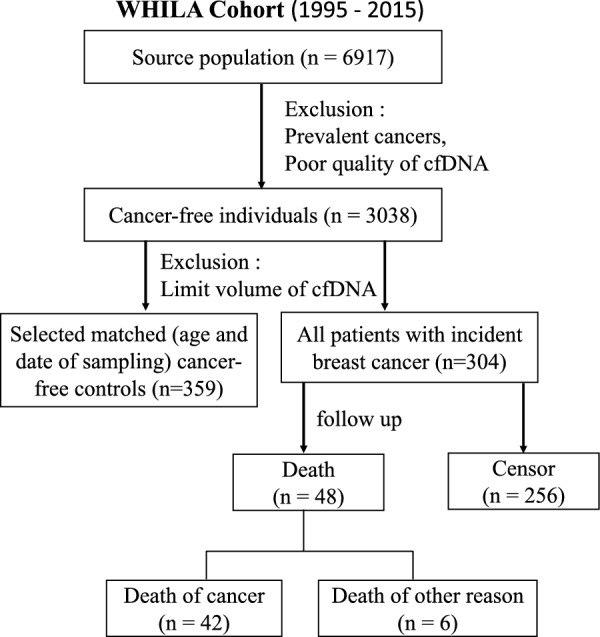
To characterize mitochondrial mutation landscapes in breast cancer, whole mtDNA sequencing and bioinformatics analyses were performed on 86 breast cancer biopsies and 50 available matched baseline cancer-free whole blood samples from the same individuals, selected from a cohort of middle-aged women in Sweden. To determine whether the mutations can be detected in blood plasma prior to cancer diagnosis, we further designed a nested case-control study (n = 663) and validated the shortlisted mutations using droplet digital PCR.
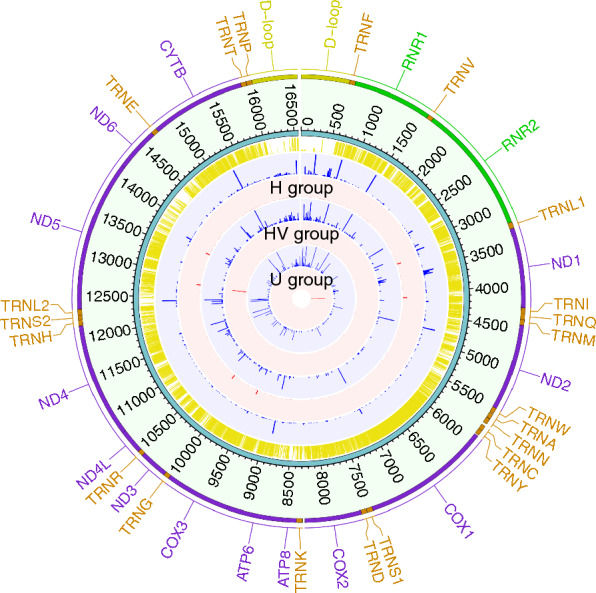
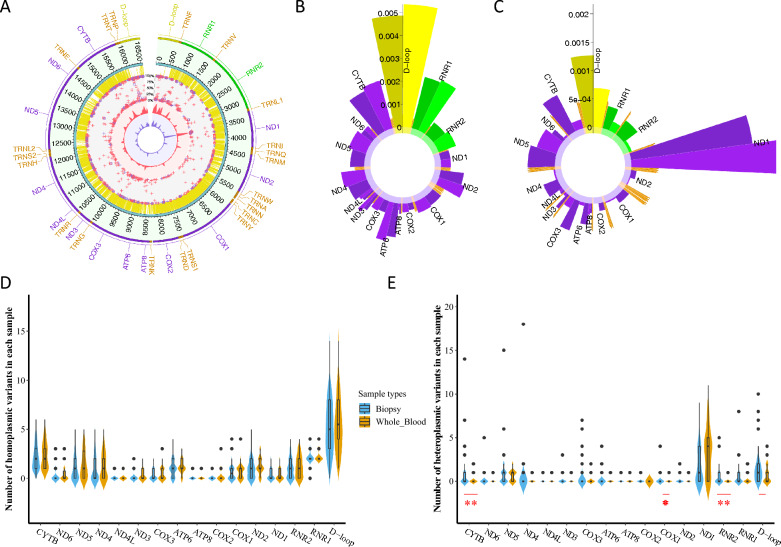
We detected different mutation landscapes between biopsies and matched whole blood samples. Compared to whole blood samples, mtDNA from biopsies had higher heteroplasmic mutations in the D-loop region (P = 0.02), RNR2 (P = 0.005), COX1 (P = 0.037) and CYTB (P = 0.006). Furthermore, the germline mtDNA mutations had higher heteroplasmy level than the lost (P = 0.002) and de novo mutations (P = 0.04). The nonsynonymous to synonymous substitution ratio (dN/dS) was higher for the heteroplasmic mutations (P = 7.25 × 10) than that for the homoplasmic mutations, but the de novo (P = 0.06) and lost mutations (P = 0.03) had lower dN/dS than the germline mutations. Interestingly, we found that the critical regions for mitochondrial transcription: MT-HSP1 (odds ratio [OR]: 21.41), MT-TFH (OR: 7.70) and MT-TAS2 (OR: 3.62), had significantly higher heteroplasmic mutations than the rest of the D-loop sub-regions. Finally, we found that the presence of mt.16093T > C mutation increases 67% risk of developing breast cancer.
Our findings show that mitochondrial genetic landscape changes during cancer pathogenesis and positive selection of mtDNA heteroplasmic mutations in breast cancer. Most importantly, the mitochondrial mutations identified in biopsies can be traced back in matched plasma samples and could potentially be used as early breast cancer diagnostic biomarkers.
尽管进行了筛查,但乳腺癌仍不能总是被及早发现,而且与其他肿瘤类型一样,已知会在循环中释放遗传信息。与单拷贝核 DNA 不同,线粒体 DNA(mtDNA)的拷贝数在每个细胞中从 100 到 10,000 不等,因此提供了一种潜在的替代方法,可以在早期阶段识别循环中潜在的缺失癌症信息。
为了描述乳腺癌中线粒体突变景观,对来自瑞典中年女性队列的 86 例乳腺癌活检样本和 50 例可获得的相同个体基线无癌全血样本进行了全 mtDNA 测序和生物信息学分析。为了确定在癌症诊断前是否可以在血浆中检测到突变,我们进一步设计了巢式病例对照研究(n=663),并使用液滴数字 PCR 验证了入选的突变。
我们在活检样本和匹配的全血样本之间检测到不同的突变景观。与全血样本相比,活检 mtDNA 在 D 环区域的异质突变更高(P=0.02),RNR2(P=0.005),COX1(P=0.037)和 CYTB(P=0.006)。此外,种系 mtDNA 突变的异质突变水平高于丢失(P=0.002)和从头突变(P=0.04)。异质突变的非同义到同义替代比(dN/dS)高于同质突变(P=7.25×10),但从头(P=0.06)和丢失突变(P=0.03)的 dN/dS 低于种系突变。有趣的是,我们发现线粒体转录的关键区域:MT-HSP1(优势比[OR]:21.41),MT-TFH(OR:7.70)和 MT-TAS2(OR:3.62)的异质突变明显更高比 D 环亚区的其余部分。最后,我们发现 mt.16093T> C 突变的存在使乳腺癌的发病风险增加了 67%。
我们的研究结果表明,线粒体遗传景观在癌症发病机制中发生变化,并且在乳腺癌中对 mtDNA 异质突变进行了积极选择。最重要的是,在活检中鉴定的线粒体突变可以追溯到匹配的血浆样本中,并且可能作为早期乳腺癌诊断的生物标志物。