Retired member of Departamento de Genética, Facultad de Biología, Universidad de La Laguna, Canary Islands, Spain.
Sci Rep. 2021 Mar 3;11(1):5036. doi: 10.1038/s41598-021-84583-1.
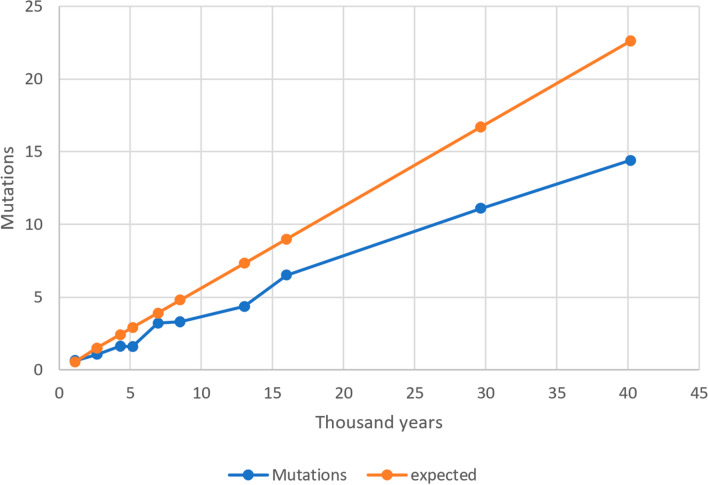
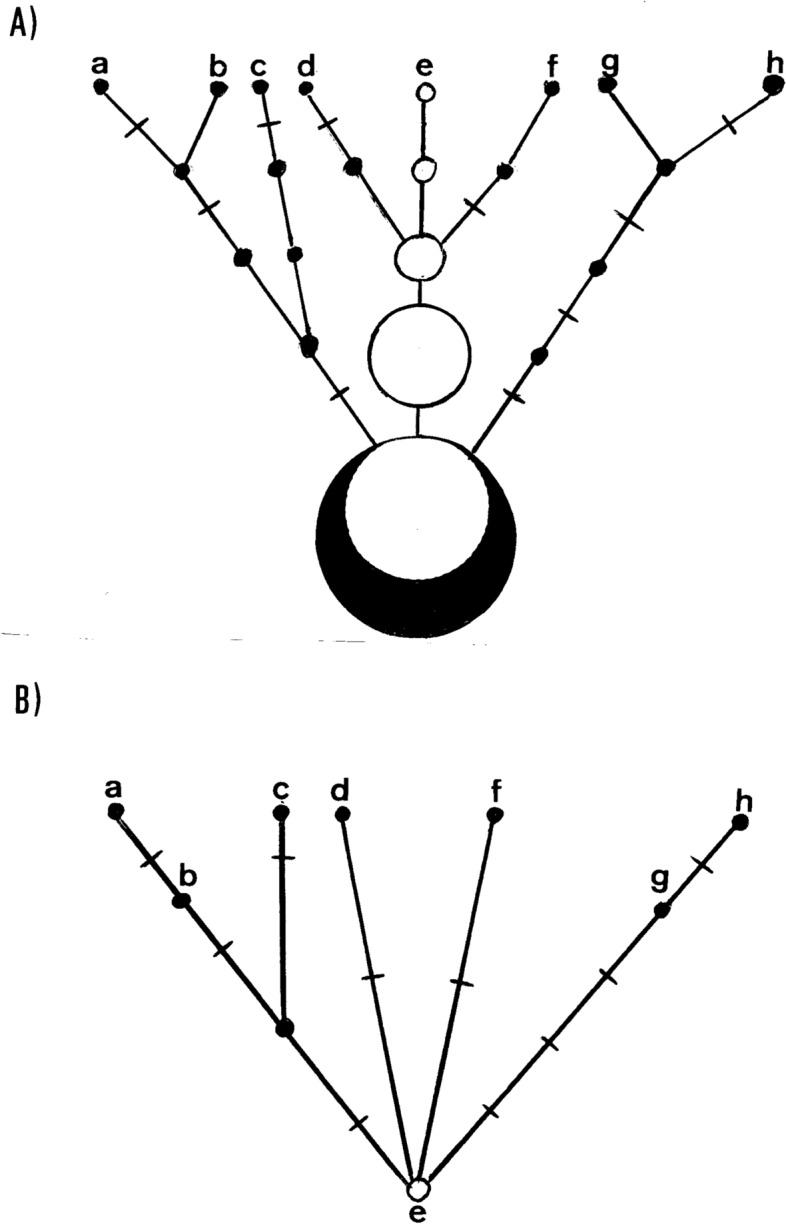
Human evolutionary genetics gives a chronological framework to interpret the human history. It is based on the molecular clock hypothesis that suppose a straightforward relationship between the mutation rate and the substitution rate with independence of other factors as demography dynamics. Analyzing ancient and modern human complete mitochondrial genomes we show here that, along the time, the substitution rate can be significantly slower or faster than the average germline mutation rate confirming a time dependence effect mainly attributable to changes in the effective population size of the human populations, with an exponential growth in recent times. We also detect that transient polymorphisms play a slowdown role in the evolutionary rate deduced from haplogroup intraspecific trees. Finally, we propose the use of the most divergent lineages within haplogroups as a practical approach to correct these molecular clock mismatches.
人类进化遗传学为解释人类历史提供了一个时间框架。它基于分子钟假说,假设突变率与替代率之间存在直接关系,不受其他因素(如人口动态)的影响。我们在这里通过分析古代和现代人类完整的线粒体基因组表明,随着时间的推移,替代率可能明显慢于或快于平均生殖系突变率,这证实了主要归因于人类群体有效种群大小变化的时间依赖性效应,最近呈指数增长。我们还检测到,在从单倍群种内树推断出的进化率中,瞬时多态性起着减缓作用。最后,我们提出使用单倍群内最具差异的谱系作为纠正这些分子钟不匹配的实用方法。