
利用地球观测数据集对交通和土地变更进行环境影响评估:亚洲和欧洲城市的比较研究
Environmental impact assessment of transportation and land alteration using Earth observational datasets: Comparative study between cities in Asia and Europe.
作者信息
Mhana Khalid Hardan, Norhisham Shuhairy Bin, Katman Herda Yati Binti, Yaseen Zaher Mundher
机构信息
Department of Civil Engineering, College of Engineering, Universiti Tenaga Nasional (UNITEN), Putrajaya Campus, Jalan IKRAM-UNITEN, 43000 Kajang, Selangor, Malaysia.
Civil Engineering Department, College of Engineering, University Of Anbar, Iraq.
出版信息
Heliyon. 2023 Aug 28;9(9):e19413. doi: 10.1016/j.heliyon.2023.e19413. eCollection 2023 Sep.
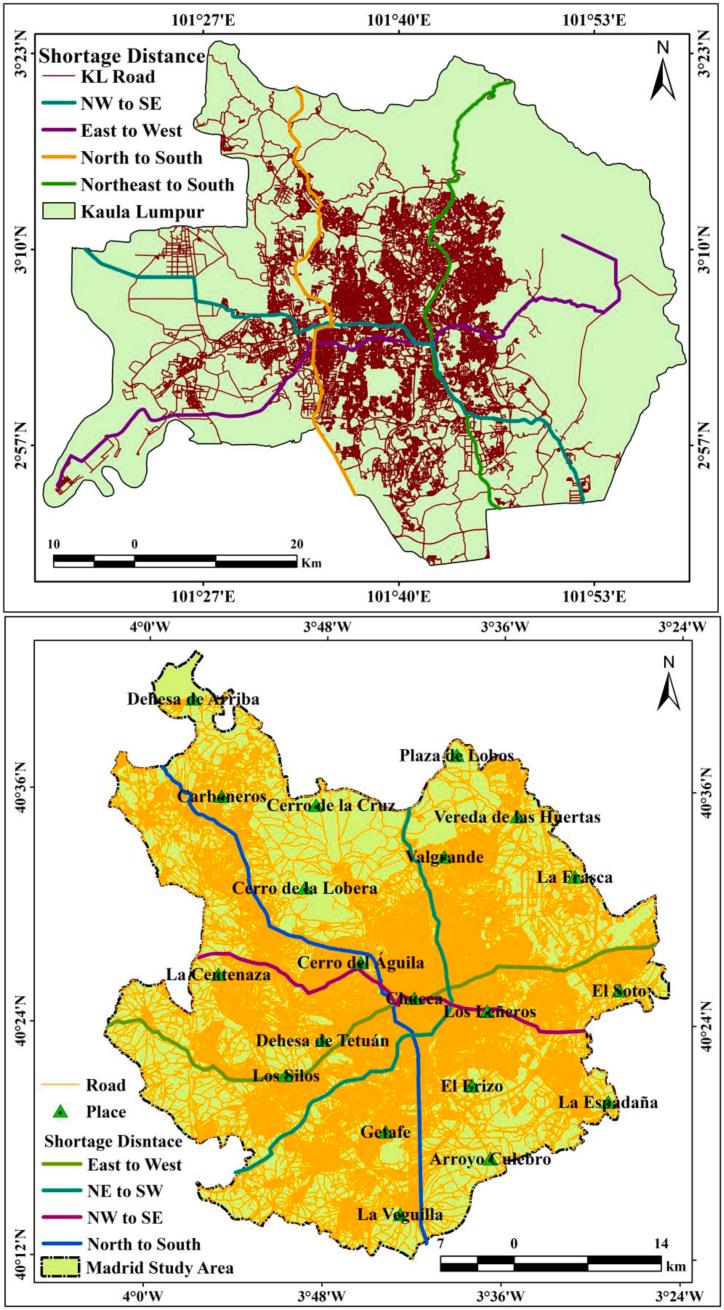
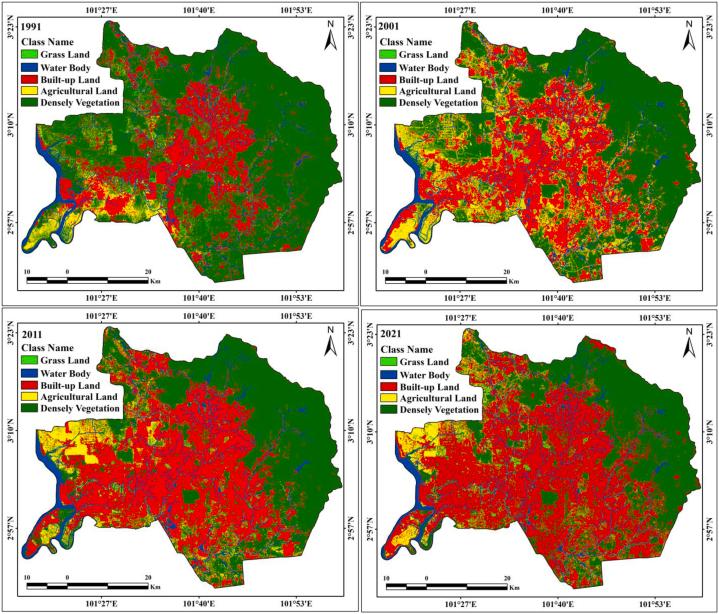
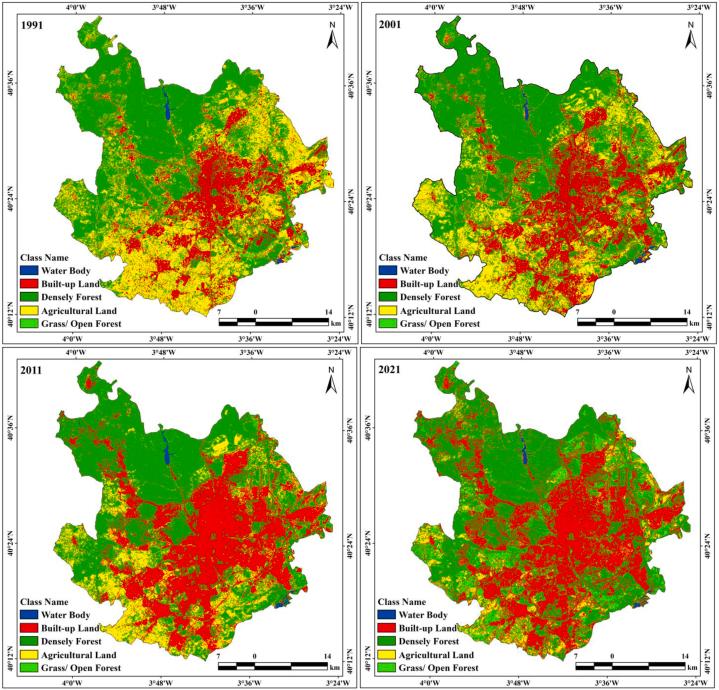
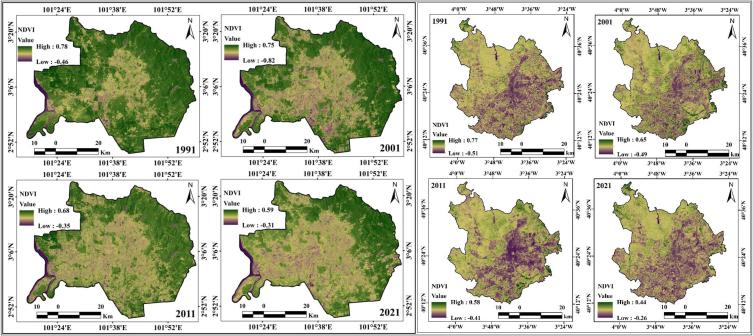
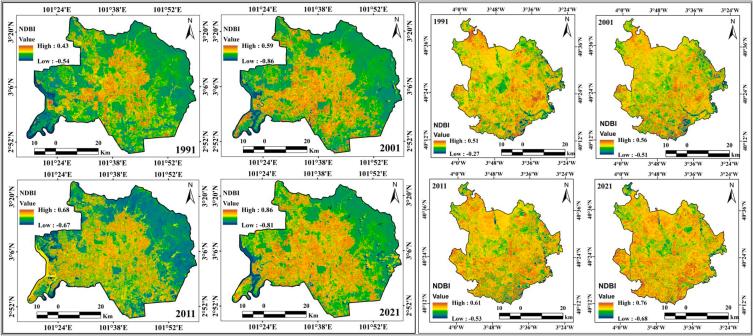
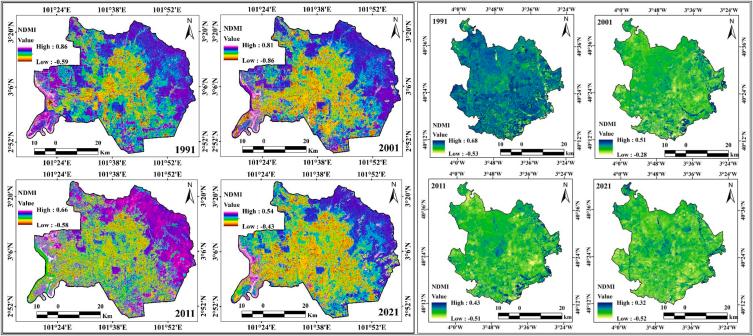
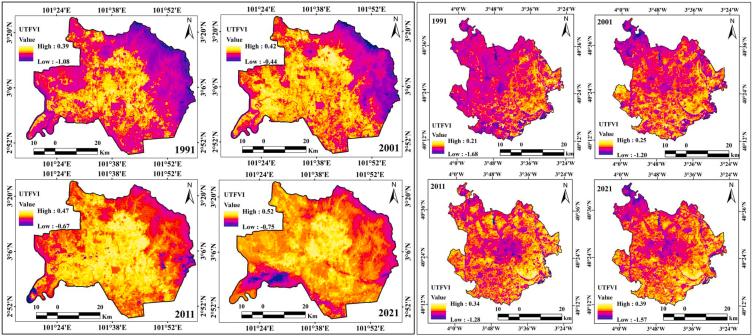
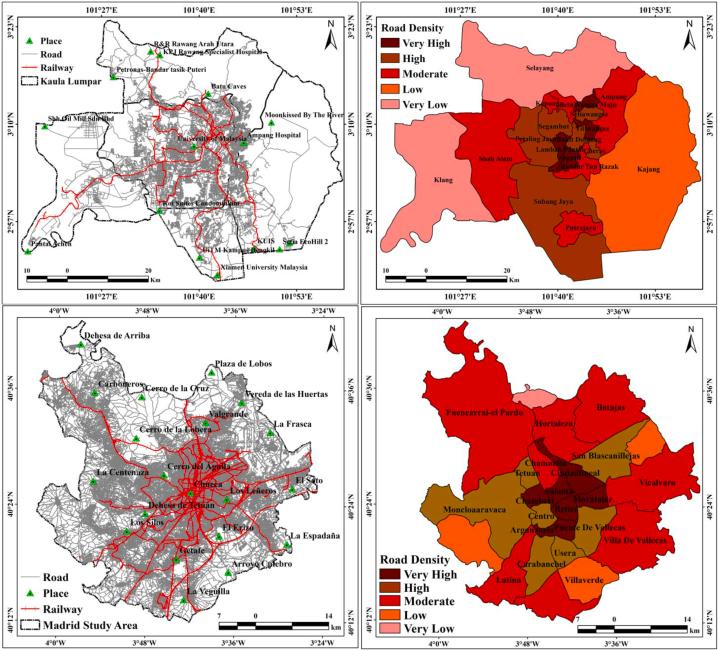
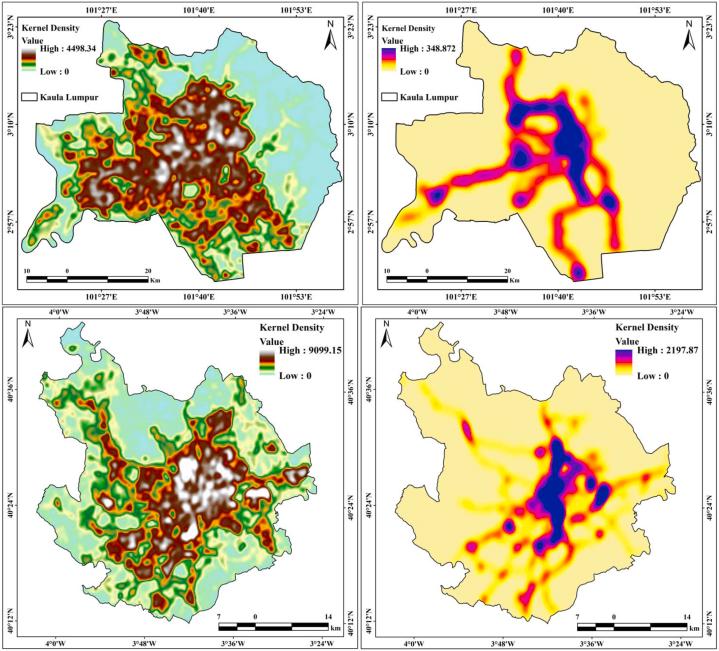
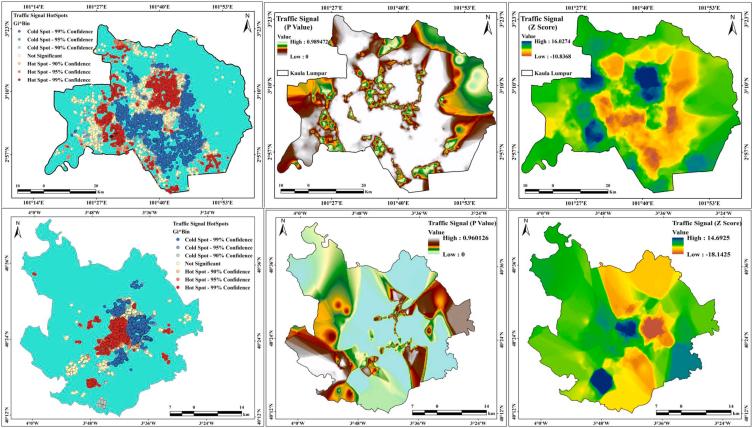
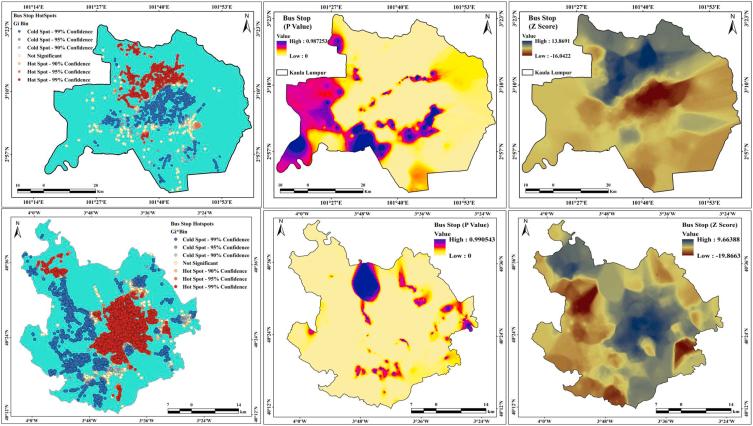
Developments in the transportation field are emerging because of the growing worldwide demand and upgrading requirements. This study measured the transportation development, shortage distance, and decadal land transformation of Kuala Lumpur and Madrid using various remote sensing and GIS approaches. The kernel density estimation (KDE) tool was applied for road and railway density analysis, and hotspot information increased the knowledge about assessable areas. Landsat datasets were used (1991-2021) for land transformation and related analyses. The built-up land increased by 1327.27 and 404.09 km in Kuala Lumpur and Madrid, respectively. In the last thirty years, the temperature increased 6.45 °C in Kuala Lumpur and 4.15 °C in Madrid owing to urban expansion and road construction. Chamberi, Retiro, Moratalaz, Salama, Wangsa Maju, Titiwangsa, Bukit Bintang, and Seputeh have very high road densities. KDE measurements showed that the road densities in Kuala Lumpur (4498.34) and Madrid (9099.15) were high in the central parts of the city, and the railway densities were 348.872 and 2197.87, respectively. The observed P values were 0.99 and 0.96 for traffic signals and 0.98 and 0.99 for bus stops, respectively. The information provided by this study can support local planners, administrators, scientists, and researchers in understanding the global transportation issues that require implementation strategies for ensuring sustainable livelihoods.
由于全球需求不断增长和要求不断升级,交通领域正在出现新的发展。本研究使用各种遥感和地理信息系统方法,测量了吉隆坡和马德里的交通发展、短缺距离以及十年土地变化情况。核密度估计(KDE)工具被用于道路和铁路密度分析,热点信息增加了对可评估区域的了解。使用了1991年至2021年的陆地卫星数据集进行土地变化及相关分析。吉隆坡和马德里的建成区土地面积分别增加了1327.27平方公里和404.09平方公里。在过去三十年里,由于城市扩张和道路建设,吉隆坡的气温上升了6.45摄氏度,马德里的气温上升了4.15摄氏度。钱贝里、雷蒂罗、莫拉塔拉兹、萨拉马、旺沙玛朱、蒂蒂旺沙、武吉免登和士布爹的道路密度非常高。KDE测量结果显示,吉隆坡(4498.34)和马德里(9099.15)市中心的道路密度很高,铁路密度分别为348.872和2197.87。交通信号灯的观测P值分别为0.99和0.96,公交车站的观测P值分别为0.98和0.99。本研究提供的信息可以支持当地规划者、管理人员、科学家和研究人员了解需要实施确保可持续生计战略的全球交通问题。





 Zotero 插件