Puspasari Maya Arlini, Syaifullah Danu Hadi, Iqbal Billy Muhamad, Afranovka Valda Aqila, Madani Safa Talitha, Susetyo Armand Khalif, Arista Salsabila Annisa
Department of Industrial Engineering, Universitas Indonesia, Indonesia.
Centre for Business in Society, Coventry University, UK.
Heliyon. 2023 Sep 3;9(9):e19499. doi: 10.1016/j.heliyon.2023.e19499. eCollection 2023 Sep.
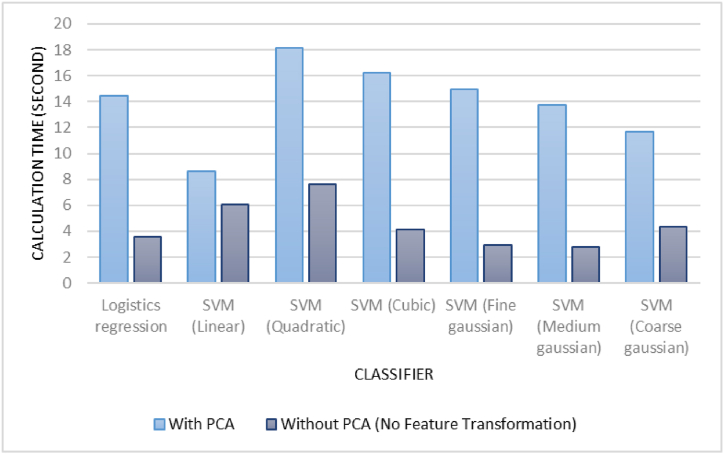
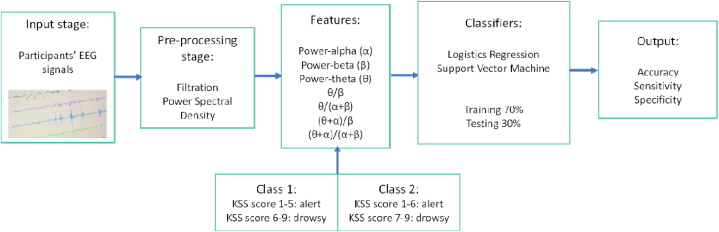
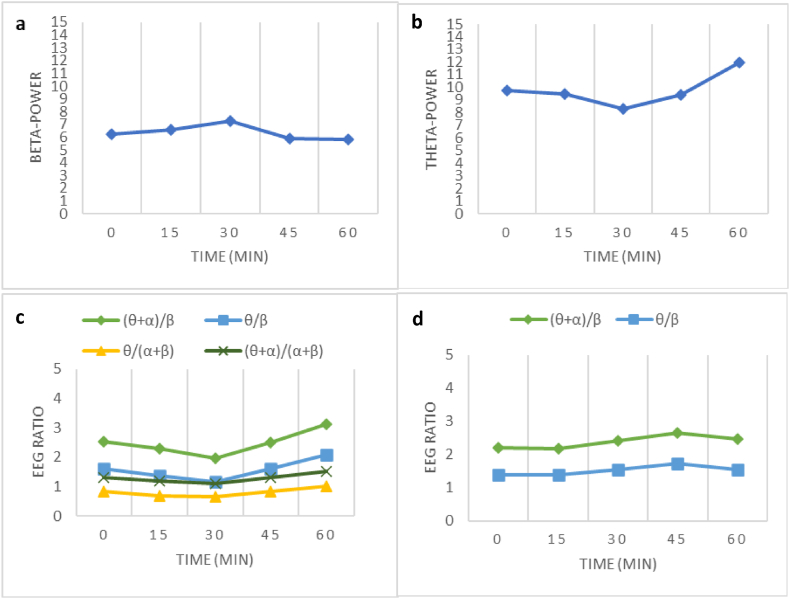
Indonesia is among the countries with the highest accident rates in the world. Fatigue and drowsiness are among the main causes of the increased risks of accidents in the road transport sector. Sleep-related factors (quality and quantity, time of day) and work-related factors significantly affect the development of fatigue. The EEG signal indicator is often referred to as the gold standard for measuring fatigue and drowsiness. However, previous studies focused primarily on the trends of EEG signals under certain conditions but overlooking the development of drowsiness indicators based on EEG signals. Furthermore, existing studies still do not agree on what parameters in the EEG signal indicator are best at detecting drowsiness. Thus, this study aims to design an EEG signal-based drowsiness indicator under simulated driving conditions. Drowsy drivers were monitored through EEG signal indicators and subjective assessments. The methods used in this study include statistical significance tests, logistic regression, and support vector machine. The results showed that sleep deprivation had a significant effect on increasing alpha, beta, and theta waves. In addition, driving duration significantly increased the theta power and all EEG ratios and decreased the beta power in the alert group. The ratio of (θ + α)/β and θ/β in the SD group also showed a considerable increase in the end of driving. Furthermore, sleep status and driving duration both influenced subjective sleepiness. EEG signals combined with sleep status and driving duration factors generated acceptable model accuracies (77.1% and 90.2% in training and testing, respectively), with 90.5% sensitivity and 90% specificity in data test. Support vector machine showed better classification than that of logistics regression, with the linear kernel as the best classifier. Theta power had the highest effect in the model compared with other EEG signals.
印度尼西亚是世界上事故率最高的国家之一。疲劳和困倦是道路运输部门事故风险增加的主要原因。与睡眠相关的因素(质量和数量、一天中的时间)以及与工作相关的因素会显著影响疲劳的发展。脑电图(EEG)信号指标常被视为测量疲劳和困倦的黄金标准。然而,以往的研究主要集中在特定条件下EEG信号的趋势,却忽视了基于EEG信号的困倦指标的发展。此外,现有研究对于EEG信号指标中哪些参数最能检测困倦仍未达成共识。因此,本研究旨在设计一种在模拟驾驶条件下基于EEG信号的困倦指标。通过EEG信号指标和主观评估对困倦的驾驶员进行监测。本研究使用的方法包括统计显著性检验、逻辑回归和支持向量机。结果表明,睡眠剥夺对增加α波、β波和θ波有显著影响。此外,驾驶时长显著增加了θ波功率、所有EEG比率,并降低了警觉组的β波功率。在睡眠不足(SD)组中,(θ + α)/β和θ/β的比率在驾驶结束时也有相当大的增加。此外,睡眠状态和驾驶时长均会影响主观困倦程度。结合睡眠状态和驾驶时长因素的EEG信号产生了可接受的模型准确率(训练和测试中分别为77.1%和90.2%),在数据测试中的灵敏度为90.5%,特异性为90%。支持向量机的分类效果优于逻辑回归,线性核是最佳分类器。与其他EEG信号相比,θ波功率在模型中的影响最大。