Centre for Environment, Fisheries and Aquaculture Science (Cefas), Lowestoft Laboratory, Lowestoft, UK.
Glob Chang Biol. 2023 Dec;29(23):6606-6619. doi: 10.1111/gcb.16881. Epub 2023 Oct 10.
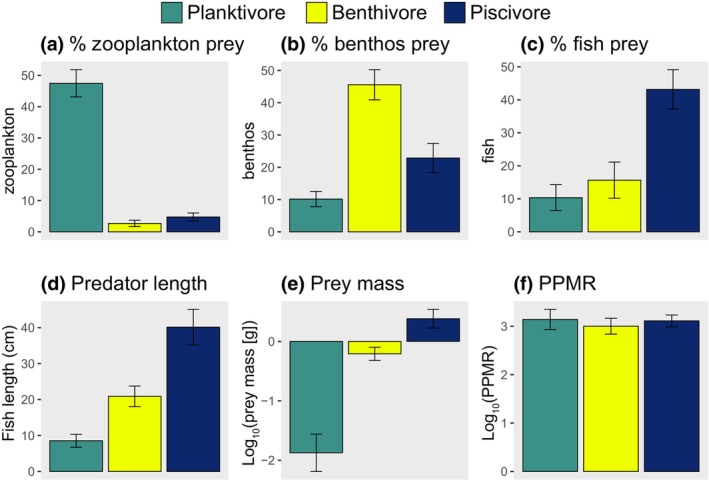
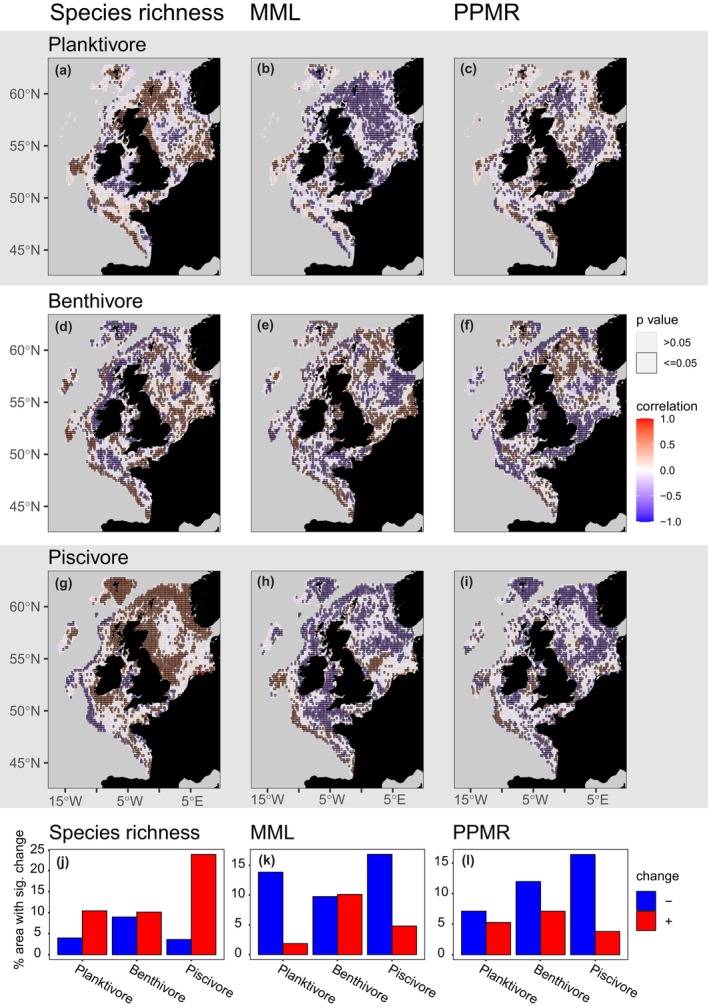
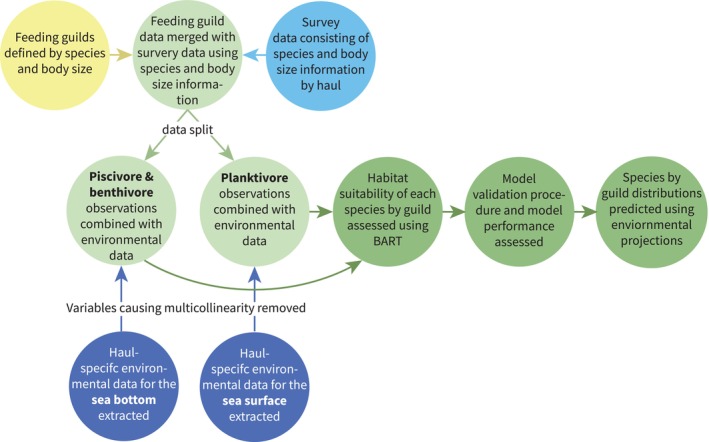
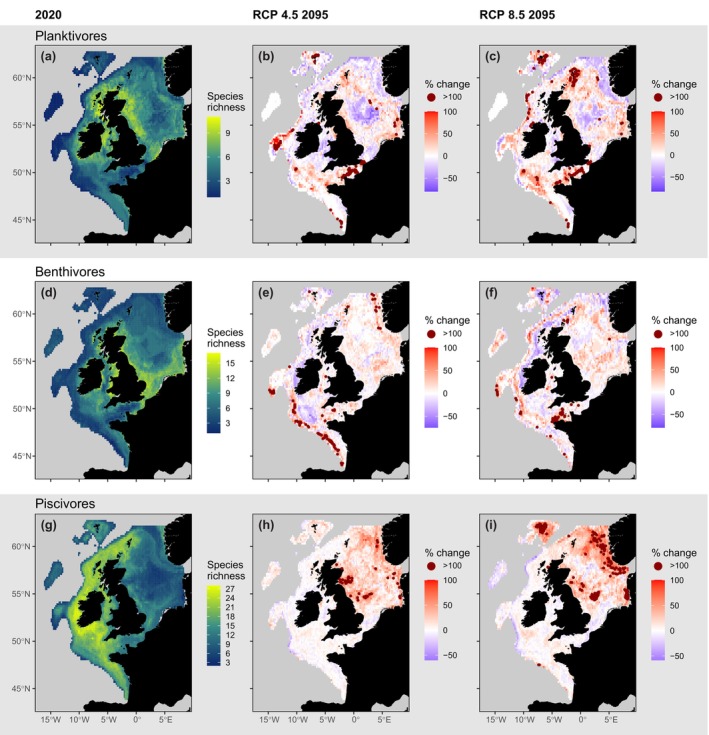
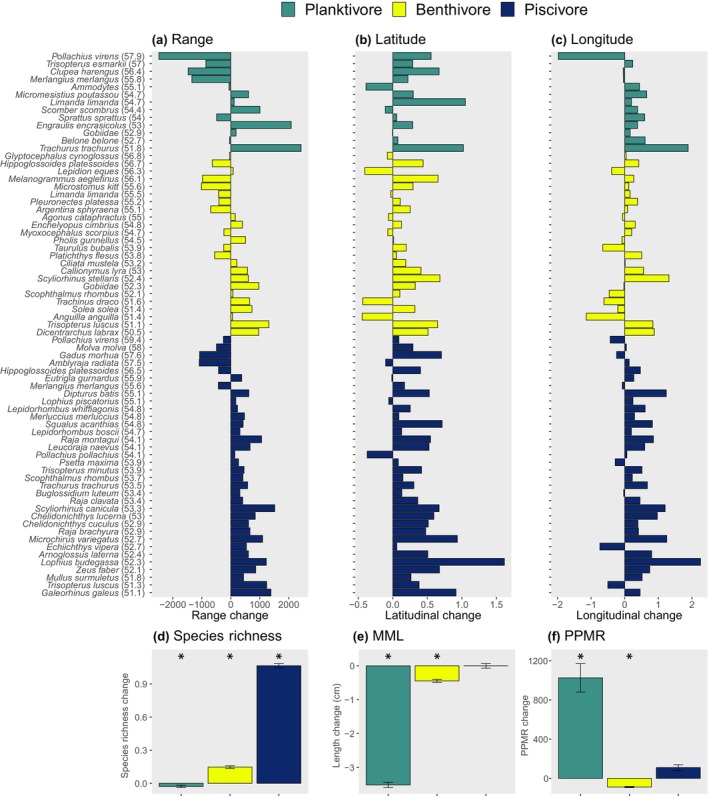
Many studies predict shifts in species distributions and community size composition in response to climate change, yet few have demonstrated how these changes will be distributed across marine food webs. We use Bayesian Additive Regression Trees to model how climate change will affect the habitat suitability of marine fish species across a range of body sizes and belonging to different feeding guilds, each with different habitat and feeding requirements in the northeast Atlantic shelf seas. Contrasting effects of climate change are predicted for feeding guilds, with spatially extensive decreases in the species richness of consumers lower in the food web (planktivores) but increases for those higher up (piscivores). Changing spatial patterns in predator-prey mass ratios and fish species size composition are also predicted for feeding guilds and across the fish assemblage. In combination, these changes could influence nutrient uptake and transformation, transfer efficiency and food web stability, and thus profoundly alter ecosystem structure and functioning.
许多研究预测了物种分布和群落大小组成会因气候变化而发生变化,但很少有研究表明这些变化将如何在海洋食物网中分布。我们使用贝叶斯加性回归树来模拟气候变化将如何影响东北大西洋大陆架海域不同体型和不同摄食类群的海洋鱼类物种的栖息地适宜性,每个类群都有不同的栖息地和摄食需求。不同的摄食类群预计会受到气候变化的不同影响,在食物网中较低层次的消费者(浮游动物)的物种丰富度会在空间上广泛减少,但较高层次的消费者(食鱼动物)的物种丰富度会增加。摄食类群和鱼类组合的捕食者-猎物质量比和鱼类物种大小组成的空间格局也预计会发生变化。这些变化综合起来可能会影响营养物质的吸收和转化、传递效率和食物网的稳定性,从而深刻改变生态系统的结构和功能。