School of Pharmacy, Zhejiang Chinese Medical University, Hangzhou, China.
Jinhua Institute, Zhejiang Chinese Medical University, Jinhua, China.
Aging Dis. 2024 Aug 1;15(4):1508-1536. doi: 10.14336/AD.2023.0830.
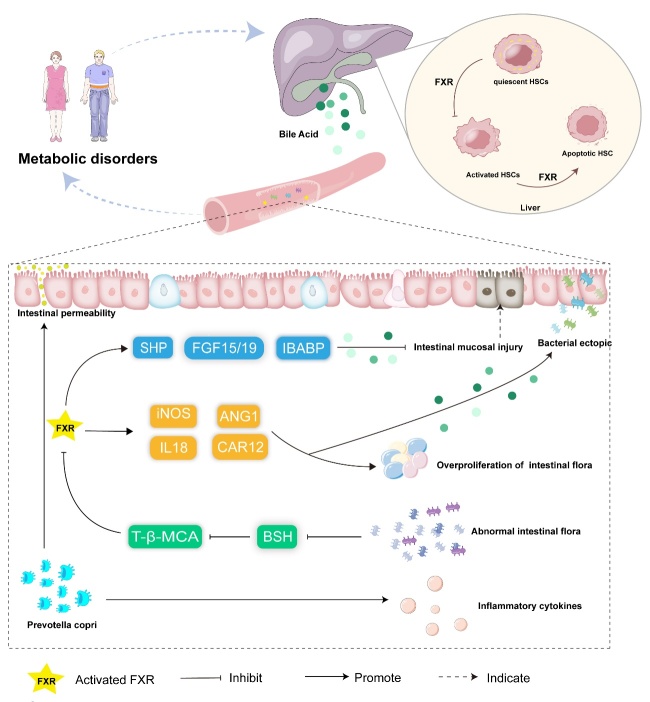
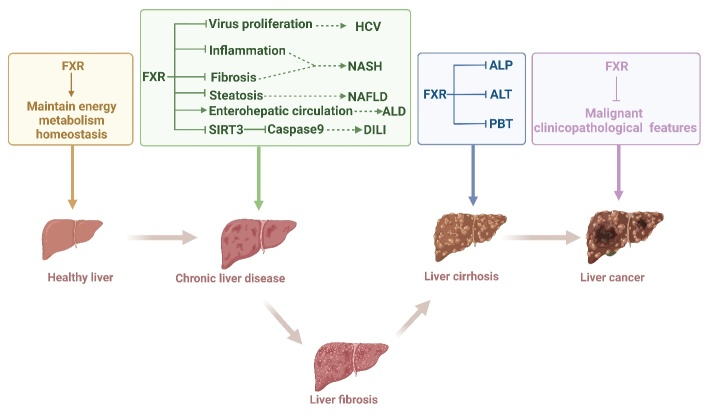
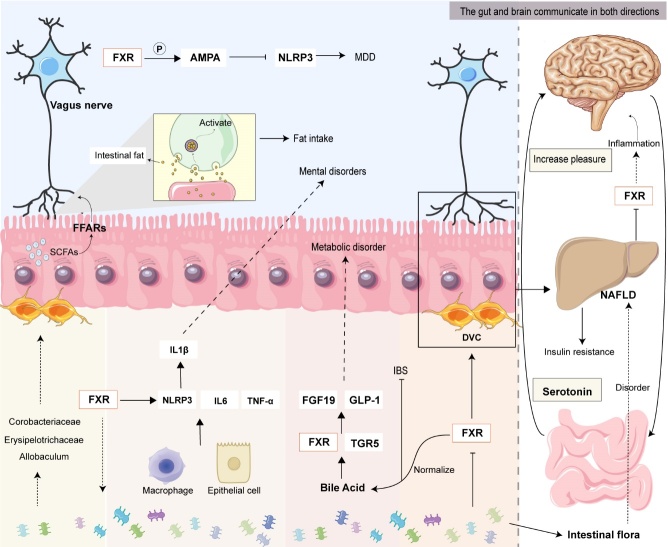
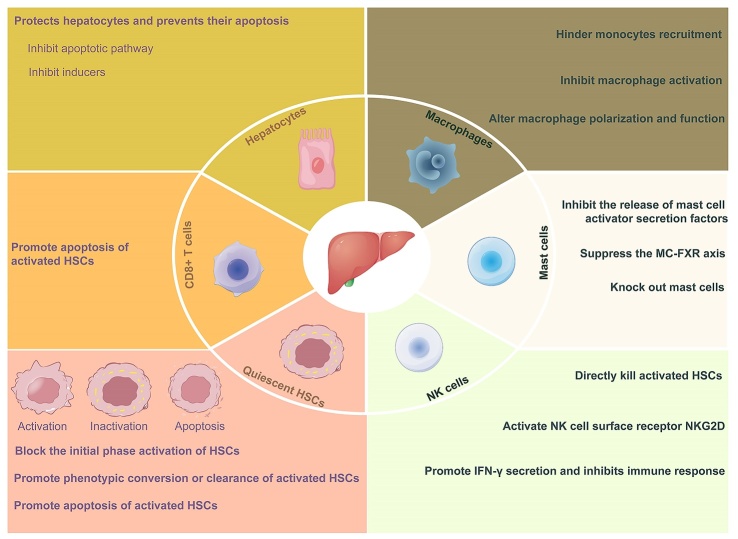
The farnesoid X receptor (FXR), a ligand-activated transcription factor, plays a crucial role in regulating bile acid metabolism within the enterohepatic circulation. Beyond its involvement in metabolic disorders and immune imbalances affecting various tissues, FXR is implicated in microbiota modulation, gut-to-brain communication, and liver disease. The liver, as a pivotal metabolic and detoxification organ, is susceptible to damage from factors such as alcohol, viruses, drugs, and high-fat diets. Chronic or recurrent liver injury can culminate in liver fibrosis, which, if left untreated, may progress to cirrhosis and even liver cancer, posing significant health risks. However, therapeutic options for liver fibrosis remain limited in terms of FDA-approved drugs. Recent insights into the structure of FXR, coupled with animal and clinical investigations, have shed light on its potential pharmacological role in hepatic fibrosis. Progress has been achieved in both fundamental research and clinical applications. This review critically examines recent advancements in FXR research, highlighting challenges and potential mechanisms underlying its role in liver fibrosis treatment.
法尼醇 X 受体(FXR)是一种配体激活的转录因子,在调节肠肝循环中的胆汁酸代谢中发挥着关键作用。除了参与影响各种组织的代谢紊乱和免疫失衡外,FXR 还与微生物组调节、肠-脑通讯和肝病有关。肝脏作为一个重要的代谢和解毒器官,容易受到酒精、病毒、药物和高脂肪饮食等因素的损害。慢性或反复的肝损伤可导致肝纤维化,如果不治疗,可能进展为肝硬化,甚至肝癌,带来重大健康风险。然而,FDA 批准的药物治疗肝纤维化的选择仍然有限。最近对 FXR 结构的深入了解,以及动物和临床研究,揭示了其在肝纤维化中的潜在药理学作用。在基础研究和临床应用方面都取得了进展。本综述批判性地检查了 FXR 研究的最新进展,强调了其在肝纤维化治疗中的作用所涉及的挑战和潜在机制。