Group for Aquatic Microbial Ecology, Department of Chemistry, Environmental Microbiology and Biotechnology (EMB), University of Duisburg-Essen, 45141, Essen, Germany.
Centre for Ecology and Evolution in Microbial Model Systems (EEMiS), Department of Biology and Environmental Science, Linnaeus University, 39231, Kalmar, Sweden.
Nat Commun. 2023 Oct 10;14(1):6354. doi: 10.1038/s41467-023-42125-5.
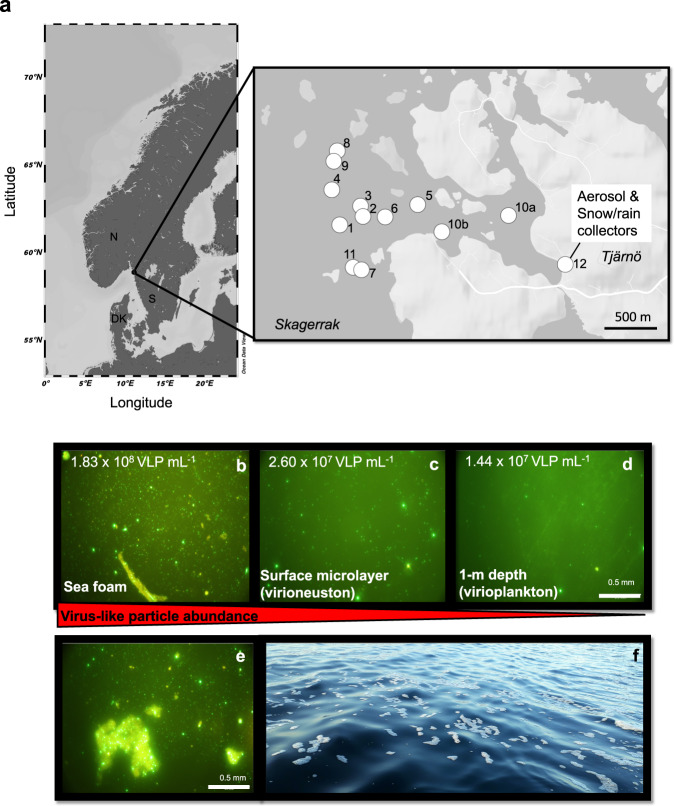
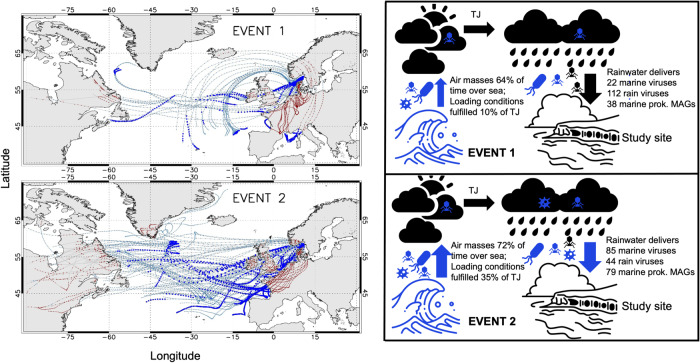
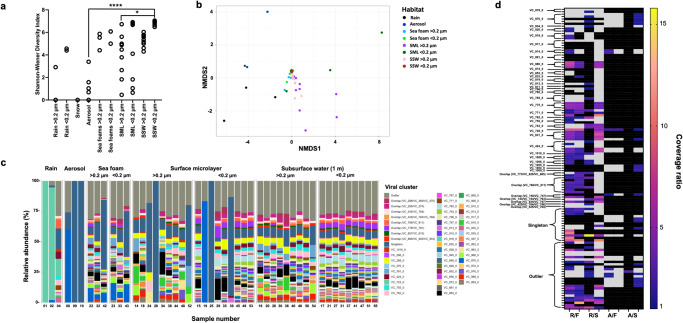
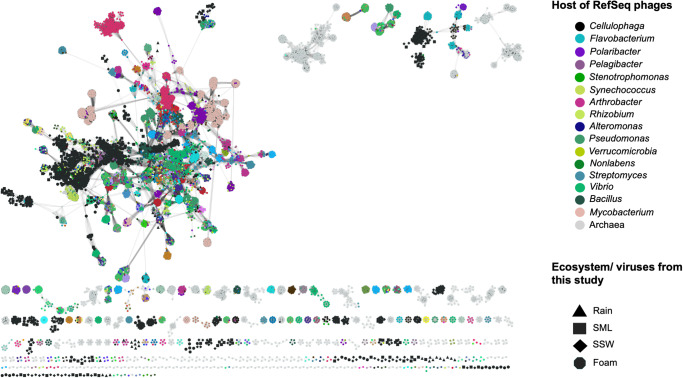
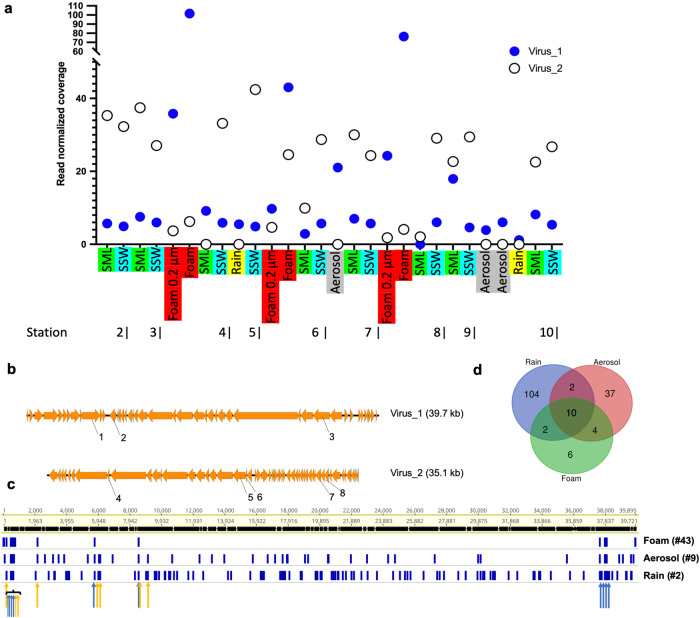
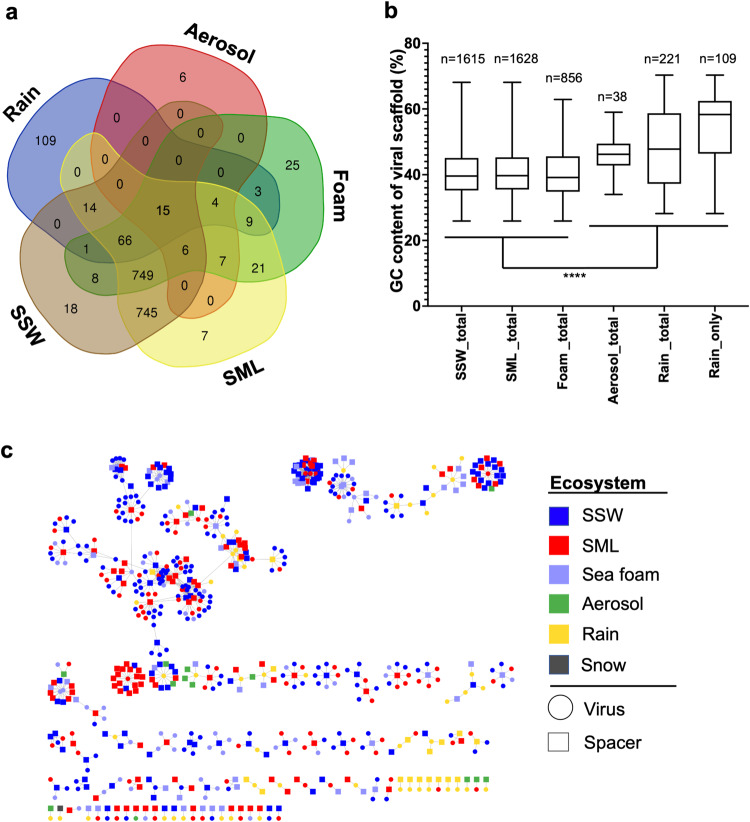
Marine viruses in seawater have frequently been studied, yet their dispersal from neuston ecosystems at the air-sea interface towards the atmosphere remains a knowledge gap. Here, we show that 6.2% of the studied virus population were shared between air-sea interface ecosystems and rainwater. Virus enrichment in the 1-mm thin surface microlayer and sea foams happened selectively, and variant analysis proved virus transfer to aerosols collected at ~2 m height above sea level and rain. Viruses detected in rain and these aerosols showed a significantly higher percent G/C base content compared to marine viruses. CRISPR spacer matches of marine prokaryotes to foreign viruses from rainwater prove regular virus-host encounters at the air-sea interface. Our findings on aerosolization, adaptations, and dispersal support transmission of viruses along the natural water cycle.
海洋病毒在海水中经常被研究,但它们从海洋上层生态系统到大气中的扩散仍然是一个知识空白。在这里,我们表明,在所研究的病毒群体中,有 6.2%存在于海气界面生态系统和雨水中。病毒在 1 毫米厚的表面微层和海沫中的富集是有选择性的,变体分析证明病毒可以转移到距海面约 2 米高的气溶胶和雨中。在雨中和这些气溶胶中检测到的病毒与海水中的病毒相比,G/C 碱基含量的百分比明显更高。海洋原核生物与雨水中外来病毒的 CRISPR 间隔子匹配证明,在海气界面经常发生病毒与宿主的相互作用。我们关于气溶胶化、适应和分散的发现支持了病毒沿着自然水循环的传播。