Chen Yi-Kai, Simon Isabella A, Maslov Ivan, Oyarce-Pino Ivan E, Kulkarni Ketav, Hopper Denham, Aguilar Marie-Isabel, Vankadari Naveen, Broughton Brad Rs, Del Borgo Mark P
Department of Pharmacology, Monash University Clayton VIC 3800 Australia
Biomedicine Discovery Institute, Monash University Clayton VIC 3800 Australia.
RSC Adv. 2023 Oct 9;13(42):29401-29407. doi: 10.1039/d3ra04514e. eCollection 2023 Oct 4.
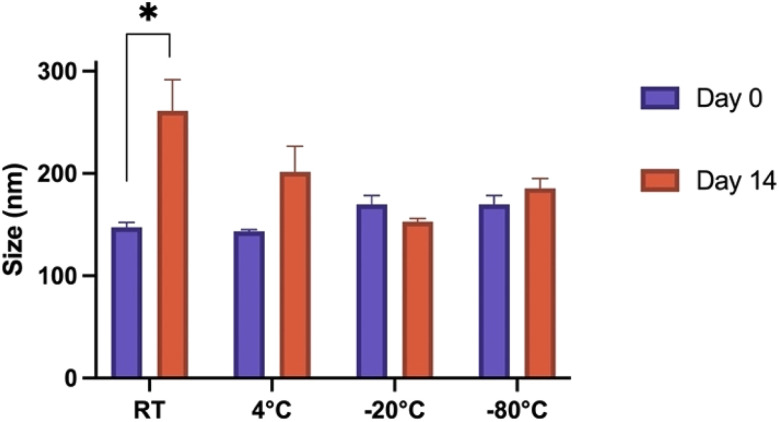
Small tripeptides composed entirely of β-amino acids have been shown to self-assemble into fibres following acylation of the N-terminus. Given the use of Fmoc as a strategy to initiate self-assembly in α-peptides, we hypothesized that the acyl cap can be replaced by an Fmoc without perturbation to the self-assembly and enable simpler synthetic protocols. We therefore replaced the -acyl cap for an Fmoc group and herein we show that these Fmoc-protected β-peptides produce regular spherical particles, rather than fibrous structures, that are stable and capable of encapsulating cargo. We then demonstrated that these particles were able to deliver cargo to cells without any obvious signs of cytotoxicity. This is the first description of such regular nanoparticles derived from Fmoc-protected β-peptides.
已证明完全由β-氨基酸组成的小三肽在N端酰化后会自组装成纤维。鉴于使用Fmoc作为α-肽自组装起始策略,我们推测酰基帽可以被Fmoc取代而不干扰自组装,并能实现更简单的合成方案。因此,我们将酰基帽替换为Fmoc基团,在此我们表明这些Fmoc保护的β-肽会产生规则的球形颗粒,而不是纤维结构,这些颗粒稳定且能够包裹货物。然后我们证明这些颗粒能够将货物递送至细胞,且没有任何明显的细胞毒性迹象。这是对源自Fmoc保护的β-肽的此类规则纳米颗粒的首次描述。