Del Borgo Mark P, Kulkarni Ketav, Tonta Mary A, Ratcliffe Jessie L, Seoudi Rania, Mechler Adam I, Perlmutter Patrick, Parkington Helena C, Aguilar Marie-Isabel
Department of Chemistry and Physics, La Trobe Institute for Molecular Science, La Trobe University, Bundoora, VIC 3086, Australia.
School of Chemistry, Monash University, Clayton, VIC 3800, Australia.
APL Bioeng. 2018 May 1;2(2):026104. doi: 10.1063/1.5020105. eCollection 2018 Jun.
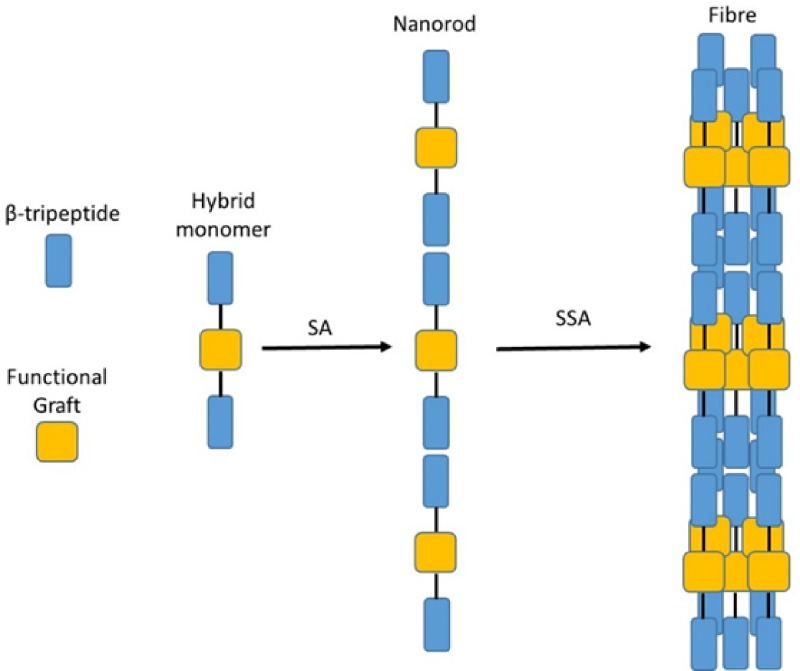
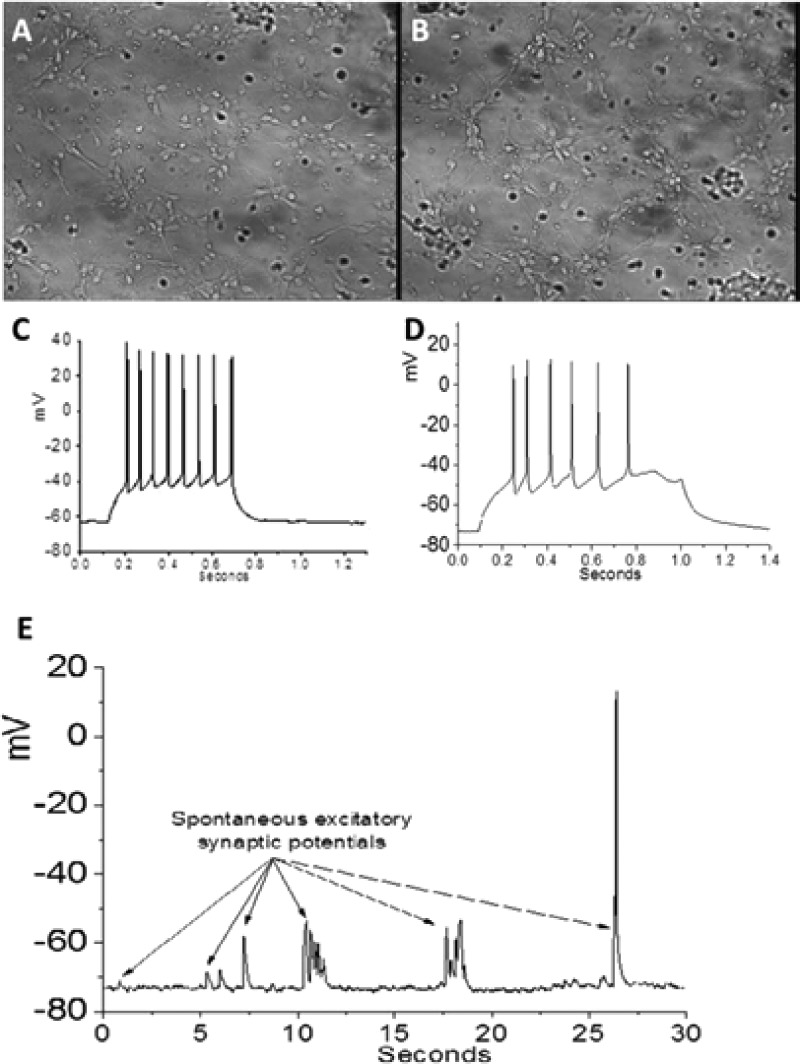
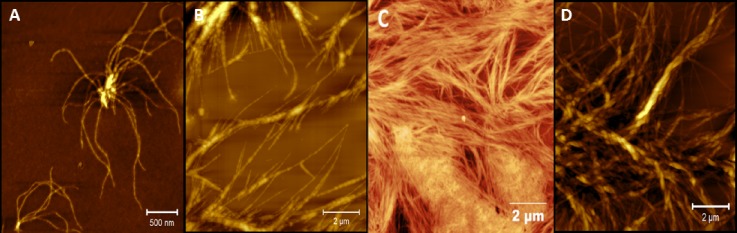
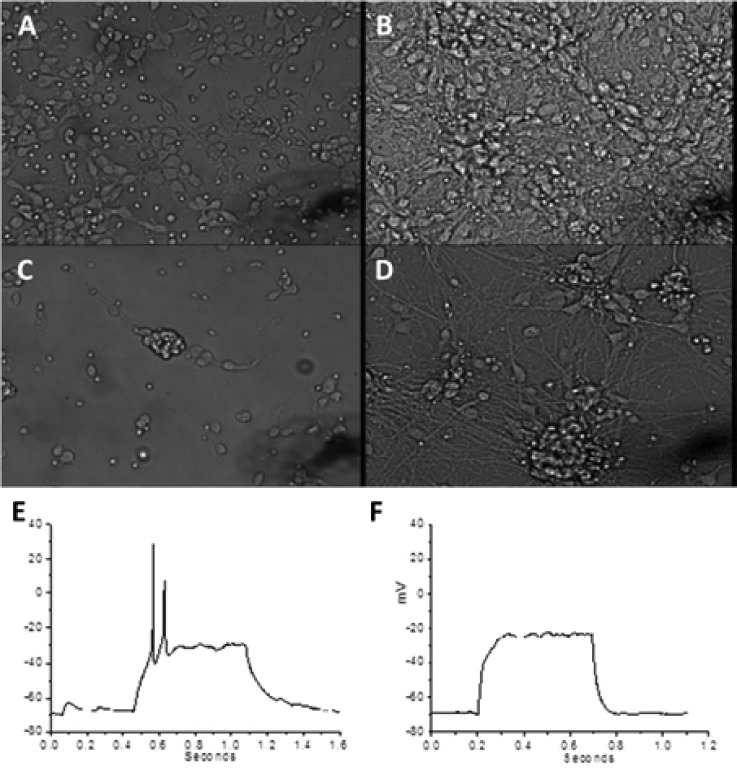
Peptides comprised entirely of β-amino acids, commonly referred to as β-foldamers, have been shown to self-assemble into a range of materials. Previously, β-foldamers have been functionalised via various side chain chemistries to introduce function to these materials without perturbation of the self-assembly motif. Here, we show that insertion of both rigid and flexible molecules into the backbone structure of the β-foldamer did not disturb the self-assembly, provided that the molecule is positioned between two β-tripeptides. These hybrid β-peptide flanked molecules self-assembled into a range of structures. α-Arginlyglycylaspartic acid (RGD), a commonly used cell attachment motif derived from fibronectin in the extracellular matrix, was incorporated into the peptide sequence in order to form a biomimetic scaffold that would support neuronal cell growth. The RGD-containing sequence formed the desired mesh-like scaffold but did not encourage neuronal growth, possibly due to over-stimulation with RGD. Mixing the RGD peptide with a β-foldamer without the RGD sequence produced a well-defined scaffold that successfully encouraged the growth of neurons and enabled neuronal electrical functionality. These results indicate that β-tripeptides can form distinct self-assembly units separated by a linker and can form fibrous assemblies. The linkers within the peptide sequence can be composed of a bioactive α-peptide and tuned to provide a biocompatible scaffold.
完全由β-氨基酸组成的肽,通常被称为β-折叠体,已被证明能自组装成一系列材料。此前,β-折叠体已通过各种侧链化学方法进行功能化,以便在不干扰自组装基序的情况下为这些材料引入功能。在此,我们表明,只要分子位于两个β-三肽之间,将刚性和柔性分子插入β-折叠体的主链结构中不会干扰自组装。这些杂合的β-肽侧翼分子自组装成一系列结构。α-精氨酰甘氨酰天冬氨酸(RGD)是一种常用的细胞附着基序,源自细胞外基质中的纤连蛋白,被纳入肽序列以形成支持神经元细胞生长的仿生支架。含RGD的序列形成了所需的网状支架,但并未促进神经元生长,这可能是由于RGD过度刺激所致。将含RGD的肽与不含RGD序列的β-折叠体混合,产生了一种明确的支架,成功促进了神经元的生长并实现了神经元的电功能。这些结果表明,β-三肽可以形成由连接子分隔的不同自组装单元,并能形成纤维状组装体。肽序列中的连接子可以由生物活性α-肽组成,并进行调整以提供生物相容性支架。