Universidad de Granada, Departamento de Química Orgánica, Facultad de Ciencias, Unidad de Excelencia de Química Aplicada a Biomedicina y Medioambiente, 18071 Granada, Spain.
Instituto de Investigación Biosanitaria (ibs.GRANADA), 18012 Granada, Spain.
ACS Appl Mater Interfaces. 2021 Oct 27;13(42):49692-49704. doi: 10.1021/acsami.1c13972. Epub 2021 Oct 14.
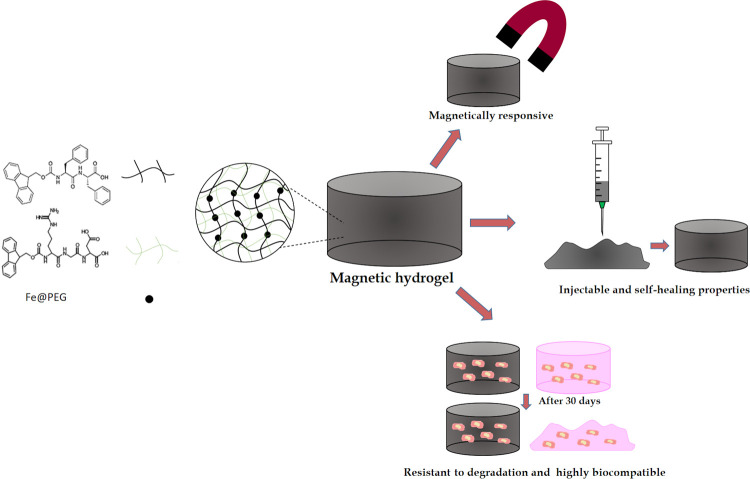
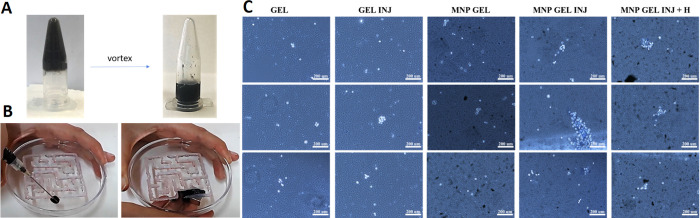
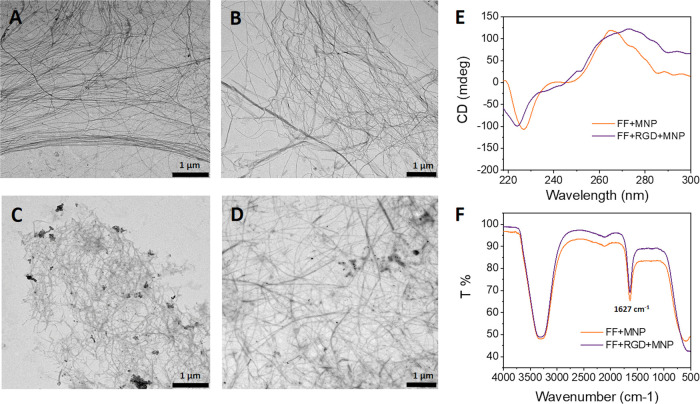
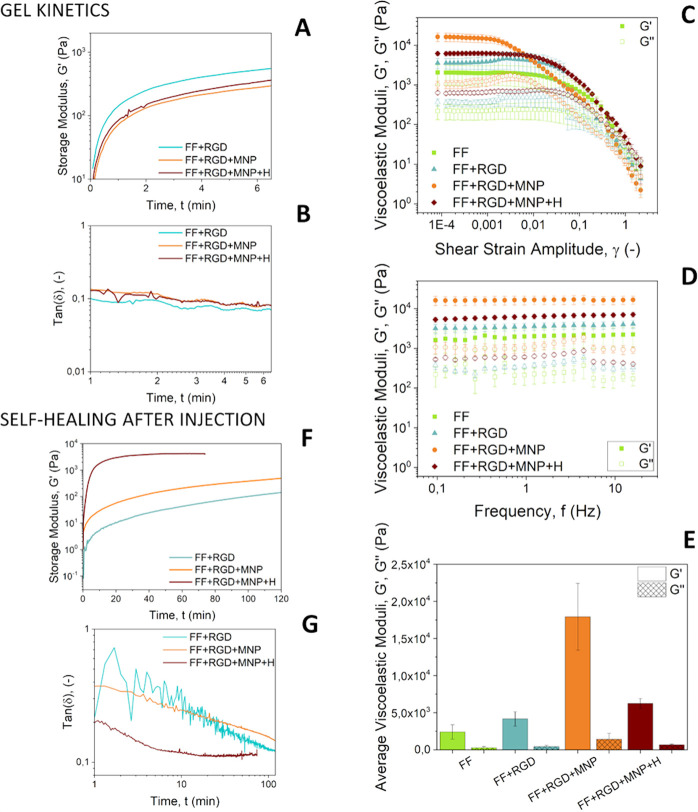
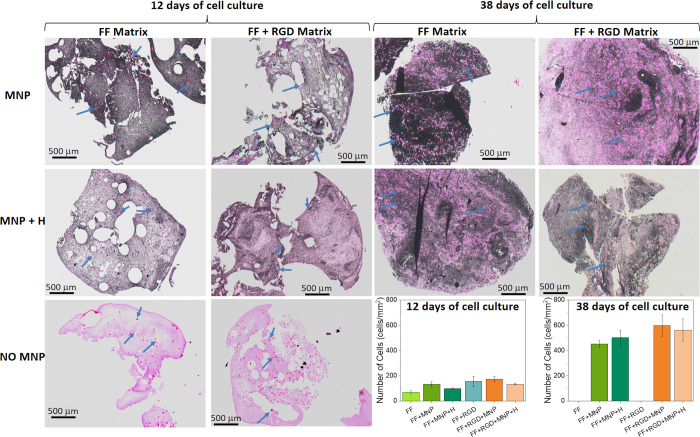
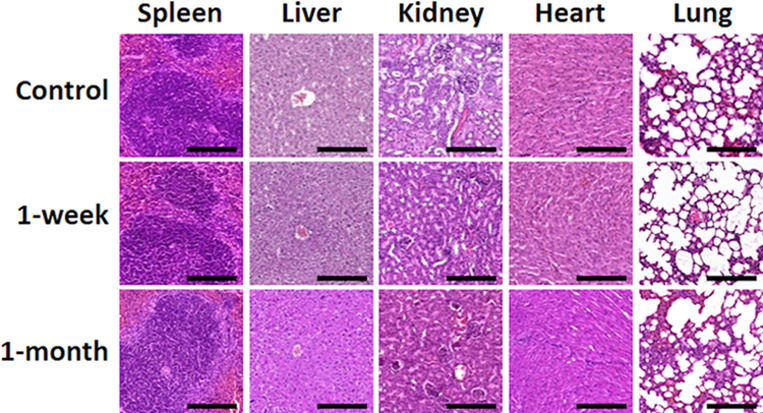
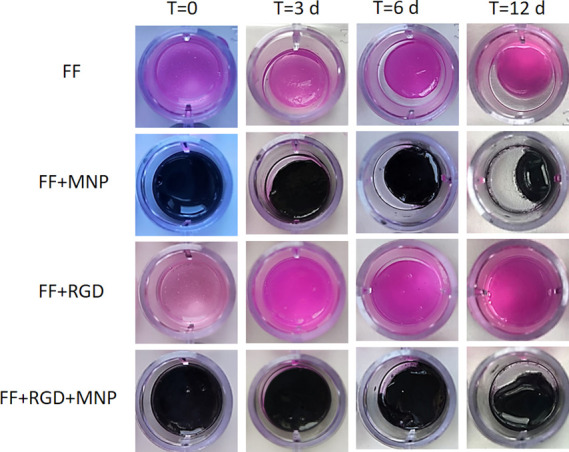
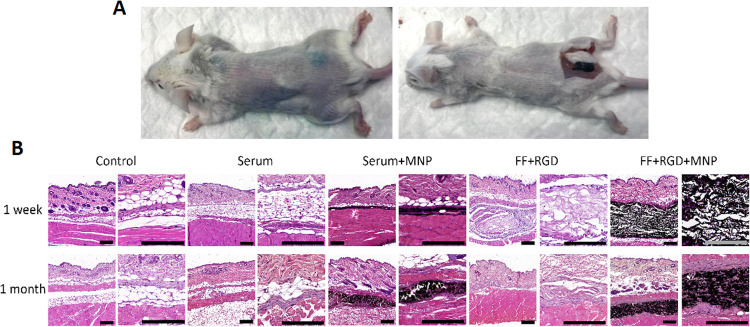
The inclusion of magnetic nanoparticles (MNP) in a hydrogel matrix to produce magnetic hydrogels has broadened the scope of these materials in biomedical research. Embedded MNP offer the possibility to modulate the physical properties of the hydrogel remotely and on demand by applying an external magnetic field. Moreover, they enable permanent changes in the mechanical properties of the hydrogel, as well as alterations in the micro- and macroporosity of its three-dimensional (3D) structure, with the associated potential to induce anisotropy. In this work, the behavior of biocompatible and biodegradable hydrogels made with Fmoc-diphenylalanine (Fmoc-FF) (Fmoc = fluorenylmethoxycarbonyl) and Fmoc-arginine-glycine-aspartic acid (Fmoc-RGD) short peptides to which MNP were incorporated was studied in detail with physicochemical, mechanical, and biological methods. The resulting hybrid hydrogels showed enhance mechanical properties and withstood injection without phase disruption. In mice, the hydrogels showed faster and improved self-healing properties compared to their nonmagnetic counterparts. Thanks to these superior physical properties and stability during culture, they can be used as 3D scaffolds for cell growth. Additionally, magnetic short-peptide hydrogels showed good biocompatibility and the absence of toxicity, which together with their enhanced mechanical stability and excellent injectability make them ideal biomaterials for in vivo biomedical applications with minimally invasive surgery. This study presents a new approach to improving the physical and mechanical properties of supramolecular hydrogels by incorporating MNP, which confer structural reinforcement and stability, remote actuation by magnetic fields, and better injectability. Our approach is a potential catalyst for expanding the biomedical applications of supramolecular short-peptide hydrogels.
将磁性纳米粒子 (MNP) 纳入水凝胶基质中以制备磁性水凝胶,拓宽了这些材料在生物医学研究中的应用范围。嵌入的 MNP 通过施加外部磁场,提供了远程和按需调节水凝胶物理性质的可能性。此外,它们使水凝胶的机械性能发生永久性变化,并改变其三维 (3D) 结构的微多孔性和大孔性,从而具有诱导各向异性的潜力。在这项工作中,详细研究了含有磁性纳米粒子的生物相容性和可生物降解的 Fmoc-二苯丙氨酸 (Fmoc-FF)(Fmoc = 芴甲氧羰基)和 Fmoc-精氨酸-甘氨酸-天冬氨酸 (Fmoc-RGD) 短肽的水凝胶的行为,这些短肽被纳入其中。使用物理化学、机械和生物学方法对其进行了研究。所得的杂化水凝胶显示出增强的机械性能,并且可以在不发生相分离的情况下进行注射。在小鼠中,与非磁性对应物相比,水凝胶显示出更快和更好的自修复性能。由于这些优越的物理性质和培养过程中的稳定性,它们可用作细胞生长的 3D 支架。此外,磁性短肽水凝胶表现出良好的生物相容性和无毒性,再加上其增强的机械稳定性和优异的可注射性,使其成为具有微创外科手术的体内生物医学应用的理想生物材料。这项研究提出了一种通过掺入 MNP 来改善超分子水凝胶的物理和机械性能的新方法,该方法赋予结构增强和稳定性、磁场的远程驱动以及更好的可注射性。我们的方法为扩展超分子短肽水凝胶的生物医学应用提供了一种潜在的催化剂。