Pritzker School of Molecular Engineering, University of Chicago, Chicago, IL 60637.
James Franck Institute, University of Chicago, Chicago, IL 60637.
Proc Natl Acad Sci U S A. 2023 Oct 17;120(42):e2305283120. doi: 10.1073/pnas.2305283120. Epub 2023 Oct 11.
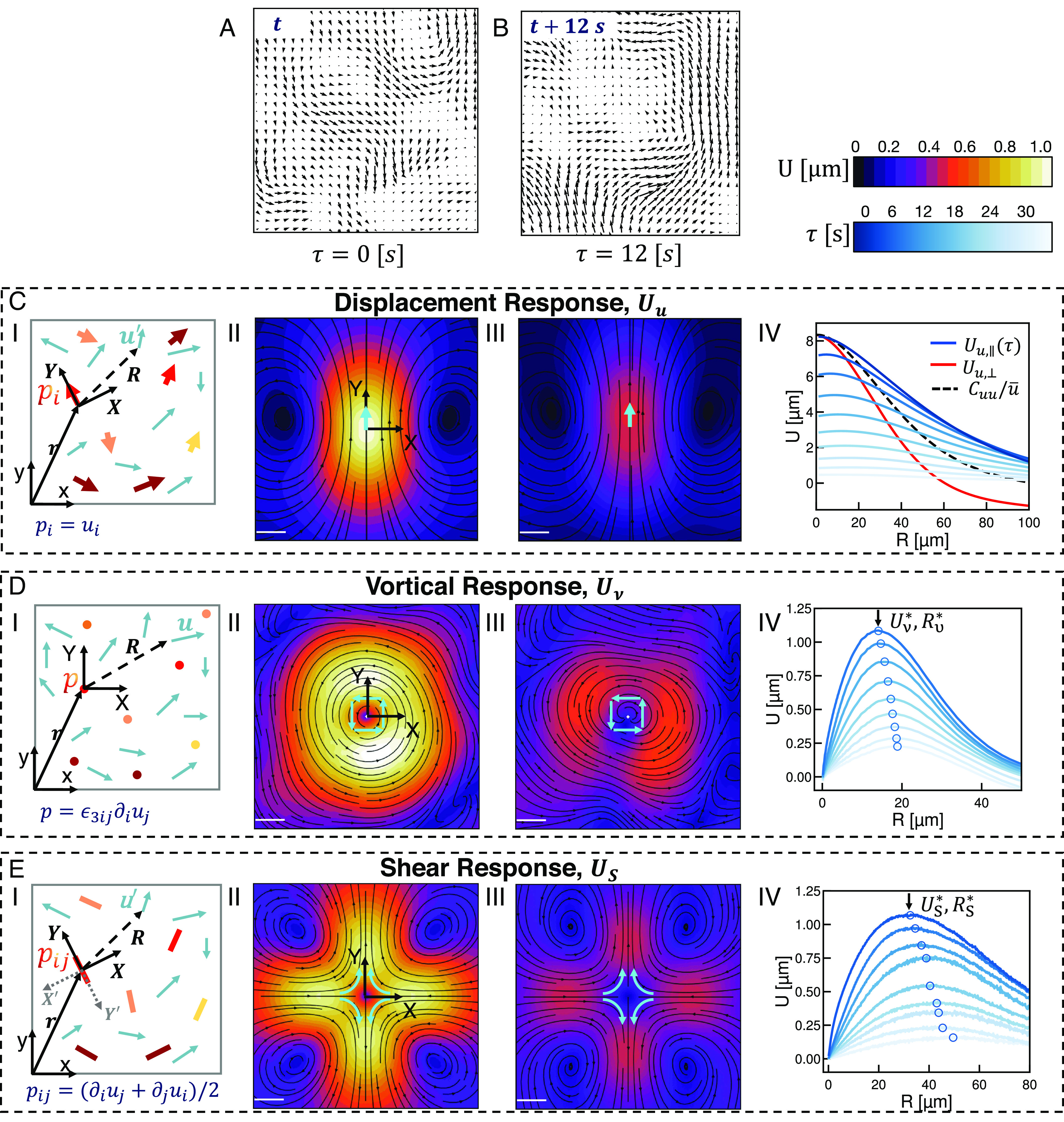
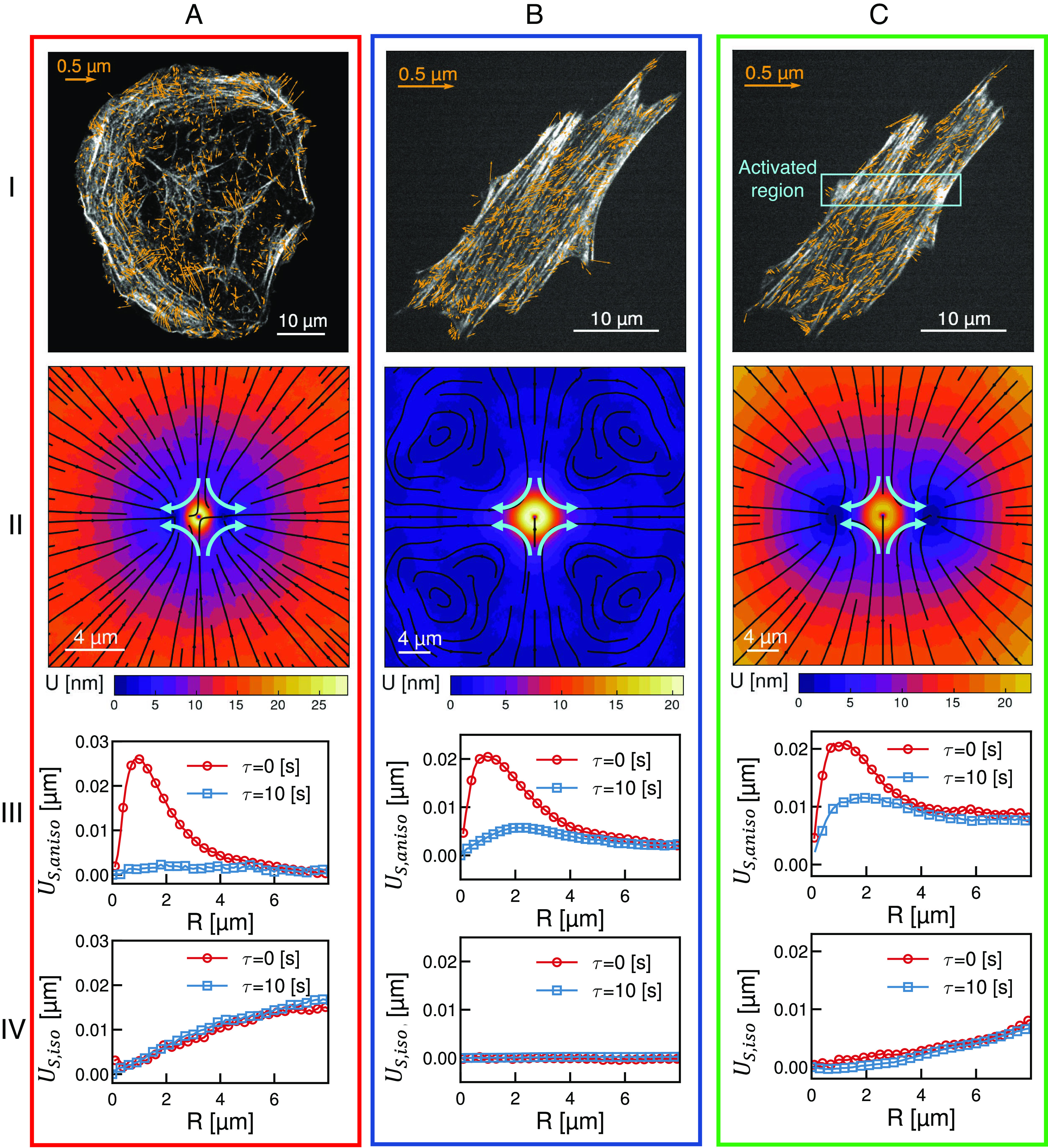
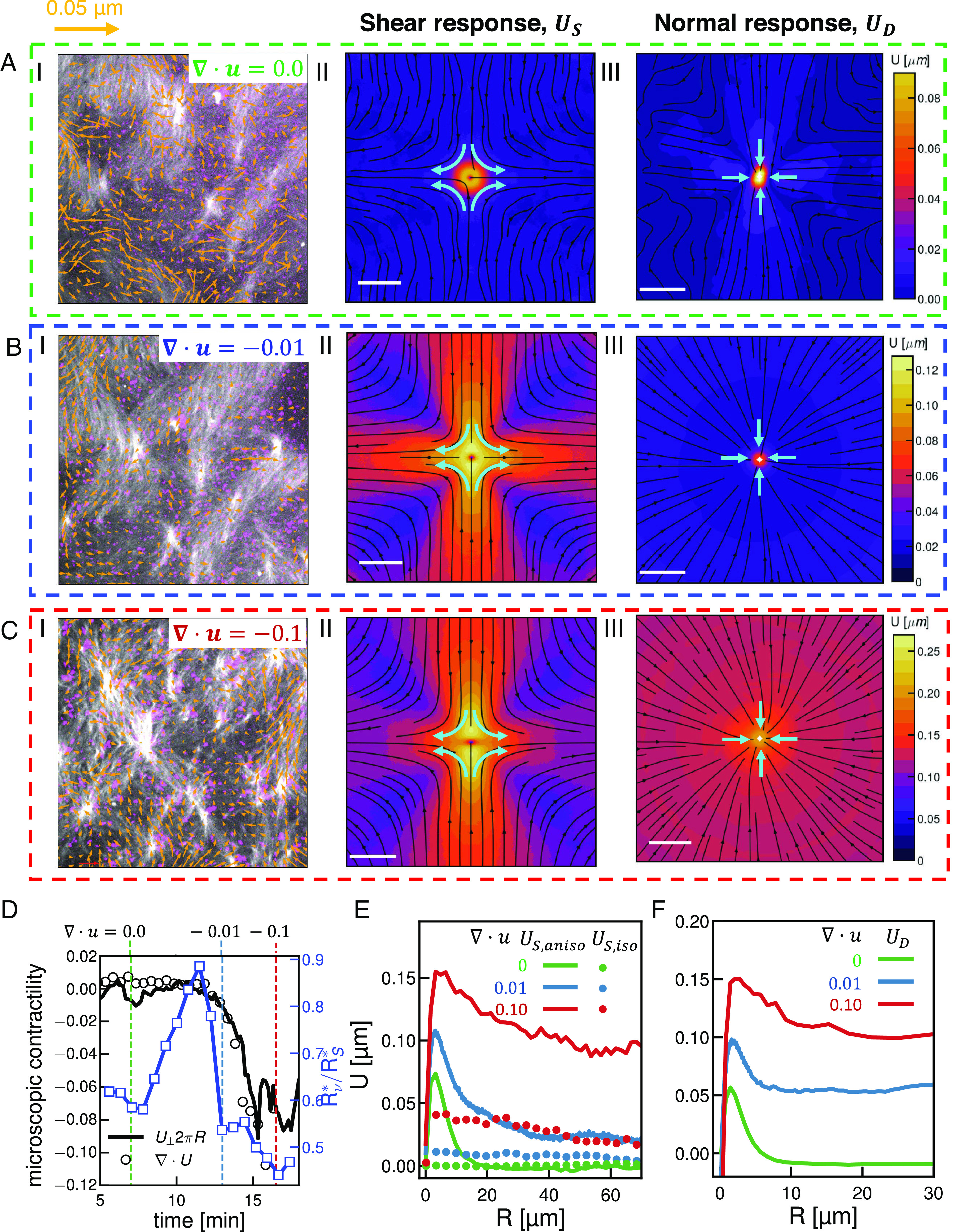
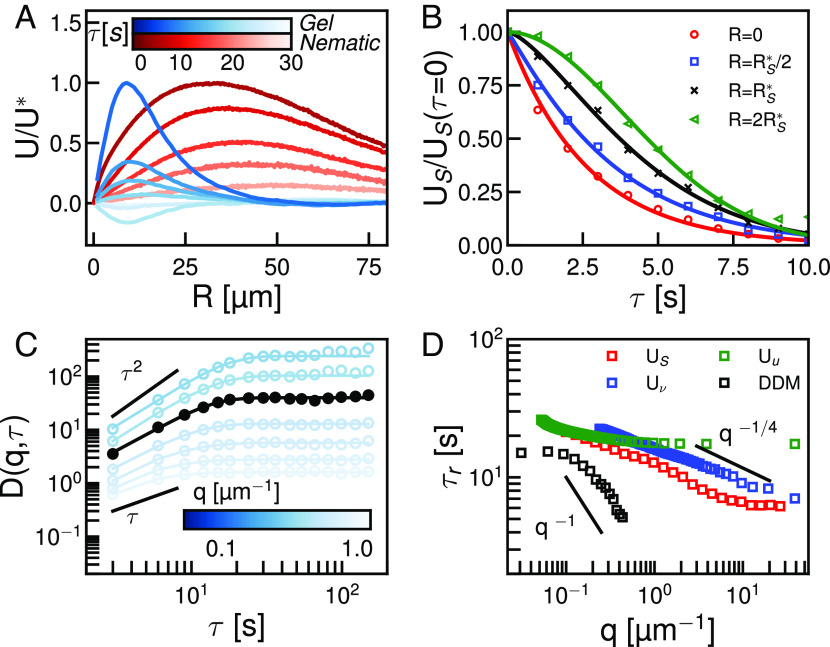
From flocks of birds to biomolecular assemblies, systems in which many individual components independently consume energy to perform mechanical work exhibit a wide array of striking behaviors. Methods to quantify the dynamics of these so-called active systems generally aim to extract important length or time scales from experimental fields. Because such methods focus on extracting scalar values, they do not wring maximal information from experimental data. We introduce a method to overcome these limitations. We extend the framework of correlation functions by taking into account the internal headings of displacement fields. The functions we construct represent the material response to specific types of active perturbation within the system. Utilizing these response functions we query the material response of disparate active systems composed of actin filaments and myosin motors, from model fluids to living cells. We show we can extract critical length scales from the turbulent flows of an active nematic, anticipate contractility in an active gel, distinguish viscous from viscoelastic dissipation, and even differentiate modes of contractility in living cells. These examples underscore the vast utility of this method which measures response functions from experimental observations of complex active systems.
从鸟类群到生物分子组装体,许多独立消耗能量来执行机械功的个体组件的系统表现出各种各样引人注目的行为。用于量化这些所谓的主动系统动力学的方法通常旨在从实验场中提取重要的长度或时间尺度。由于这些方法侧重于提取标量值,因此它们不能从实验数据中提取最大信息量。我们介绍了一种克服这些限制的方法。我们通过考虑位移场的内部标题来扩展相关函数的框架。我们构建的函数代表系统内特定类型的主动扰动的材料响应。利用这些响应函数,我们查询由肌动蛋白丝和肌球蛋白马达组成的不同主动系统的材料响应,从模型流体到活细胞。我们表明,我们可以从活跃向列的湍流中提取关键长度尺度,预测活跃凝胶的收缩性,区分粘性和粘弹性耗散,甚至区分活细胞中的收缩模式。这些例子强调了这种方法的广泛应用,该方法可以从复杂主动系统的实验观测中测量响应函数。