Van Vu Sy, Nguyen Anh-Thu, Cao Tran Anh-Thi, Thi Le Viet-Ha, Lo Tien Nu Hoang, Ho Thi H, Pham Nguyet N T, Park In, Vo Khuong Quoc
Faculty of Chemistry, University of Science, Vietnam National University - Ho Chi Minh City 227 Nguyen Van Cu Street, Ward 4, District 5 Ho Chi Minh City 70000 Vietnam
Vietnam National University Ho Chi Minh City Vietnam.
Nanoscale Adv. 2023 Sep 4;5(20):5543-5561. doi: 10.1039/d3na00483j. eCollection 2023 Oct 10.
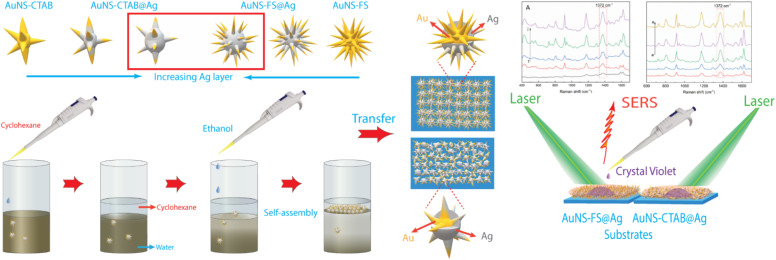
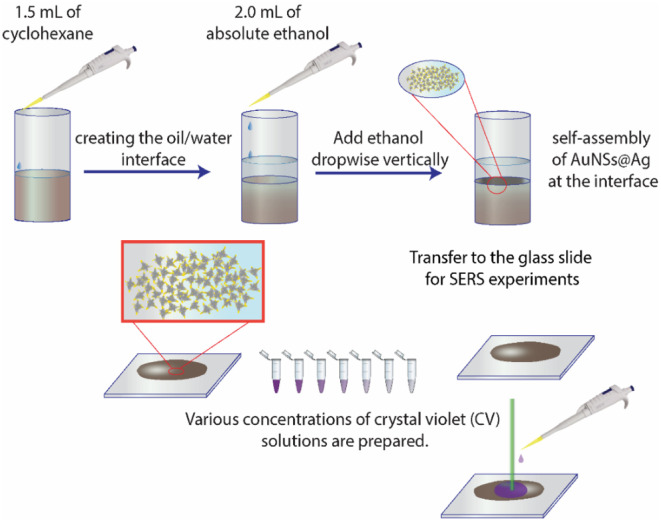
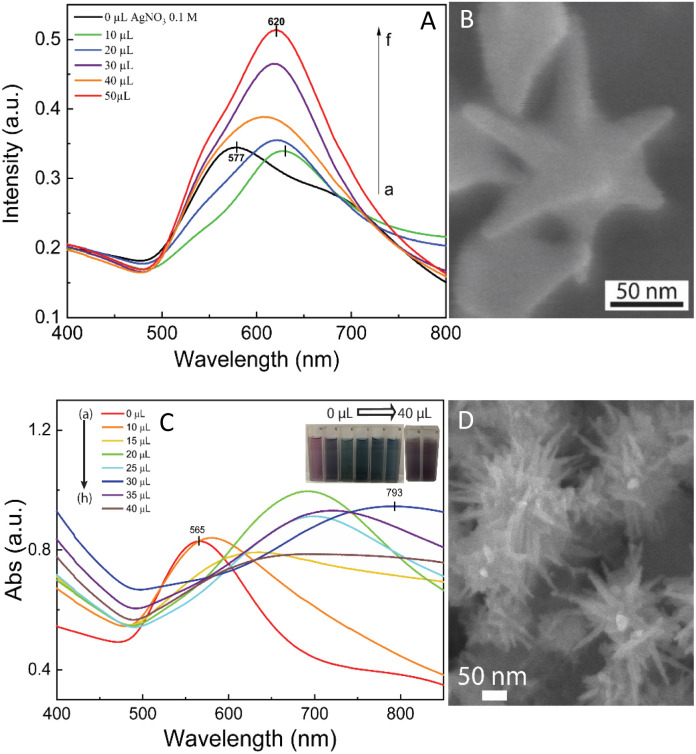
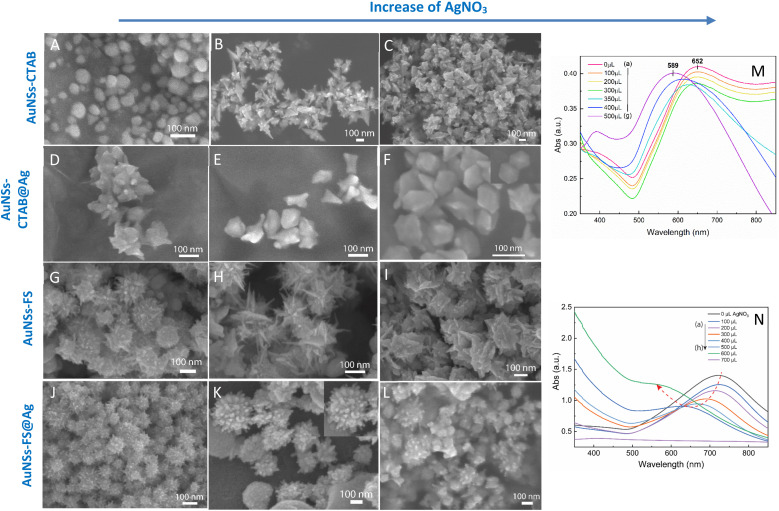
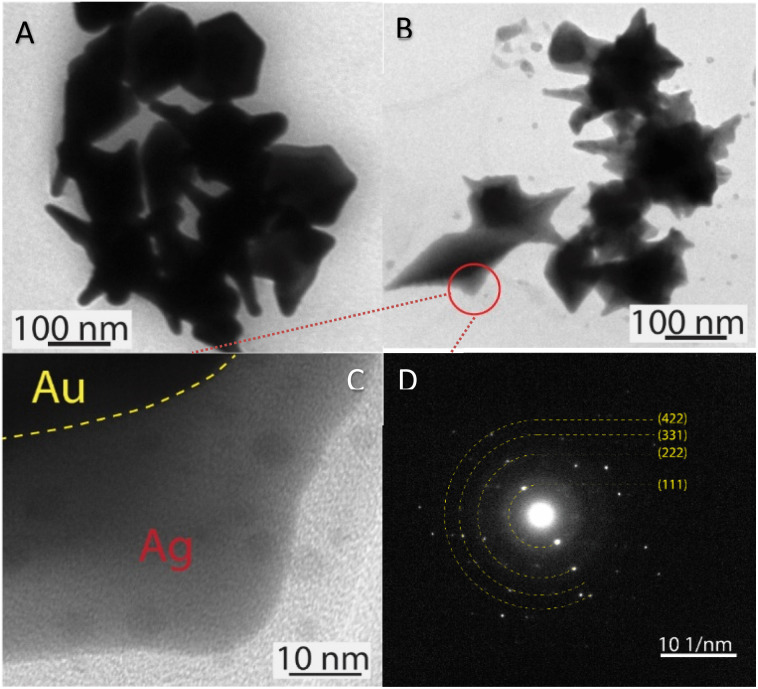
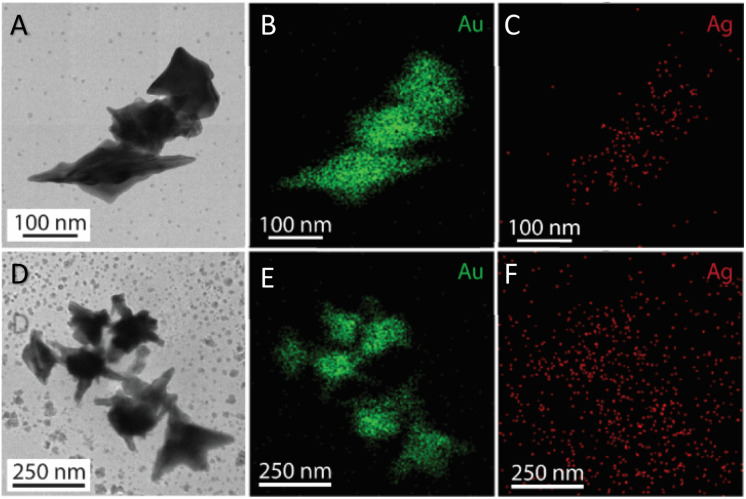
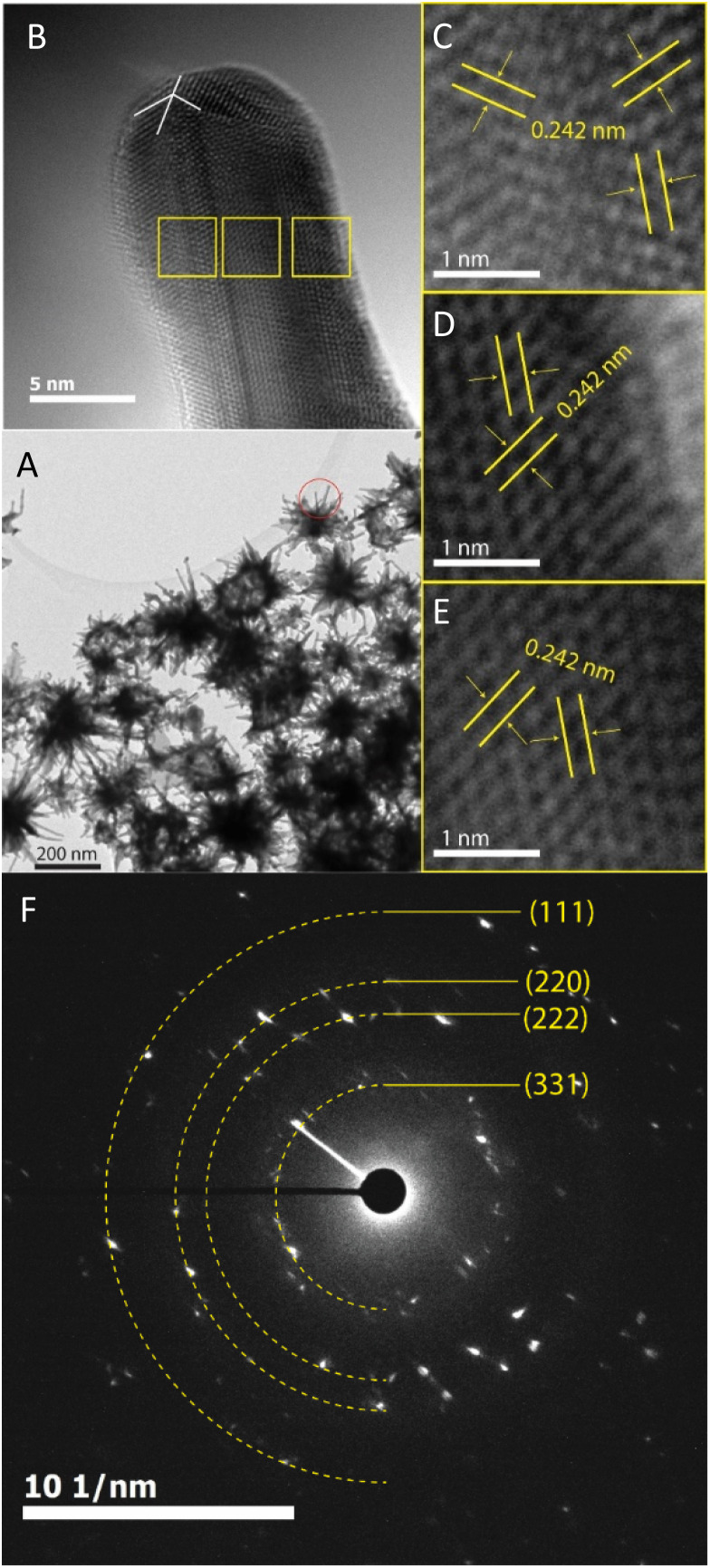
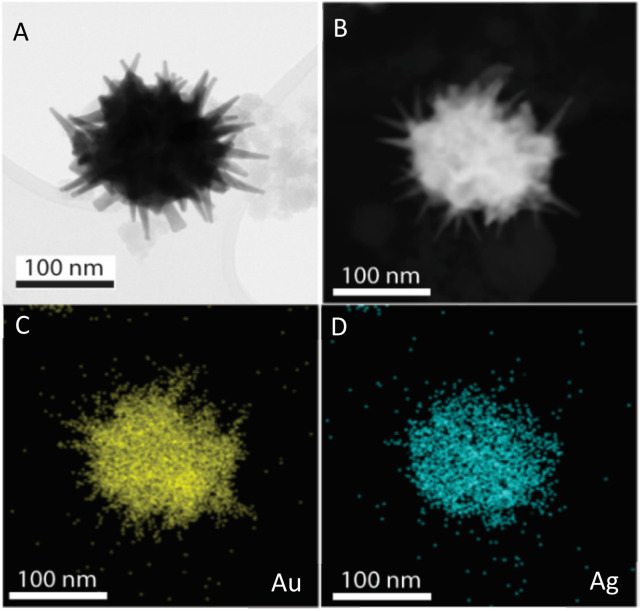
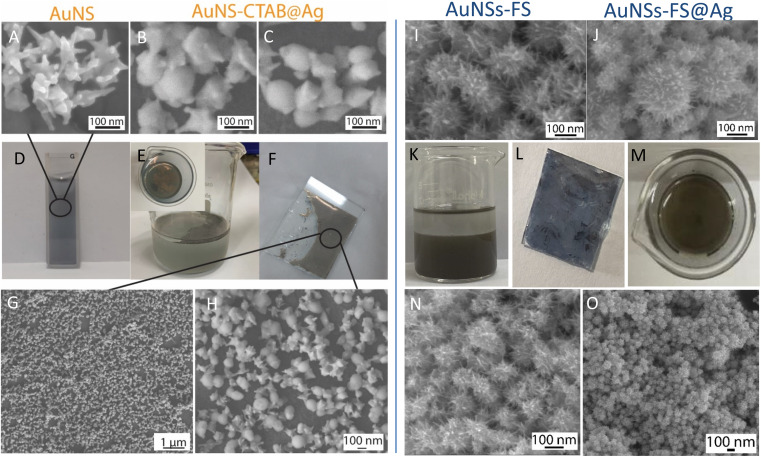
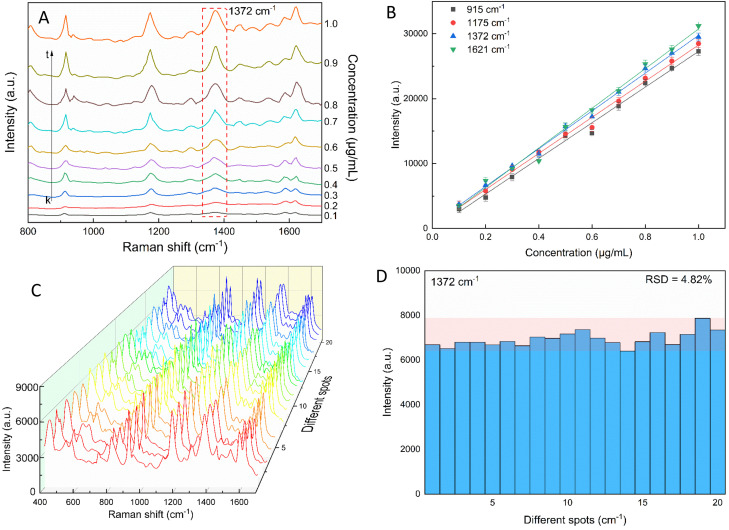
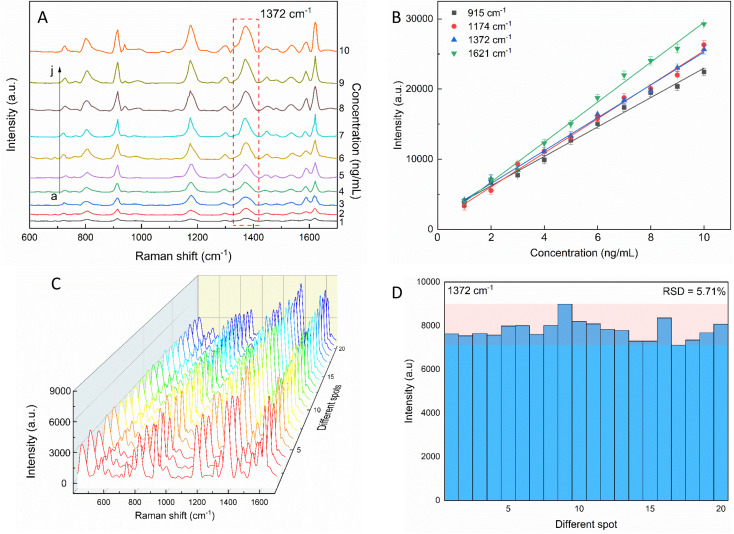
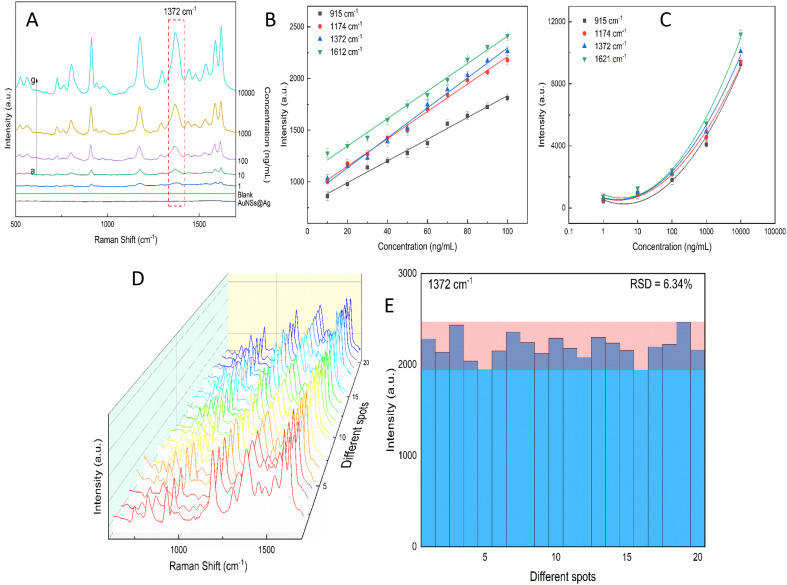
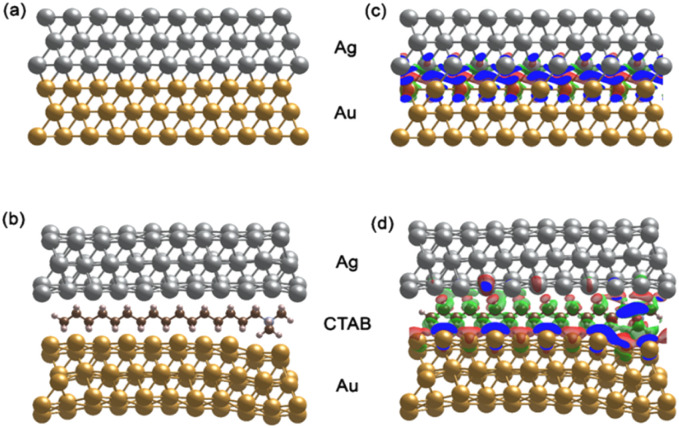
In this study, we assessed the controlled synthesis and efficacy of surface-enhanced Raman scattering (SERS) on two distinct types of star-like Au@Ag core-shell nanoarrays. These nanoarrays were designed based on gold nanostars (AuNSs), which were synthesized with and without CTAB surfactant (AuNSs-CTAB and AuNSs-FS, respectively). The AuNS-FS nanoparticles were synthesized a novel modification process, which helped overcome the previous limitations in the free-surfactant preparation of AuNSs by significantly increasing the number of branches, increasing the sharpness of the branches and minimizing the adsorption of the surfactant on the surface of AuNSs. Furthermore, the differences in the size and morphology of these AuNSs in the created nanoarrays were studied. To create the nanoarrays, a three-step method was employed, which involved the controlled synthesis of gold nanostars, covering them with a silver layer (AuNSs-FS@Ag and AuNSs-CTAB@Ag), and finally self-assembling the AuNS@Ag core-shelled nanoparticles the liquid/liquid self-assembly method. AuNSs-FS@Ag showed higher ability in forming self-assembled nanoarrays than the nanoparticles prepared using CTAB, which can be attributed to the decrease in the repulsion between the nanoparticles at the interface. The nano-substrates developed with AuNSs-FS@Ag possessed numerous "hot spots" on their surface, resulting in a highly effective SERS performance. AuNSs-FS featured a significantly higher number of sharp branches than AuNSs-CTAB, making it the better choice for creating nanoarrays. It is worth mentioning that AuNSs-CTAB did not exhibit the same benefits as AuNSs-FS. The morphology of AuNSs with numerous branches was formed by controlling the seed boiling temperature and adding a specific amount of silver ions. To compare the SERS activity between the as-prepared nano-substrates, , AuNS-CTAB@Ag and AuNS-FS@Ag self-assembled nanoarrays, low concentrations of crystal violet aqueous solution were characterized. The results showed that the developed AuNSs-FS@Ag could detect CV at trace concentrations ranging from 1.0 ng mL to 10 ng mL with a limit of detection (LOD) of 0.45 ng mL and limit of quantification (LOQ) of 1.38 ng mL. The nano-substrates remained stable for 42 days with a decrease in the intensity of the characteristic Raman peaks of CV by less than 7.0% after storage. Furthermore, the spiking method could detect trace amounts of CV in natural water from the Dong Nai River with concentrations as low as 1 to 100 ng mL, with an LOD of 6.07 ng mL and LOQ of 18.4 ng mL. This method also displayed good reproducibility with an RSD value of 5.71%. To better understand the impact of CTAB stabilization of the Au@Ag star-like nanoparticles on their surface-enhanced Raman scattering (SERS) performance, we conducted density functional theory (DFT) calculations. Our research showed that the preparation of AuNSs-FS@Ag self-assembly is an efficient, simple, and fast process, which can be easily performed in any laboratory. Furthermore, the research and development results presented herein on nanoarrays have potential application in analyzing and determining trace amounts of organic compounds in textile dyeing wastewater.
在本研究中,我们评估了表面增强拉曼散射(SERS)在两种不同类型的星形金@银核壳纳米阵列上的可控合成及效果。这些纳米阵列是基于金纳米星(AuNSs)设计的,分别在有和没有十六烷基三甲基溴化铵(CTAB)表面活性剂的情况下合成(分别为AuNSs - CTAB和AuNSs - FS)。AuNS - FS纳米粒子是通过一种新颖的改性工艺合成的,该工艺通过显著增加分支数量、提高分支的尖锐度并使表面活性剂在AuNSs表面的吸附最小化,帮助克服了先前在无表面活性剂制备AuNSs时的局限性。此外,还研究了这些AuNSs在生成的纳米阵列中的尺寸和形态差异。为了创建纳米阵列,采用了一种三步法,包括金纳米星的可控合成、用银层覆盖它们(AuNSs - FS@Ag和AuNSs - CTAB@Ag),最后通过液/液自组装方法将金@银核壳纳米粒子自组装。与使用CTAB制备的纳米粒子相比,AuNSs - FS@Ag在形成自组装纳米阵列方面表现出更高的能力,这可归因于界面处纳米粒子之间排斥力的降低。用AuNSs - FS@Ag开发的纳米基底表面有许多“热点”,从而产生了高效的SERS性能。AuNSs - FS的尖锐分支数量明显多于AuNSs - CTAB,使其成为创建纳米阵列的更好选择。值得一提的是,AuNSs - CTAB没有表现出与AuNSs - FS相同的优势。通过控制种子沸腾温度并添加特定量的银离子,形成了具有许多分支的AuNSs形态。为了比较所制备的纳米基底(即AuNS - CTAB@Ag和AuNS - FS@Ag自组装纳米阵列)之间的SERS活性,对低浓度的结晶紫水溶液进行了表征。结果表明,所开发的AuNSs - FS@Ag能够检测浓度范围为1.0 ng/mL至10 ng/mL的痕量结晶紫,检测限(LOD)为0.45 ng/mL,定量限(LOQ)为1.38 ng/mL。纳米基底在储存42天后保持稳定,结晶紫特征拉曼峰强度下降小于7.0%。此外,加标法能够检测同奈河天然水中低至1至100 ng/mL的痕量结晶紫,LOD为6.07 ng/mL,LOQ为18.4 ng/mL。该方法还具有良好的重现性,相对标准偏差(RSD)值为5.71%。为了更好地理解CTAB对金@银星形纳米粒子的稳定作用对其表面增强拉曼散射(SERS)性能的影响,我们进行了密度泛函理论(DFT)计算。我们的研究表明,通过自组装制备AuNSs - FS@Ag是一个高效、简单且快速的过程,在任何实验室都能轻松进行。此外,本文介绍的关于纳米阵列的研发成果在分析和测定纺织印染废水中痕量有机化合物方面具有潜在应用。