MOX, Department of Mathematics, Politecnico di Milano, Milano, Italy.
mathLab, Mathematics Area, SISSA International School for Advanced Studies, Trieste, Italy.
BMC Bioinformatics. 2023 Oct 13;24(1):389. doi: 10.1186/s12859-023-05513-8.
Simulating the cardiac function requires the numerical solution of multi-physics and multi-scale mathematical models. This underscores the need for streamlined, accurate, and high-performance computational tools. Despite the dedicated endeavors of various research teams, comprehensive and user-friendly software programs for cardiac simulations, capable of accurately replicating both normal and pathological conditions, are still in the process of achieving full maturity within the scientific community.
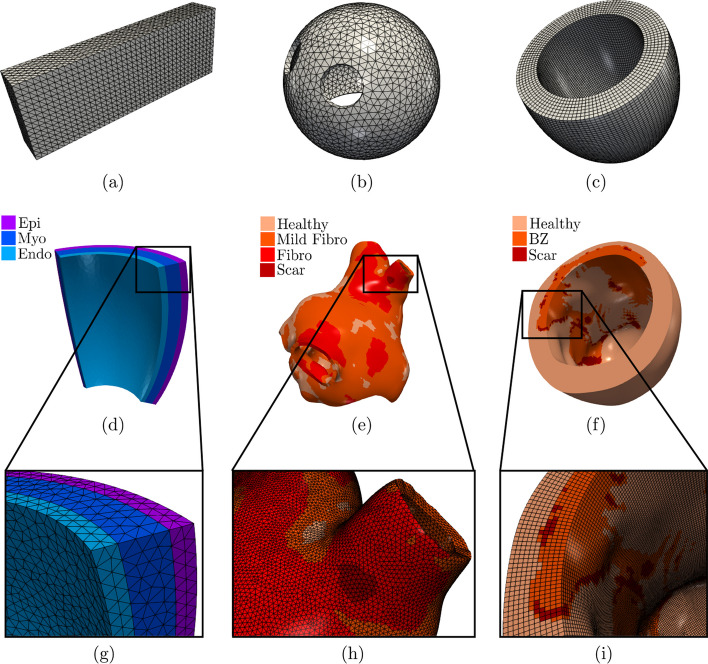
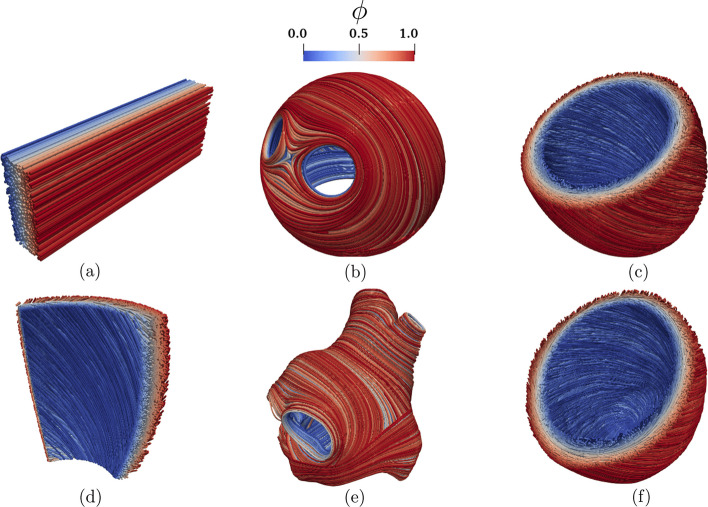
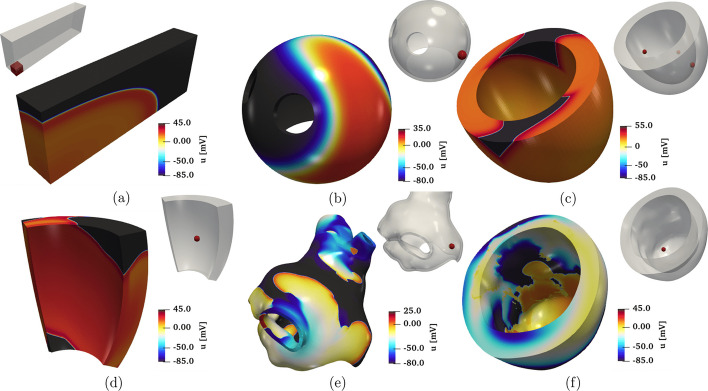
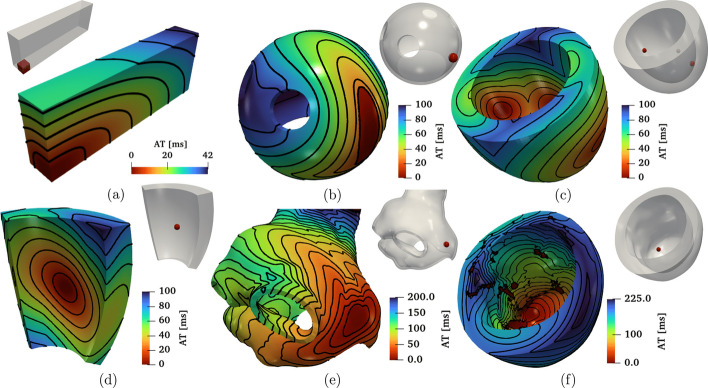
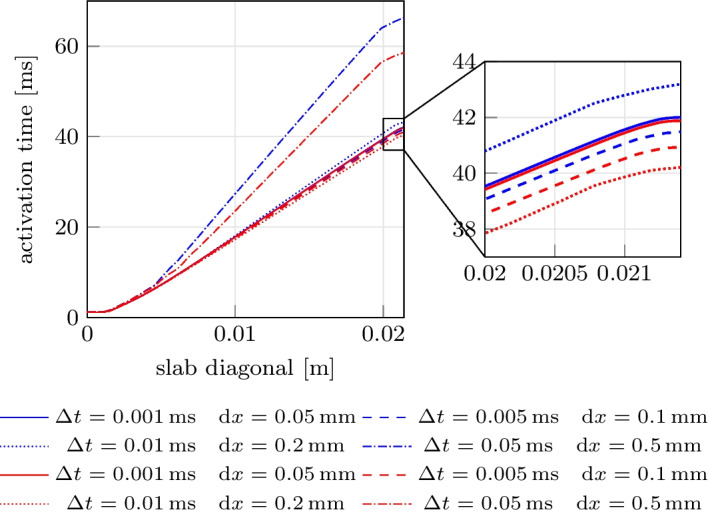
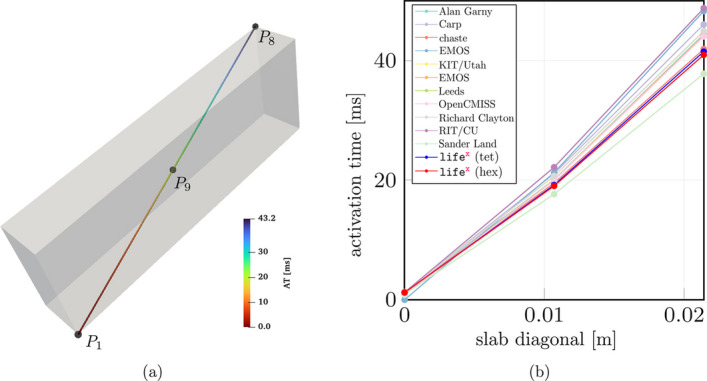
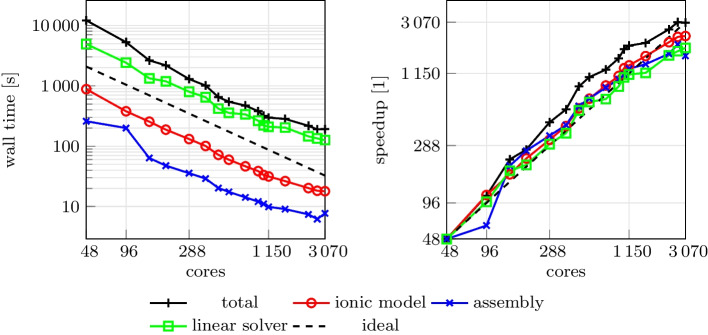
This work introduces [Formula: see text]-ep, a publicly available software for numerical simulations of the electrophysiology activity of the cardiac muscle, under both normal and pathological conditions. [Formula: see text]-ep employs the monodomain equation to model the heart's electrical activity. It incorporates both phenomenological and second-generation ionic models. These models are discretized using the Finite Element method on tetrahedral or hexahedral meshes. Additionally, [Formula: see text]-ep integrates the generation of myocardial fibers based on Laplace-Dirichlet Rule-Based Methods, previously released in Africa et al., 2023, within [Formula: see text]-fiber. As an alternative, users can also choose to import myofibers from a file. This paper provides a concise overview of the mathematical models and numerical methods underlying [Formula: see text]-ep, along with comprehensive implementation details and instructions for users. [Formula: see text]-ep features exceptional parallel speedup, scaling efficiently when using up to thousands of cores, and its implementation has been verified against an established benchmark problem for computational electrophysiology. We showcase the key features of [Formula: see text]-ep through various idealized and realistic simulations conducted in both normal and pathological scenarios. Furthermore, the software offers a user-friendly and flexible interface, simplifying the setup of simulations using self-documenting parameter files.
[Formula: see text]-ep provides easy access to cardiac electrophysiology simulations for a wide user community. It offers a computational tool that integrates models and accurate methods for simulating cardiac electrophysiology within a high-performance framework, while maintaining a user-friendly interface. [Formula: see text]-ep represents a valuable tool for conducting in silico patient-specific simulations.
模拟心脏功能需要求解多物理场和多尺度数学模型。这凸显了对简化、准确和高性能计算工具的需求。尽管各个研究团队都付出了努力,但在科学界,能够准确模拟正常和病理条件的全面且用户友好的心脏模拟软件程序仍在不断完善。
本工作介绍了 [Formula: see text]-ep,这是一个用于在正常和病理条件下模拟心脏肌肉电生理活动的数值模拟的开源软件。[Formula: see text]-ep 使用单域方程来模拟心脏的电活动。它结合了现象学和第二代离子模型。这些模型使用有限元方法在四面体或六面体网格上离散化。此外,[Formula: see text]-ep 集成了基于拉普拉斯-狄利克雷规则的方法生成心肌纤维的功能,该方法先前在 Africa 等人 2023 年的研究中发布,集成在 [Formula: see text]-fiber 中。作为替代方案,用户也可以选择从文件中导入肌纤维。本文提供了 [Formula: see text]-ep 所基于的数学模型和数值方法的简要概述,以及全面的实现细节和用户指南。[Formula: see text]-ep 具有出色的并行加速能力,在使用多达数千个内核时高效扩展,其实现已通过计算电生理学的基准问题进行了验证。我们通过在正常和病理情况下进行的各种理想化和现实模拟展示了 [Formula: see text]-ep 的关键功能。此外,该软件提供了用户友好且灵活的接口,通过使用自文档化的参数文件简化了模拟设置。
[Formula: see text]-ep 为广大用户提供了易于访问的心脏电生理模拟。它提供了一种计算工具,在高性能框架内集成了模型和准确的方法来模拟心脏电生理,同时保持用户友好的界面。[Formula: see text]-ep 是进行计算机仿真患者特定模拟的有价值工具。