Malik Ishaq, Perez Arnaldo, Toombs Elaine, Schmidt Fred, Olthuis Janine V, Charlton Jaidyn, Grassia Elizabeth, Squier Crystal, Stasiuk Kristine, Bobinski Tina, Mushquash Aislin R
Department of Psychology, Lakehead University, Thunder Bay, ON, Canada.
Faculty of Medicine and Dentistry, University of Alberta, Edmonton, AB, Canada.
Front Digit Health. 2023 Sep 27;5:1197362. doi: 10.3389/fdgth.2023.1197362. eCollection 2023.
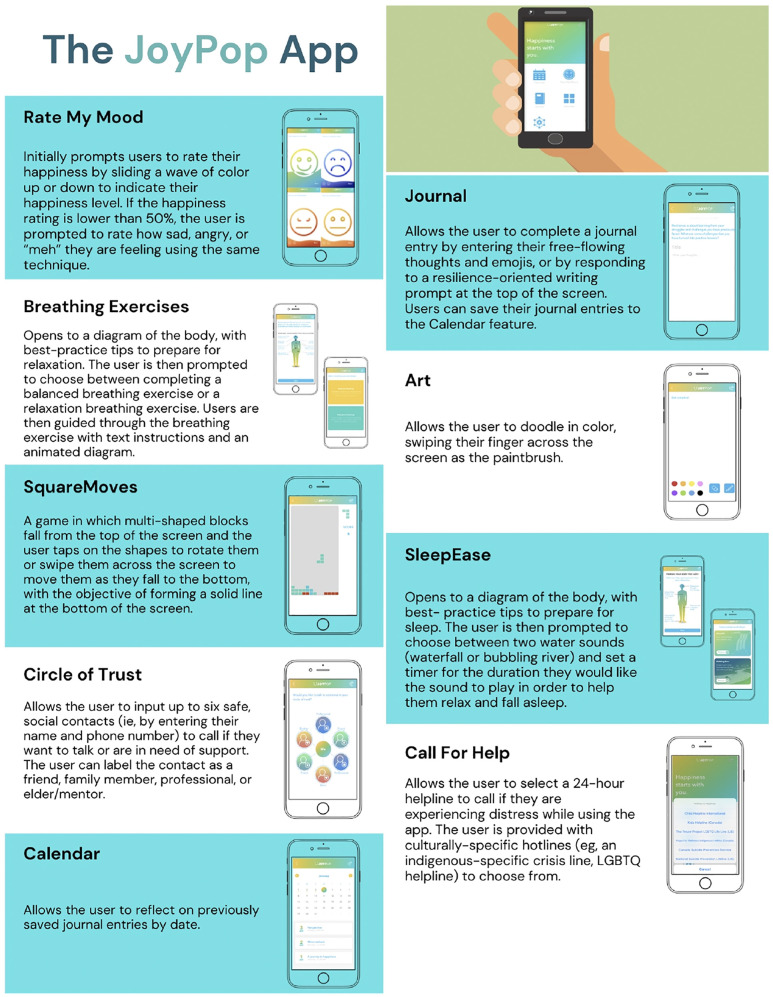
Mobile health (mHealth) apps are a promising adjunct to traditional mental health services, especially in underserviced areas. Developed to foster resilience in youth, the JoyPop™ app has a growing evidence base showing improvement in emotion regulation and mental health symptoms among youth. However, whether this novel technology will be accepted among those using or providing mental health services remains unknown. This study aimed to evaluate the JoyPop™ app's acceptance among (a) a clinical sample of youth and (b) mental health service providers.
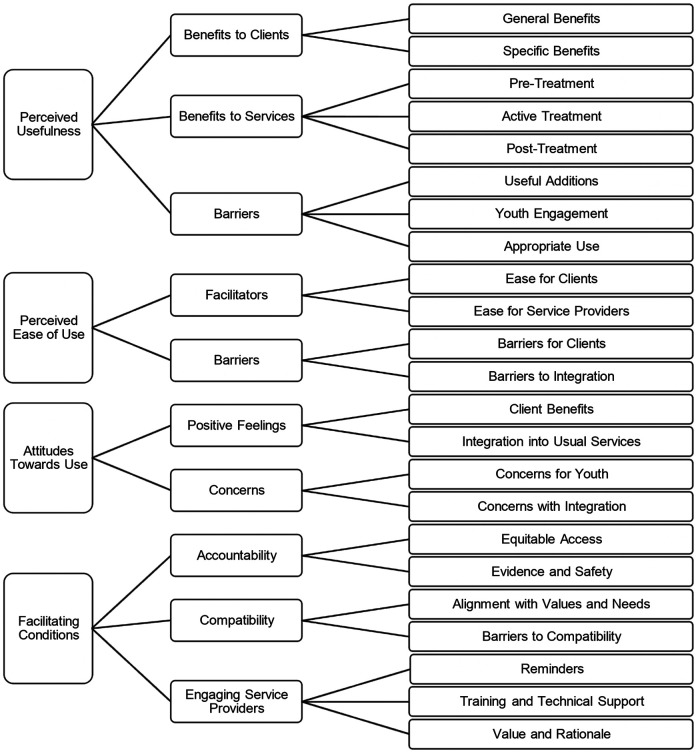
A qualitative descriptive approach involving one-on-one semi-structured interviews was conducted. Interviews were guided by the Technology Acceptance Model and were analyzed using a deductive-inductive content analysis approach.
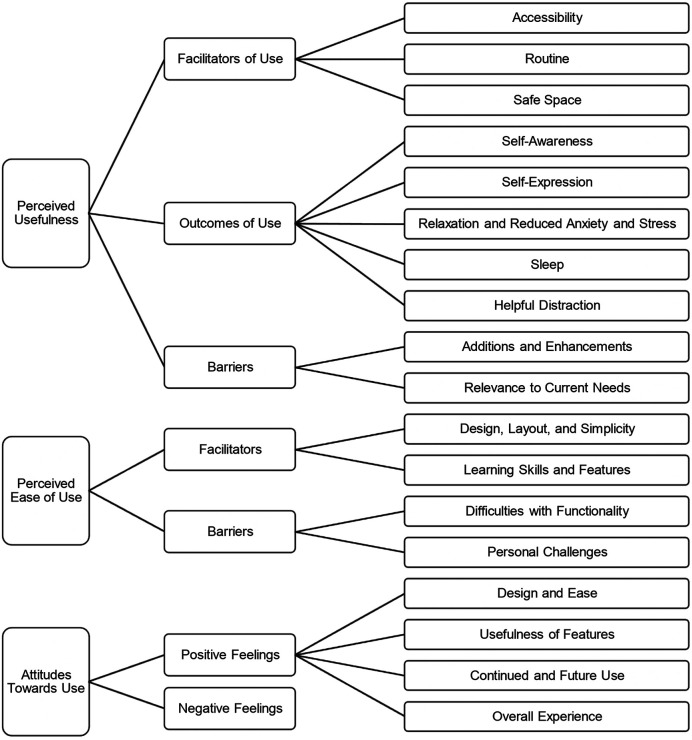
All youth (= 6 females; = 14.60, range 12-17) found the app easy to learn and use and expressed positive feelings towards using the app. Youth found the app useful because it facilitated accessibility to helpful coping skills (e.g., journaling to express their emotions; breathing exercises to increase calmness) and positive mental health outcomes (e.g., increased relaxation and reduced stress). All service providers (= 7 females; = 43.75, range 32-60) perceived the app to be useful and easy to use by youth within their services and expressed positive feelings about integrating the app into usual care. Service providers also highlighted various organizational factors affecting the app's acceptance. Youth and service providers raised some concerns about apps in general and provided recommendations to improve the JoyPop™ app.
Results support youth and service providers' acceptance of the JoyPop™ app and lend support for it as an adjunctive resource to traditional mental health services for youth with emotion regulation difficulties.
移动健康(mHealth)应用程序是传统心理健康服务的一种有前景的辅助手段,特别是在服务不足的地区。JoyPop™应用程序旨在培养青少年的恢复力,越来越多的证据表明,它能改善青少年的情绪调节和心理健康症状。然而,这项新技术能否被使用或提供心理健康服务的人群所接受仍不明确。本研究旨在评估JoyPop™应用程序在以下两类人群中的接受度:(a)青少年临床样本;(b)心理健康服务提供者。
采用定性描述性方法,进行一对一的半结构化访谈。访谈以技术接受模型为指导,并使用演绎-归纳内容分析方法进行分析。
所有青少年(=6名女性;=14.60,年龄范围12 - 17岁)都认为该应用程序易于学习和使用,并对使用该应用程序表达了积极的感受。青少年认为该应用程序很有用,因为它便于获取有用的应对技巧(例如,通过写日记来表达情绪;通过呼吸练习来增加平静感)以及积极的心理健康结果(例如,增强放松感和减轻压力)。所有服务提供者(=7名女性;=43.75,年龄范围32 - 60岁)都认为该应用程序对其服务范围内的青少年有用且易于使用,并对将该应用程序纳入常规护理表达了积极的感受。服务提供者还强调了影响该应用程序接受度的各种组织因素。青少年和服务提供者对一般应用程序提出了一些担忧,并提出了改进JoyPop™应用程序的建议。
结果支持青少年和服务提供者对JoyPop™应用程序的接受,并为其作为情绪调节困难青少年传统心理健康服务的辅助资源提供了支持。