
虚拟现实和混合现实在颅内动脉瘤手术规划中的3D可视化应用:一项系统综述。
Application of virtual and mixed reality for 3D visualization in intracranial aneurysm surgery planning: a systematic review.
作者信息
Colombo Elisa, Lutters Bart, Kos Tessa, van Doormaal Tristan
机构信息
Department of Neurosurgery and Klinisches Neurozentrum Zurich ZH, Universität Zürich; Universitätsspital Zürich, Zurich, Switzerland.
Julius Center for Health Sciences and Primary Care, Medical Humanities, University Medical Center Utrecht, Utrecht, Netherlands.
出版信息
Front Surg. 2023 Sep 27;10:1227510. doi: 10.3389/fsurg.2023.1227510. eCollection 2023.
BACKGROUND
Precise preoperative anatomical visualization and understanding of an intracranial aneurysm (IA) are fundamental for surgical planning and increased intraoperative confidence. Application of virtual reality (VR) and mixed reality (MR), thus three-dimensional (3D) visualization of IAs could be significant in surgical planning. Authors provide an up-to-date overview of VR and MR applied to IA surgery, with specific focus on tailoring of the surgical treatment.
METHODS
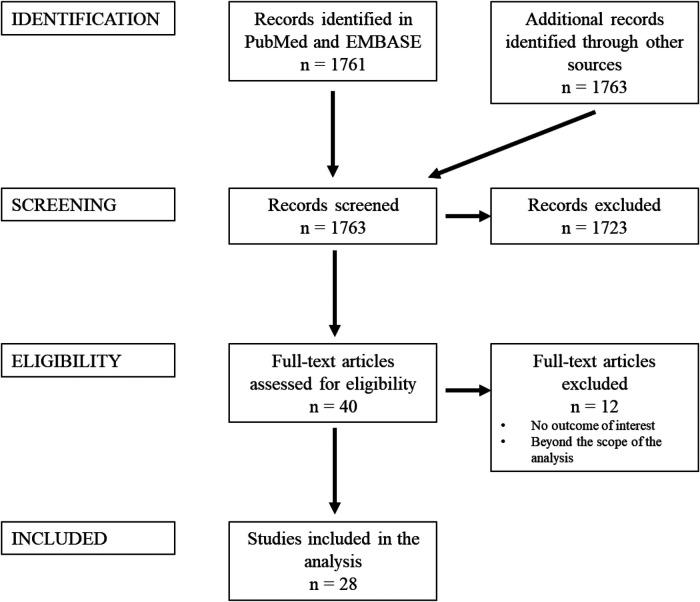
A systematic analysis of the literature was performed in accordance with the PRISMA guidelines. Pubmed, and Embase were searched to identify studies reporting use of MR and VR 3D visualization in IA surgery during the last 25 years. Type and number of IAs, category of input scan, visualization techniques (screen, glasses or head set), inclusion of haptic feedback, tested population (residents, fellows, attending neurosurgeons), and aim of the study (surgical planning/rehearsal, neurosurgical training, methodological validation) were noted.
RESULTS
Twenty-eight studies were included. Eighteen studies (64.3%) applied VR, and 10 (35.7%) used MR. A positive impact on surgical planning was documented by 19 studies (67.9%): 17 studies (60.7%) chose the tailoring of the surgical approach as primary outcome of the analysis. A more precise anatomical visualization and understanding with VR and MR was endorsed by all included studies (100%).
CONCLUSION
Application of VR and MR to perioperative 3D visualization of IAs allowed an improved understanding of the patient-specific anatomy and surgical preparation. This review describes a tendency to utilize mostly VR-platforms, with the primary goals of a more accurate anatomical understanding, surgical planning and rehearsal.
背景
精确的术前颅内动脉瘤(IA)解剖可视化及理解对于手术规划和增强术中信心至关重要。虚拟现实(VR)和混合现实(MR)的应用,即IA的三维(3D)可视化,在手术规划中可能具有重要意义。作者提供了应用于IA手术的VR和MR的最新综述,特别关注手术治疗的定制。
方法
根据PRISMA指南进行文献系统分析。检索了PubMed和Embase,以确定报告过去25年中在IA手术中使用MR和VR 3D可视化的研究。记录IA的类型和数量、输入扫描类别、可视化技术(屏幕、眼镜或头戴设备)、是否包含触觉反馈、受试人群(住院医师、研究员、主治神经外科医生)以及研究目的(手术规划/预演、神经外科培训、方法学验证)。
结果
纳入28项研究。18项研究(64.3%)应用了VR,10项(35.7%)使用了MR。19项研究(67.9%)记录了对手术规划的积极影响:17项研究(60.7%)选择手术入路的定制作为分析的主要结果。所有纳入研究(100%)都认可VR和MR能实现更精确的解剖可视化及理解。
结论
VR和MR应用于IA围手术期3D可视化可改善对患者特定解剖结构的理解和手术准备。本综述描述了主要利用VR平台的趋势,其主要目标是更准确的解剖理解、手术规划和预演。
 Zotero 插件