Tu Wenjing, Yan Shuxia, Yin Tingting, Zhang Sumin, Xu Wenjing, Zhang Ping, Xu Guihua
Nursing School, Nanjing University of Chinese Medicine, Nanjing, China.
Anorectal Department, Nanjing City Hospital of Traditional Chinese Medicine, Nanjing, China.
Digit Health. 2023 Oct 11;9:20552076231205741. doi: 10.1177/20552076231205741. eCollection 2023 Jan-Dec.
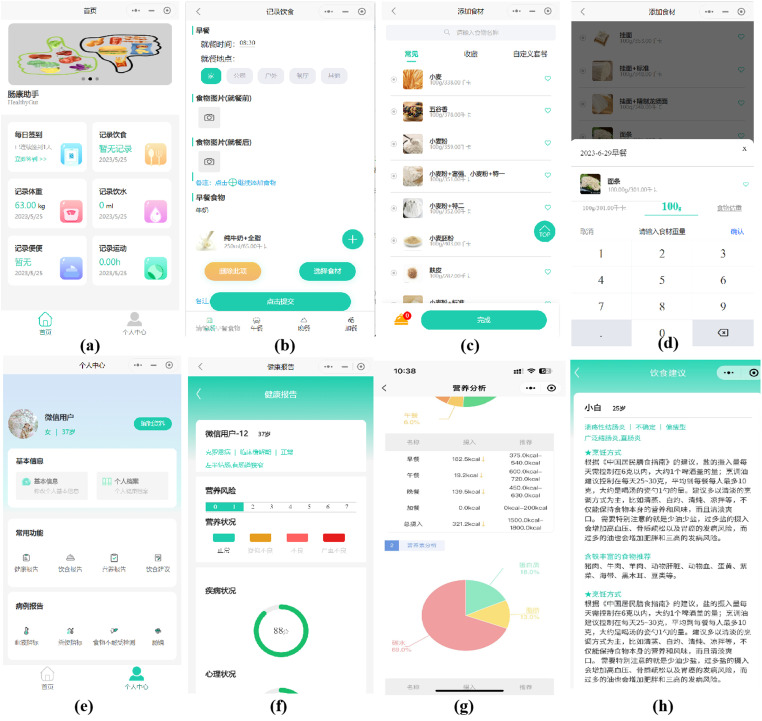
Dietary management plays a crucial role in the treatment of patients with ulcerative colitis (UC). While various e-services provide dietary advice, the long-term dietary management requires continuous monitoring and dynamic adjustment to accommodate the evolving nature of the disease and meet the patients' nutritional needs. Consequently, the development of a novel dietary management tool that incorporates diet tracking, personalized nutritional feedback, and evidence-based advice becomes imperative. This study aims to address this need by developing a WeChat applet called "HealthyGut" specifically designed for the dietary management of UC patients, and evaluate its feasibility, acceptability, and preliminary efficacy.
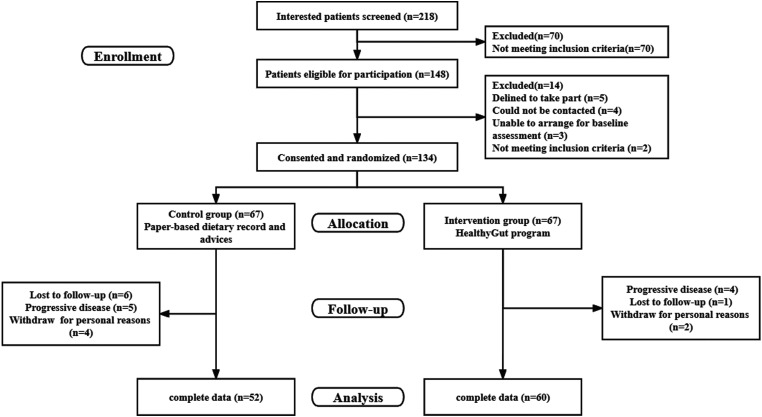
A total of 134 UC patients were equally allocated into the intervention group (receiving a 12-week mobile-based dietary management via HealthyGut) and control group (receiving a paper-based food diary and routine advice). The feasibility outcomes were recruitment, retention, engagement, satisfaction, and acceptability in the intervention group. Dietary intakes were effective outcomes.
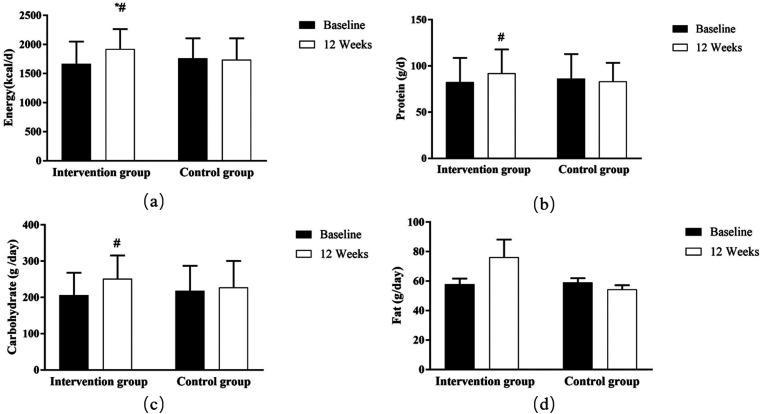
Both groups had satisfactory retention rates (89.6% and 77.6%, respectively). The System Usability Scale in the intervention group yielded "good usability" with a mean score of 79.63 (SD 7.39), and all participants reported good user experiences and perceived benefits after using HealthyGut. At week 12, intervention responders reported significantly higher daily energy intake than control group (Z = -3.089, p = 0.002).
The results display that HealthyGut as a dietary management tool is feasible and accepted by UC patients, and it may help them make healthier food choices. Larger sample studies should be considered in the future.
饮食管理在溃疡性结肠炎(UC)患者的治疗中起着至关重要的作用。虽然各种电子服务提供饮食建议,但长期的饮食管理需要持续监测和动态调整,以适应疾病的演变性质并满足患者的营养需求。因此,开发一种结合饮食跟踪、个性化营养反馈和循证建议的新型饮食管理工具变得势在必行。本研究旨在通过开发一款名为“健康肠道”的微信小程序来满足这一需求,该小程序专为UC患者的饮食管理而设计,并评估其可行性、可接受性和初步疗效。
总共134名UC患者被平均分配到干预组(通过“健康肠道”接受为期12周的基于手机的饮食管理)和对照组(接受纸质食物日记和常规建议)。可行性结果包括干预组的招募、留存、参与度、满意度和可接受性。饮食摄入量是有效结果。
两组的留存率都令人满意(分别为89.6%和77.6%)。干预组的系统可用性量表得出“良好可用性”,平均得分为79.63(标准差7.39),所有参与者在使用“健康肠道”后都报告了良好的用户体验和感知益处。在第12周时,干预组有反应者报告的每日能量摄入量显著高于对照组(Z = -3.089,p = 0.002)。
结果表明,“健康肠道”作为一种饮食管理工具是可行的,并且被UC患者所接受,它可能有助于他们做出更健康的食物选择。未来应考虑进行更大样本的研究。