Nazari Shima, Norberg Astrid, Strandberg Gunilla, Åhlin Johan, Ericson-Lidman Eva, Mazaheri Monir
School of Nursing and Midwifery, Tehran University of Medical Sciences, Tehran, Iran.
Department of Nursing, Umeå University, Umeå, Sweden.
BMC Nurs. 2023 Oct 13;22(1):379. doi: 10.1186/s12912-023-01529-w.
Considering cultural influences, it is important to study the perceptions and stress of conscience in different contexts. This study aimed to investigate the association between perceptions of conscience, stress of conscience, and burnout among nursing staff working in older people care settings in Tehran.
This was a descriptive, cross-sectional study. A total of 161 participants completed the Perceptions of Conscience Questionnaire, Stress of Conscience Questionnaire, and Oldenburg Burnout Inventory, 2019. All nursing staff working at the 20 contacted nursing homes agreed to participate in the study. The descriptive and inferential analysis was conducted through SPSS, using T-tests and one-way between-groups analysis of variance, Chi-square and t-tests, Cohen's d (d), Eta-squared (η2), and Phi coefficient (φ), Partial least squares regression (PLSR), jackknife approximate t-tests of the regression coefficients, and jackknife 95% confidence intervals of the regression coefficients.
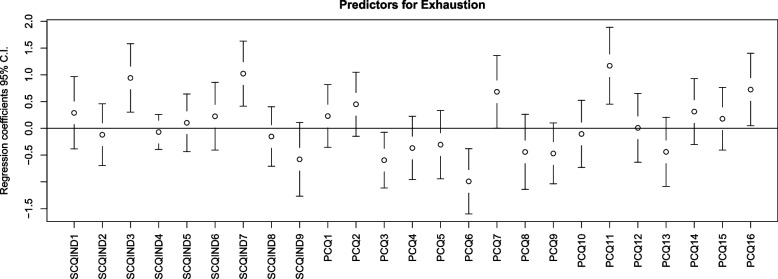
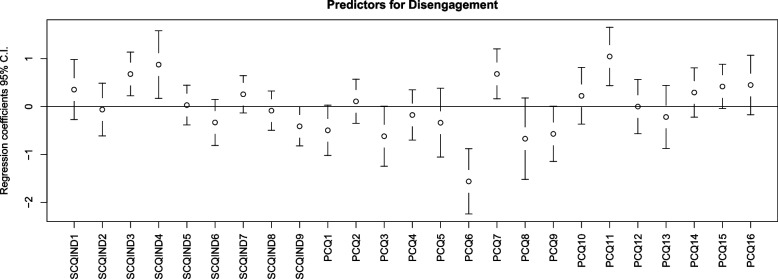
The nursing staff perceived their conscience mainly as an authority, asset, and warning signal. Impact of workload on family life was the most common source of stress for the nursing staff. Dealing with incompatible demands, the impact of workload on family life, witnessing insulated patients, inability to meet one's standards in providing care, and perception of conscience as a burden were strongly associated with the burnout.
Perceiving conscience as a warning signal or authority may serve as a buffer against burnout among nursing staff. This study highlights the need for further exploration of perceptions of conscience in different cultural and social backgrounds.
考虑到文化影响,研究不同背景下的良心观念和良心压力很重要。本研究旨在调查德黑兰老年人护理机构中护理人员的良心观念、良心压力与职业倦怠之间的关联。
这是一项描述性横断面研究。共有161名参与者完成了《良心观念问卷》《良心压力问卷》和《2019年奥尔登堡职业倦怠量表》。在联系的20家养老院工作的所有护理人员均同意参与该研究。描述性和推断性分析通过SPSS进行,使用t检验、组间单因素方差分析、卡方检验和t检验、科恩d值(d)、偏 eta平方(η2)和Phi系数(φ)、偏最小二乘回归(PLSR)、回归系数的刀切近似t检验以及回归系数的刀切95%置信区间。
护理人员主要将他们的良心视为一种权威、资产和警示信号。工作量对家庭生活的影响是护理人员最常见的压力来源。应对不相容的需求、工作量对家庭生活 的影响、目睹孤立无援的患者、在提供护理时无法达到自己的标准以及将良心视为一种负担与职业倦怠密切相关。
将良心视为警示信号或权威可能有助于缓冲护理人员的职业倦怠。本研究强调需要在不同文化和社会背景下进一步探索良心观念。