Department of Microbiology & Immunology, Yong Loo Lin School of Medicine, National University of Singapore, Singapore 117545, Singapore.
Host and Pathogen Interactivity Laboratory, NUHS Infectious Diseases Translational Research Program, Yong Loo Lin School of Medicine, National University of Singapore, Singapore 117545, Singapore.
Int J Mol Sci. 2023 Sep 24;24(19):14500. doi: 10.3390/ijms241914500.
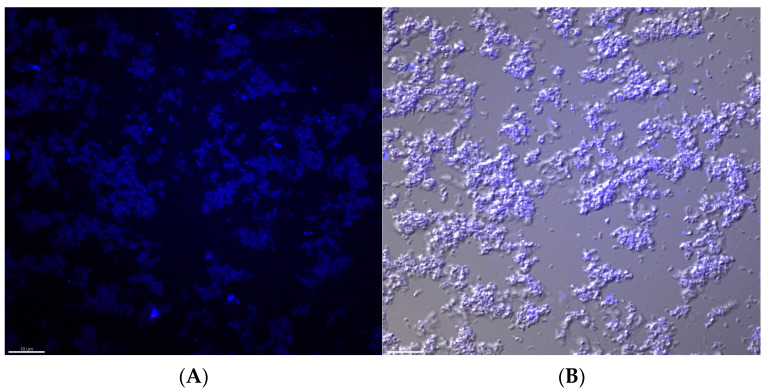
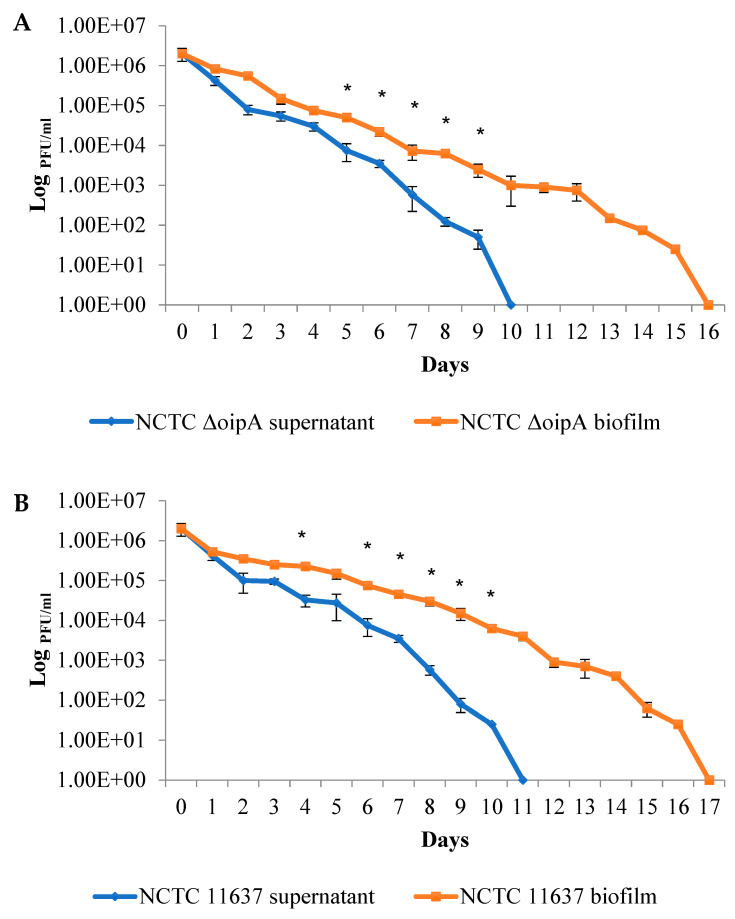
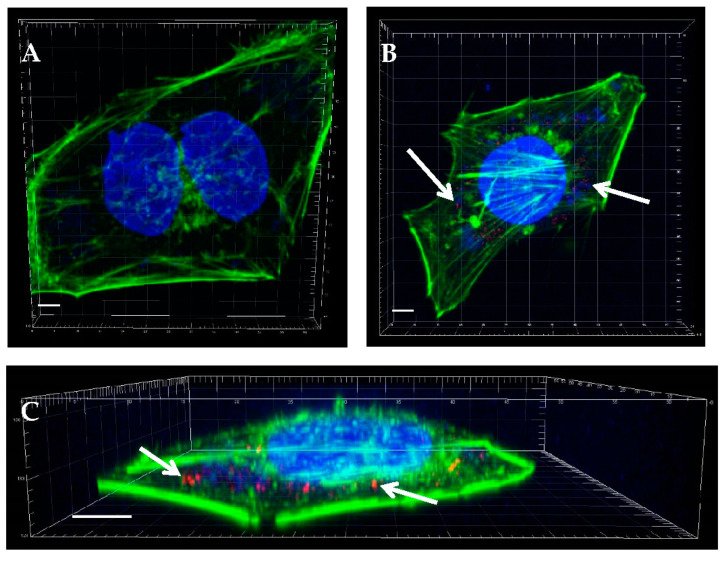
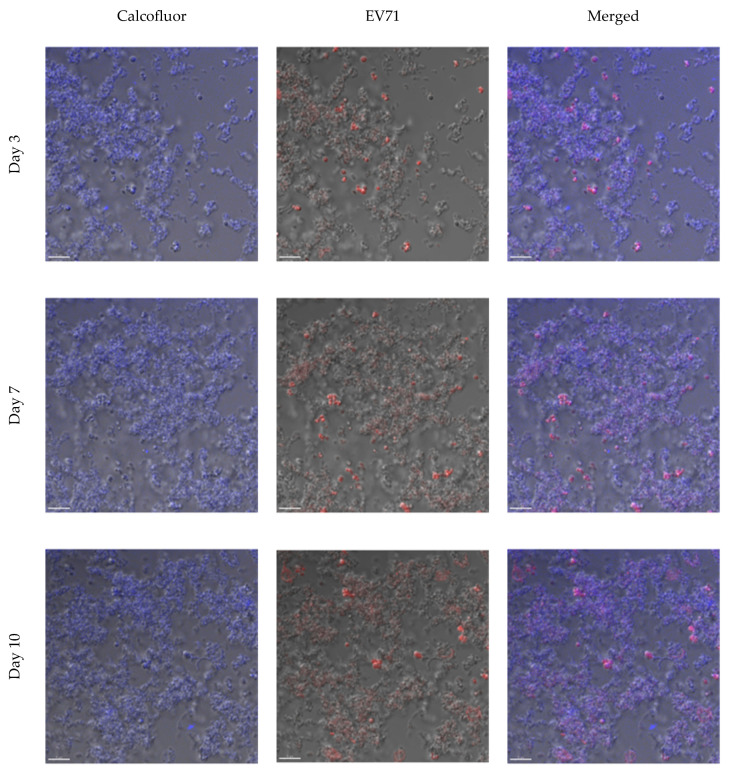
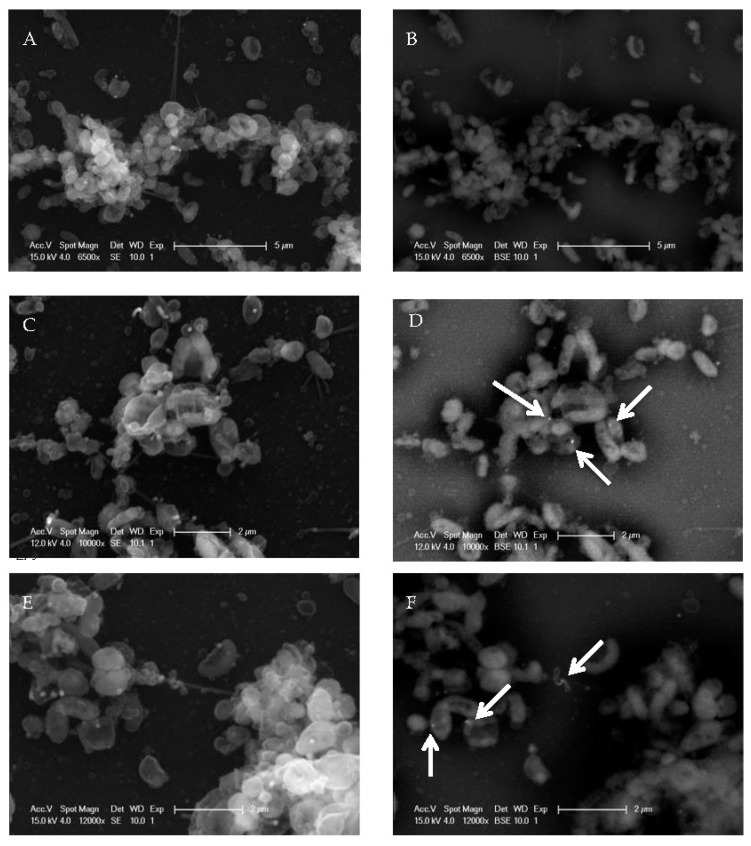
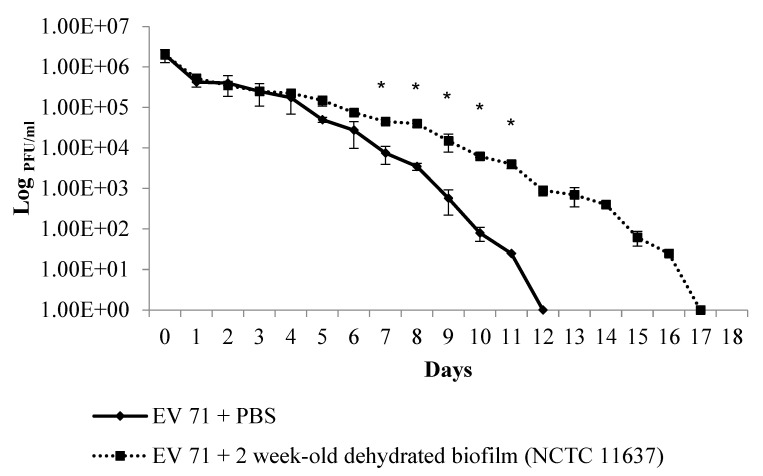
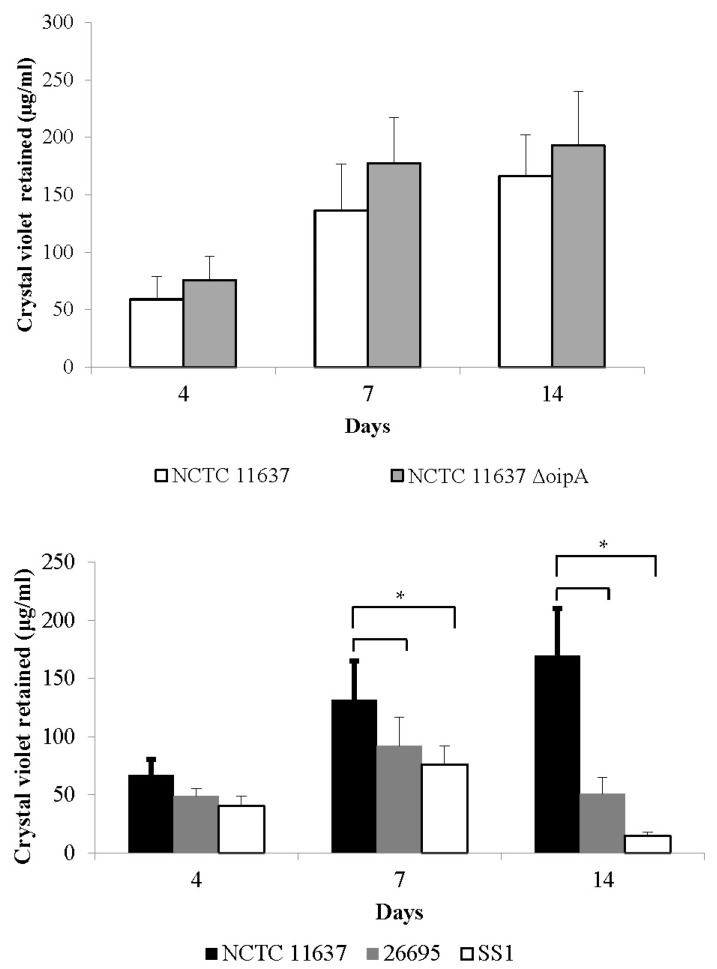
The transition time during which a virus leaves its host and infects the next susceptible host is critical for virus survival. Enterovirus 71 (EV71) is stable in aqueous environments, but its molecular interactions with bacteria and their biofilms are not well-established. is a highly successful gut bacterial pathogen, with its capacity to form biofilms being linked to its transmission. Given that both are gut-associated microbes, we hypothesized that biofilms formed by may play a significant role in the survival of EV71 in the external environment. In this study, we examine the interactions of EV71 with the preformed biofilm of to mimic its natural state in the environment. Immunofluorescence confocal microscopy and scanning electron microscopy revealed that EV71 particles persisted for up to 10 days when incubated with the biofilm. Furthermore, the presence of the biofilm significantly augmented viral viability, as verified through virus plaque assays. Interestingly, the viability of EV71 was dependent on the quantity of biofilm formation. Thus, two strains able to generate large amounts of biofilm could facilitate EV71 viability for up to 17 days, whereas two other strains that produced moderate or low quantities of biofilm could not prolong virus viability. It is interesting that biofilm contains N-acetyl-glucosamine and glycosaminoglycan, and that EV71 has binding affinity to cell-surface heparan sulfate glycosaminoglycan, which acts as an EV71 attachment receptor. The synergistic ability of biofilm to promote EV71 viability for extended periods implies that biofilm may serve as an additional pathway of EV71 transmission.
病毒离开宿主并感染下一个易感宿主的过渡时间对病毒的存活至关重要。肠道病毒 71 型(EV71)在水相环境中稳定,但它与细菌及其生物膜的分子相互作用尚未得到充分证实。是一种高度成功的肠道细菌病原体,其形成生物膜的能力与其传播有关。鉴于两者都是与肠道相关的微生物,我们假设 形成的生物膜可能在 EV71 在外部环境中的存活中发挥重要作用。在这项研究中,我们研究了 EV71 与 预先形成的生物膜的相互作用,以模拟其在环境中的自然状态。免疫荧光共聚焦显微镜和扫描电子显微镜显示,当与 生物膜孵育时,EV71 颗粒可存活长达 10 天。此外,生物膜的存在显著增强了病毒的存活率,这通过病毒斑测定得到了验证。有趣的是,EV71 的存活率取决于生物膜形成的数量。因此,能够产生大量生物膜的两种 菌株可以将 EV71 的存活能力延长至 17 天,而另外两种产生中等或低量生物膜的 菌株则不能延长病毒的存活能力。有趣的是,生物膜含有 N-乙酰葡萄糖胺和糖胺聚糖,而 EV71 对细胞表面硫酸乙酰肝素糖胺聚糖具有结合亲和力,后者作为 EV71 的附着受体。生物膜促进 EV71 存活能力延长的协同能力意味着生物膜可能是 EV71 传播的另一种途径。