Department of Microbiology, Faculty of Medicine, Wroclaw Medical University, Wroclaw, Poland.
Department of Environment, Hygiene and Animal Welfare, Wroclaw University of Environmental and Life Sciences, Wroclaw, Poland.
Front Cell Infect Microbiol. 2022 Mar 25;12:868905. doi: 10.3389/fcimb.2022.868905. eCollection 2022.
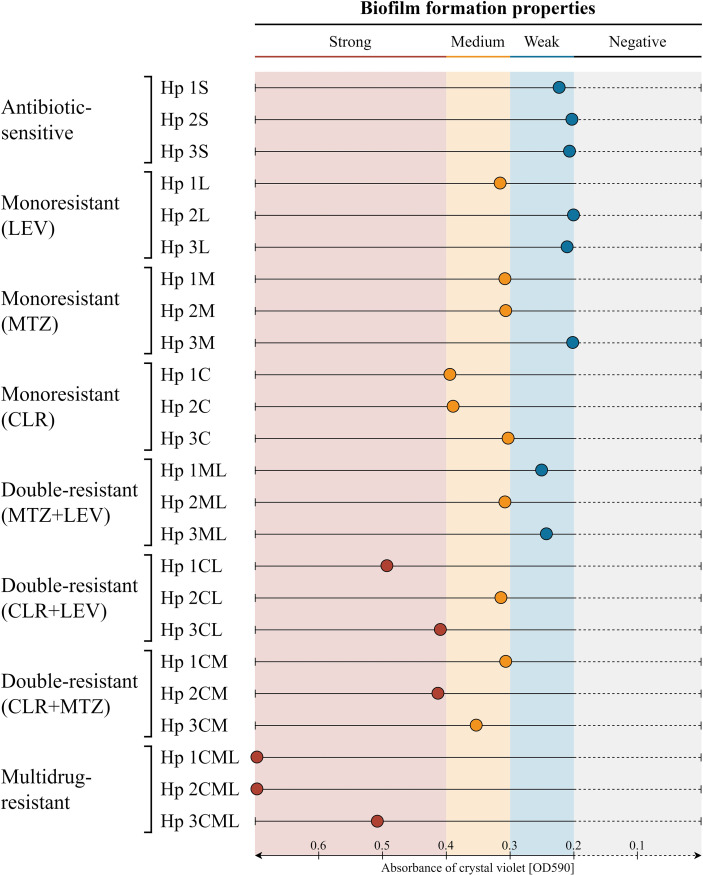
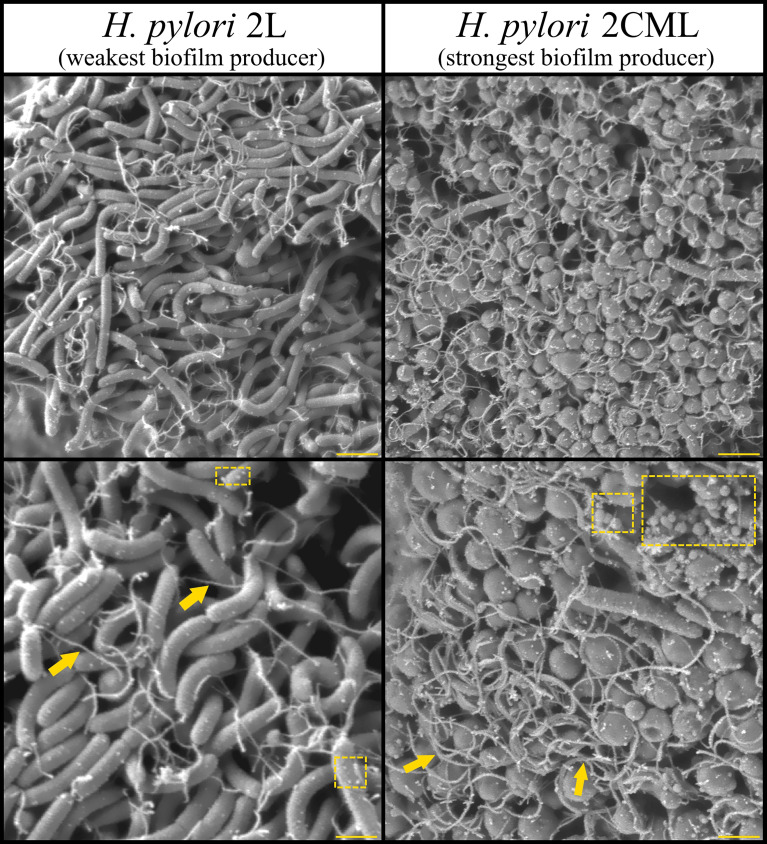
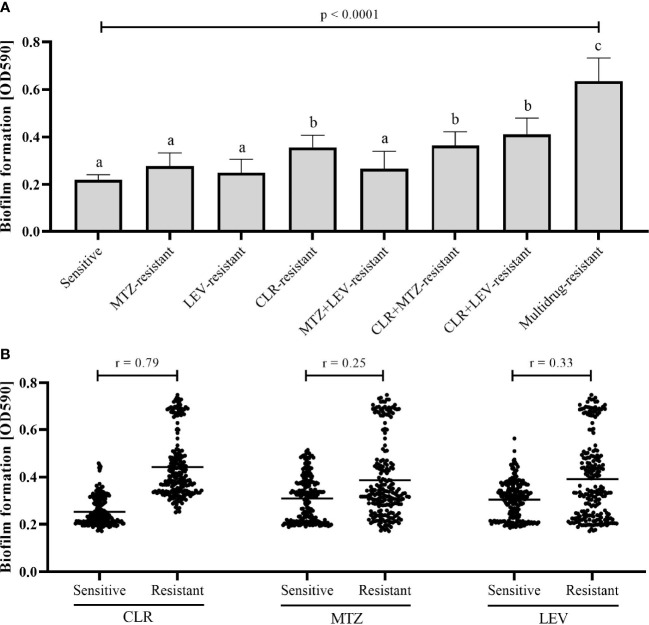
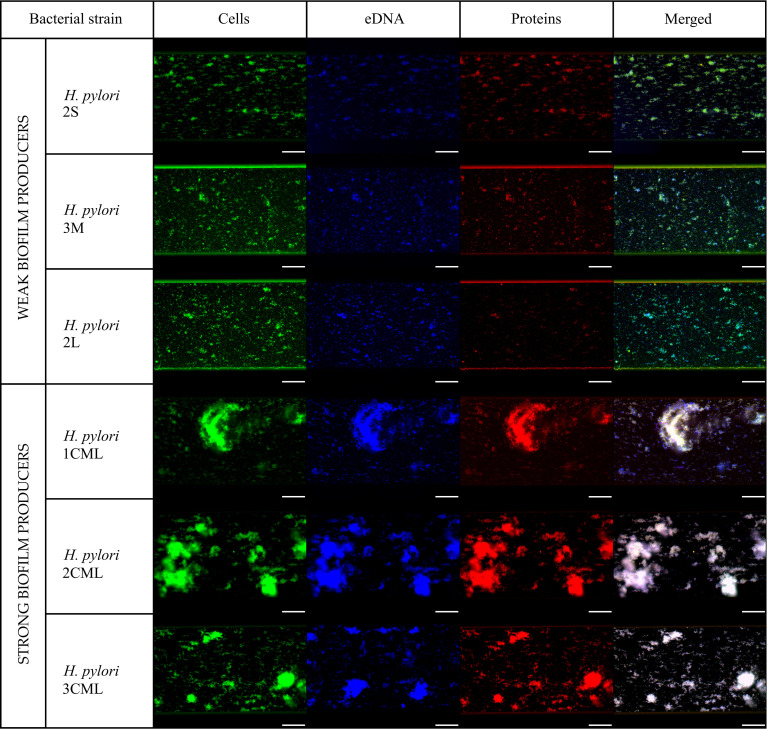
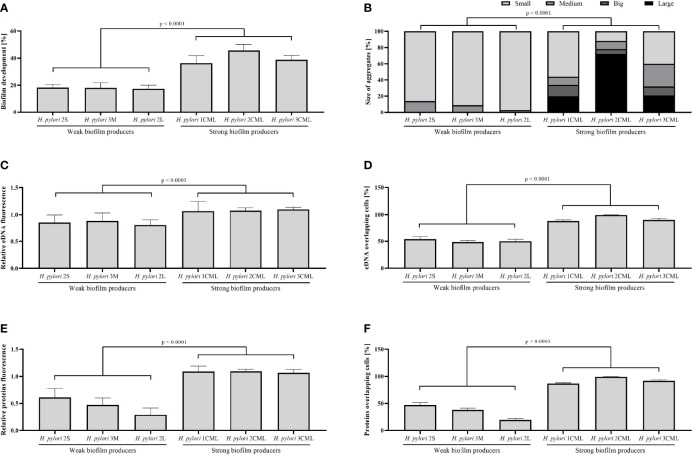
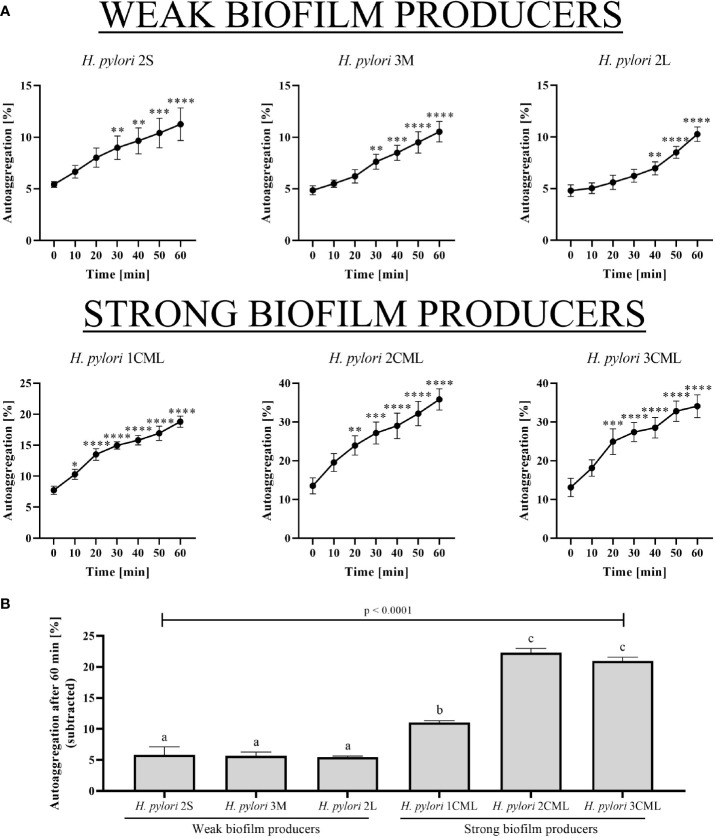
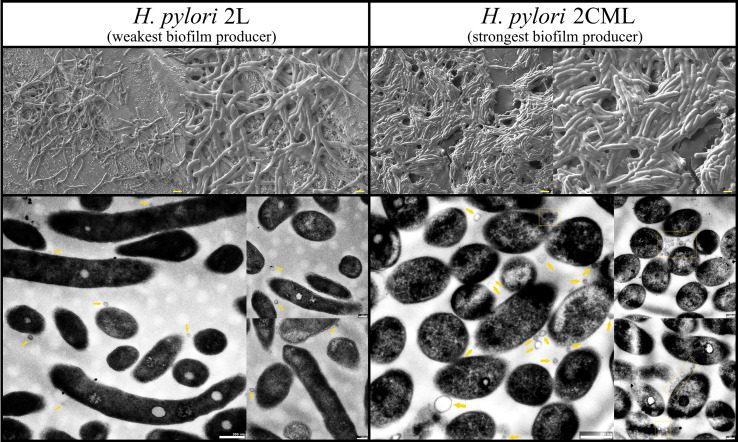
It is widely accepted that production of biofilm is a protective mechanism against various type of stressors, including exposure to antibiotics. However, the impact of this structure on the spread of antibiotic resistance in is still poorly understood. Therefore, the aim of the current research was to determine the relationship between biofilm formation and antibiotic resistance of . The study was carried out on 24 clinical strains with different resistance profiles (antibiotic-sensitive, mono-resistant, double-resistant and multidrug-resistant) against clarithromycin (CLR), metronidazole (MTZ) and levofloxacin (LEV). Using static conditions and a crystal violet staining method, a strong correlation was observed between biofilm formation and resistance to CLR but not MTZ or LEV. Based on the obtained results, three the strongest and three the weakest biofilm producers were selected and directed for a set of microfluidic experiments performed in the Bioflux system combined with fluorescence microscopy. Under continuous flow conditions, it was observed that strong biofilm producers formed twice as much of biofilm and created significantly more eDNA and in particular proteins within the biofilm matrix when compared to weak biofilm producers. Additionally, it was noticed that strong biofilm producers had higher tendency for autoaggregation and presented morphostructural differences (a greater cellular packing, shorter cells and a higher amount of both OMVs and flagella) in relation to weak biofilm counterparts. In conclusion, resistance to CLR in clinical strains was associated with a broad array of phenotypical features translating to the ability of strong biofilm formation.
人们普遍认为,生物膜的产生是一种针对各种应激源的保护机制,包括暴露于抗生素。然而,这种结构对抗生素耐药性在中的传播的影响仍知之甚少。因此,本研究旨在确定生物膜形成与临床分离株的抗生素耐药性之间的关系。该研究在 24 株具有不同耐药谱(对克拉霉素[CLR]、甲硝唑[MTZ]和左氧氟沙星[LEV]敏感、单耐药、双耐药和多药耐药)的临床分离株上进行。使用静态条件和结晶紫染色法,观察到生物膜形成与 CLR 耐药性之间存在很强的相关性,但与 MTZ 或 LEV 耐药性无关。基于获得的结果,选择了三个最强和三个最弱的生物膜产生者,并在结合荧光显微镜的 Bioflux 系统中进行了一组微流控实验。在连续流动条件下,观察到强生物膜产生者形成了两倍的生物膜,并且在生物膜基质中产生了更多的 eDNA,特别是蛋白质,与弱生物膜产生者相比。此外,还注意到强生物膜产生者具有更高的自动聚集倾向,并表现出形态结构差异(细胞包装更紧密、细胞更短、OMVs 和鞭毛的数量也更多)与弱生物膜对应物相比。总之,临床分离株对 CLR 的耐药性与一系列表型特征相关,这些特征转化为强生物膜形成的能力。