Department of Microbiology, School of Medicine, Shahid Beheshti University of Medical Sciences, Tehran 1985717443, Iran.
School of Medicine, Shahid Beheshti University of Medical Sciences, Tehran 1985717443, Iran.
Int J Mol Sci. 2023 Sep 26;24(19):14562. doi: 10.3390/ijms241914562.
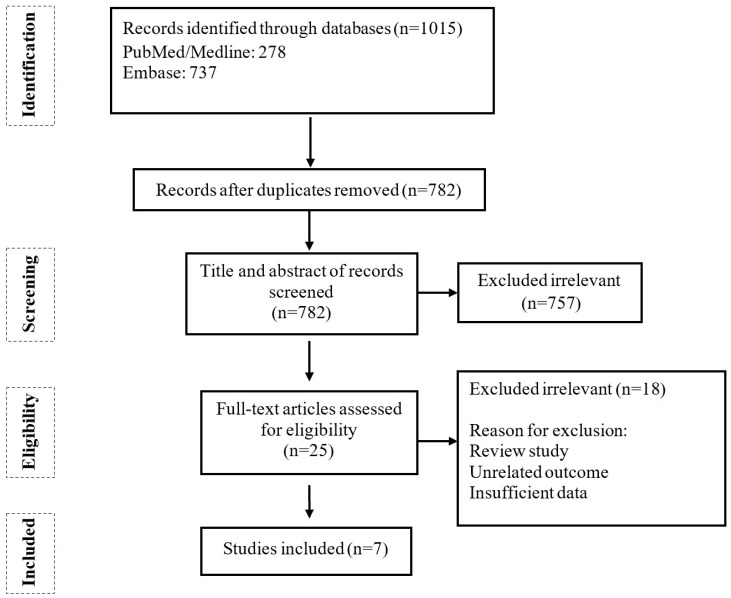
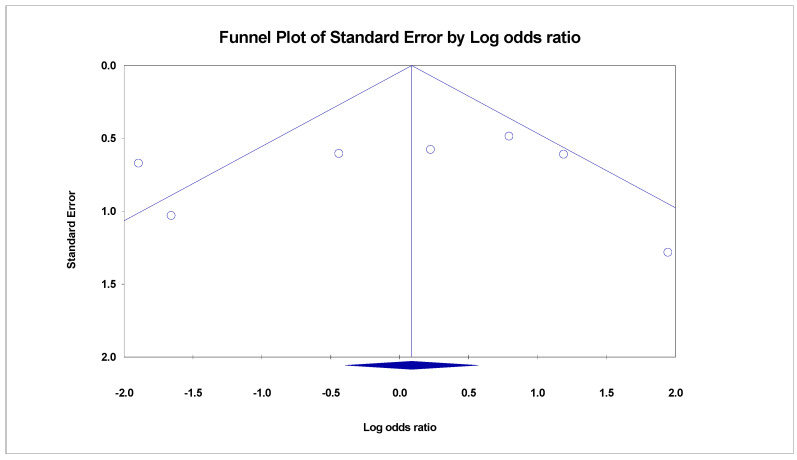
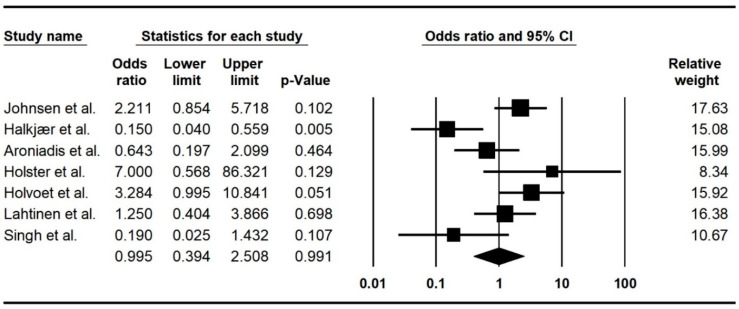
Irritable bowel syndrome (IBS) poses a significant challenge due to its poorly understood pathogenesis, substantial morbidity, and often inadequate treatment outcomes. The role of fecal microbiota transplantation (FMT) in managing IBS symptoms remains inconclusive. This systematic review and meta-analysis aimed to ascertain the effectiveness of FMT in relieving symptoms in IBS patients. A thorough search was executed on PubMed/Medline and Embase databases until 14 June 2023, including all studies on FMT use in IBS patients. We examined the efficiency of FMT in reducing patients' symptoms overall and in particular subgroups, classified by placebo preparation, FMT preparation, frequency, and route of administration. Among 1015 identified studies, seven met the inclusion criteria for the meta-analysis. The overall symptomatology of FMT-treated IBS patients did not significantly differ from the control group (Odds Ratio (OR) = 0.99, 95% Confidence Interval (CI) 0.39-2.5). Multiple doses of FMT compared with non-FMT placebo, or single-donor FMT therapy compared with autologous FMT placebo also showed no significant benefit (OR = 0.32, 95%CI (0.07-1.32), = 0.11, and OR = 1.67, 95%CI (0.59-4.67), = 0.32, respectively). However, a single dose of multiple-donor FMT administered via colonoscopy (lower gastrointestinal (GI) administration) significantly improved patient symptoms compared with autologous FMT placebo (OR = 2.54, 95%CI (1.20-5.37), = 0.01, and OR = 2.2, 95%CI (1.20-4.03), = 0.01, respectively). The studies included in the analysis showed a low risk of bias and no publication bias. In conclusion, lower GI administration of a single dose of multiple-donor FMT significantly alleviates patient complaints compared with the autologous FMT used as a placebo. The underlying mechanisms need to be better understood, and further experimental studies are desired to fill the current gaps.
肠易激综合征(IBS)的发病机制尚不清楚,发病率高,治疗效果往往不理想,因此给治疗带来了很大的挑战。粪便微生物群移植(FMT)在缓解 IBS 症状方面的作用仍存在争议。本系统评价和荟萃分析旨在确定 FMT 缓解 IBS 患者症状的有效性。我们在 PubMed/Medline 和 Embase 数据库中进行了全面检索,检索时间截至 2023 年 6 月 14 日,纳入了所有关于 FMT 治疗 IBS 患者的研究。我们检查了 FMT 在总体上以及根据安慰剂制备、FMT 制备、频率和给药途径分类的特定亚组中降低患者症状的效率。在 1015 项确定的研究中,有 7 项符合荟萃分析的纳入标准。与对照组相比,FMT 治疗的 IBS 患者的整体症状没有显著差异(优势比(OR)=0.99,95%置信区间(CI)0.39-2.5)。与非 FMT 安慰剂相比,多次 FMT 剂量或与自体 FMT 安慰剂相比,单次供体 FMT 治疗也没有显著获益(OR=0.32,95%CI(0.07-1.32), =0.11,OR=1.67,95%CI(0.59-4.67), =0.32)。然而,通过结肠镜(下胃肠道(GI)给药)给予单次多供体 FMT 可显著改善患者症状与自体 FMT 安慰剂相比(OR=2.54,95%CI(1.20-5.37), =0.01,OR=2.2,95%CI(1.20-4.03), =0.01)。纳入分析的研究显示出低偏倚风险,且无发表偏倚。总之,与自体 FMT 作为安慰剂相比,单次下 GI 给予单剂量的多供体 FMT 可显著缓解患者的不适。需要更好地了解其潜在机制,还需要进一步的实验研究来填补当前的空白。