Li Hao-Kang, Wu Tai-Sheng, Kuo Yi-Chiu, Hsiao Ching-Wen, Yang Hsiu-Ping, Lee Chia-Yun, Leng Pei-Ju, Chiang Yun-Jung, Cheng Zih-Fei, Yang Sen-Han, Lin Yan-Liang, Chen Li-Yu, Chen Ciao-Syuan, Chen Yu-Ju, Hsiao Shih-Chia, Tang Sai-Wen
Acepodia Biotech Inc., Alameda, CA 94502, USA.
Institute of Chemistry, Academia Sinica, Taipei 11529, Taiwan.
Cancers (Basel). 2023 Oct 4;15(19):4844. doi: 10.3390/cancers15194844.
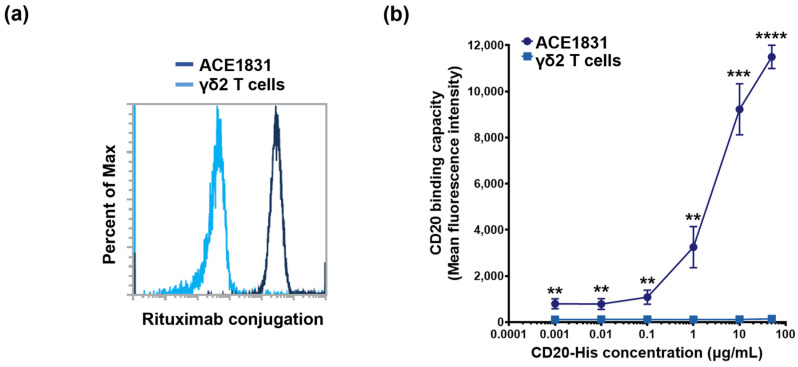
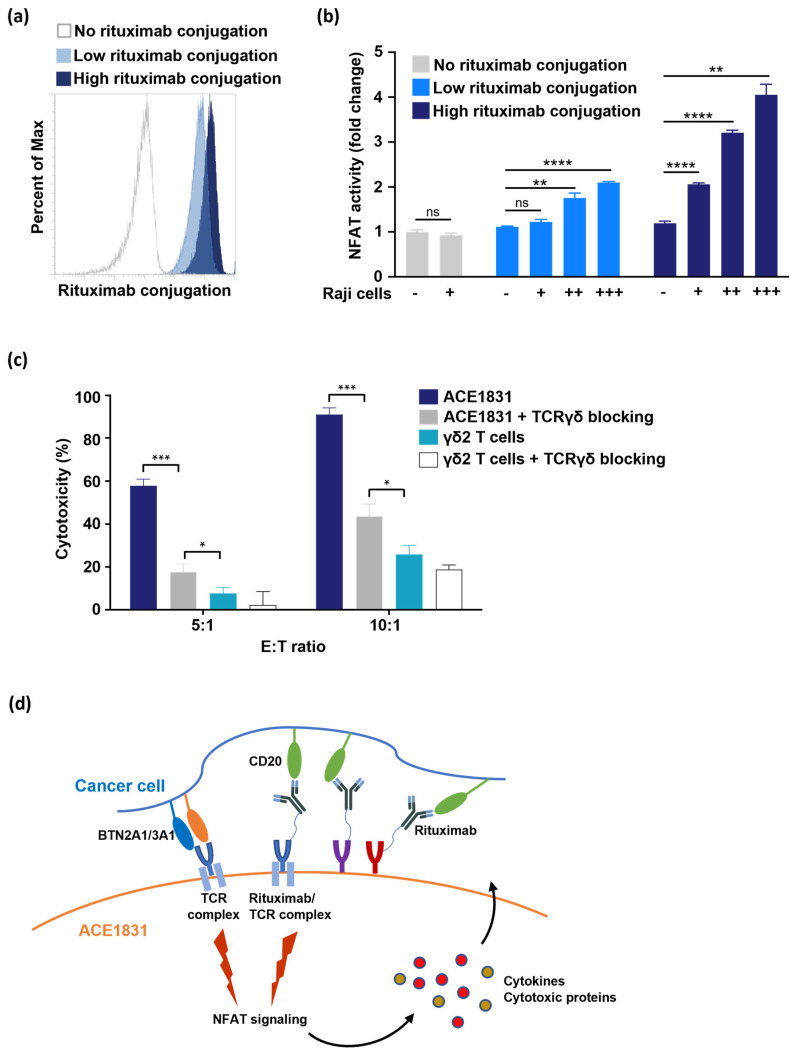
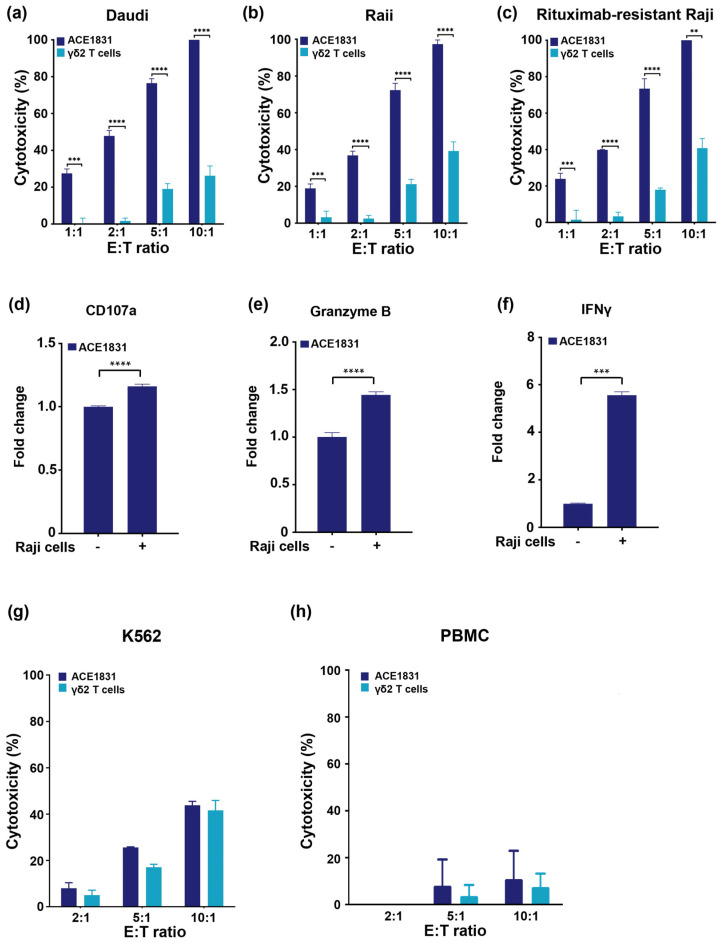
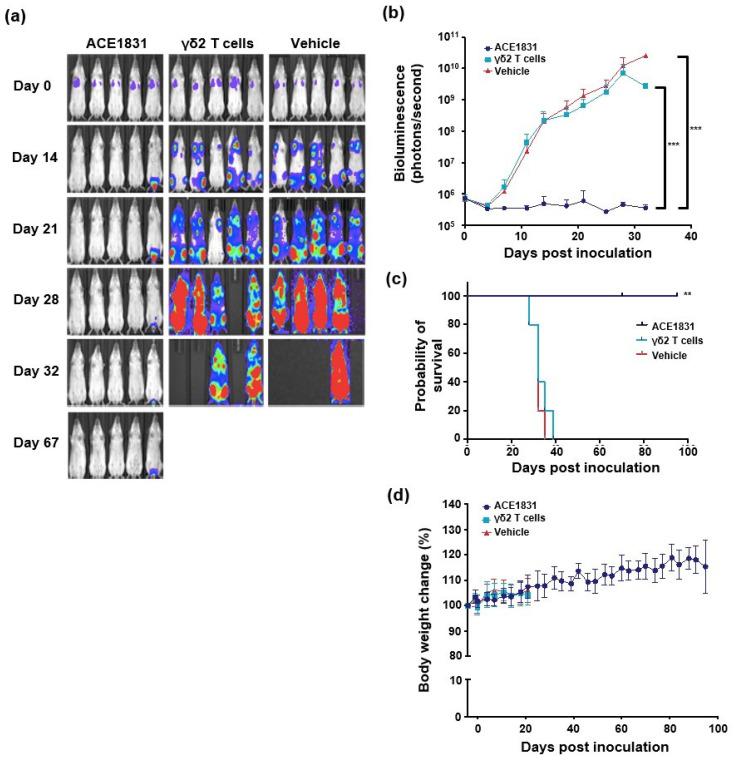
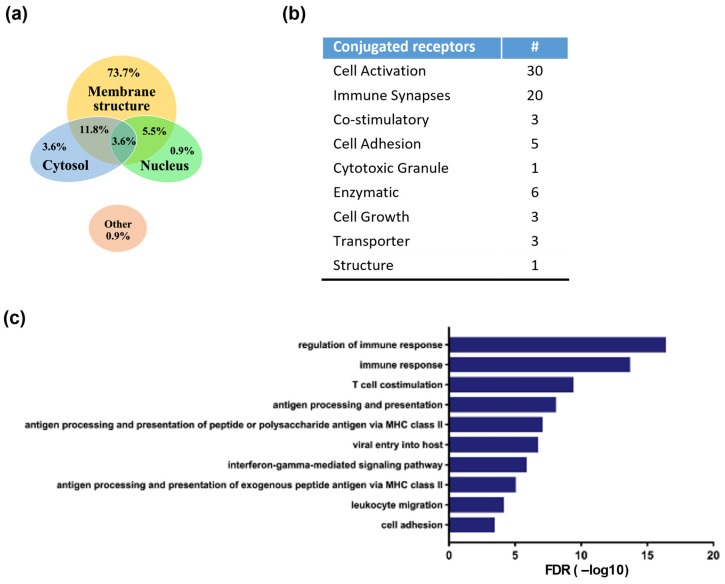
Chimeric antigen receptor T cell (CAR-T) therapy has been applied in the treatment of B-cell lymphoma; however, CAR-T manufacturing requires virus- or non-virus-based genetic modification, which causes high manufacturing costs and potential safety concerns. Antibody-cell conjugation (ACC) technology, which originated from bio-orthogonal click chemistry, provides an efficient approach for arming immune cells with cancer-targeting antibodies without genetic modification. Here, we applied ACC technology in Vγ9Vδ2 T (γδ2 T) cells to generate a novel off-the-shelf CD20-targeting cell therapy ACE1831 (rituximab-conjugated γδ2 T cells) against relapsed/refractory B-cell lymphoma. ACE1831 exhibited superior cytotoxicity against B-cell lymphoma cells and rituximab-resistant cells compared to γδ2 T cells without rituximab conjugation. The in vivo xenograft study demonstrated that ACE1831 treatment strongly suppressed the aggressive proliferation of B-cell lymphoma and prolonged the survival of tumor-bearing mice with no observed toxicity. Mass spectrometry analysis indicated that cell activation receptors including the TCR complex, integrins and cytokine receptors were conjugated with rituximab. Intriguingly, the antigen recognition of the ACC-linked antibody/receptor complex stimulated NFAT activation and contributed to ACE1831-mediated cytotoxicity against CD20-expressing cancer cells. This study elucidates the role of the ACC-linked antibody/receptor complex in cytotoxicity and supports the potential of ACE1831 as an off-the-shelf γδ2 cell therapy against relapsed/refractory B-cell lymphoma.
嵌合抗原受体T细胞(CAR-T)疗法已应用于B细胞淋巴瘤的治疗;然而,CAR-T的制造需要基于病毒或非病毒的基因改造,这导致了高昂的制造成本和潜在的安全问题。源于生物正交点击化学的抗体-细胞偶联(ACC)技术,为在不进行基因改造的情况下用靶向癌症的抗体武装免疫细胞提供了一种有效方法。在此,我们将ACC技术应用于Vγ9Vδ2 T(γδ2 T)细胞,以生成一种新型的现成的靶向CD20的细胞疗法ACE1831(利妥昔单抗偶联的γδ2 T细胞),用于治疗复发/难治性B细胞淋巴瘤。与未偶联利妥昔单抗的γδ2 T细胞相比,ACE1831对B细胞淋巴瘤细胞和利妥昔单抗耐药细胞表现出更强的细胞毒性。体内异种移植研究表明,ACE1831治疗强烈抑制了B细胞淋巴瘤的侵袭性增殖,并延长了荷瘤小鼠的生存期,且未观察到毒性。质谱分析表明,包括TCR复合物、整合素和细胞因子受体在内的细胞激活受体与利妥昔单抗偶联。有趣的是,ACC连接的抗体/受体复合物的抗原识别刺激了NFAT激活,并促成了ACE1831对表达CD20的癌细胞的细胞毒性。这项研究阐明了ACC连接的抗体/受体复合物在细胞毒性中的作用,并支持了ACE1831作为一种现成的γδ2细胞疗法治疗复发/难治性B细胞淋巴瘤的潜力。