Department of Chemistry, University of Fort Hare, Alice 5700, South Africa.
Molecules. 2023 Sep 30;28(19):6889. doi: 10.3390/molecules28196889.
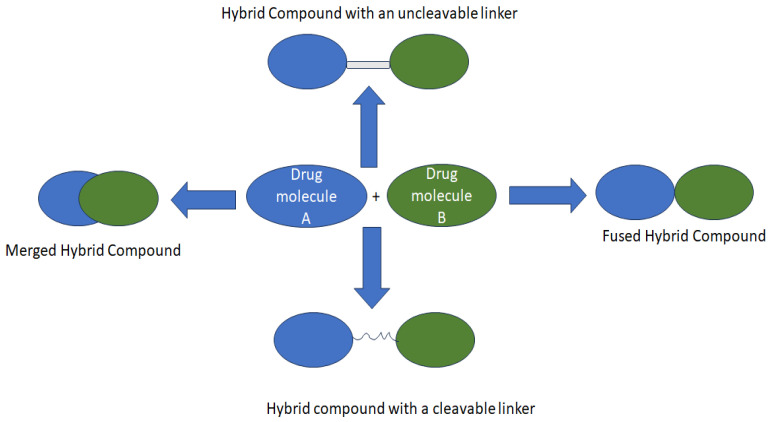
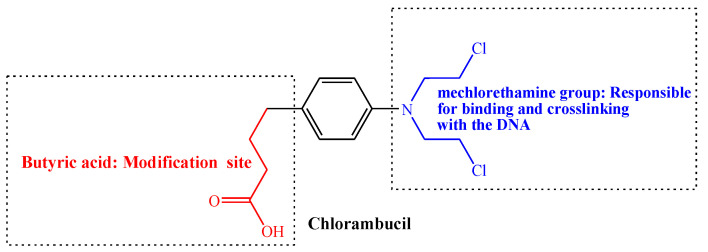
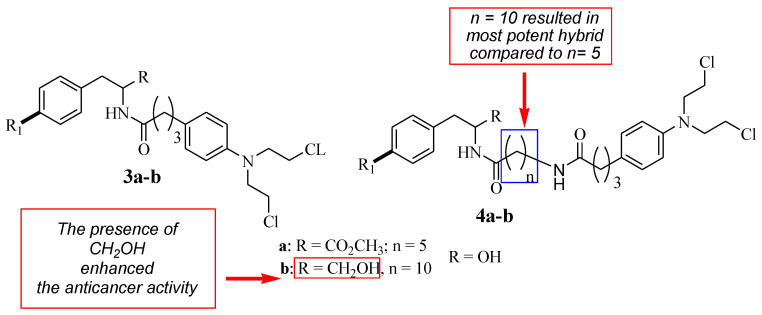
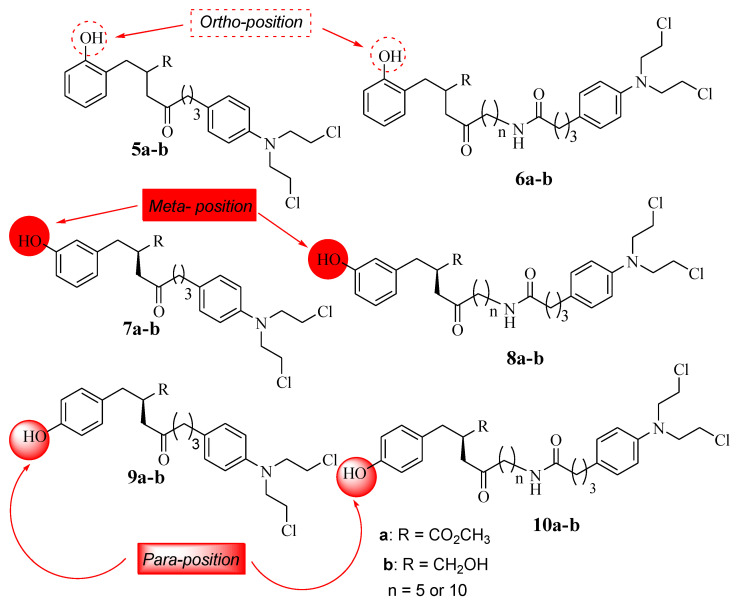
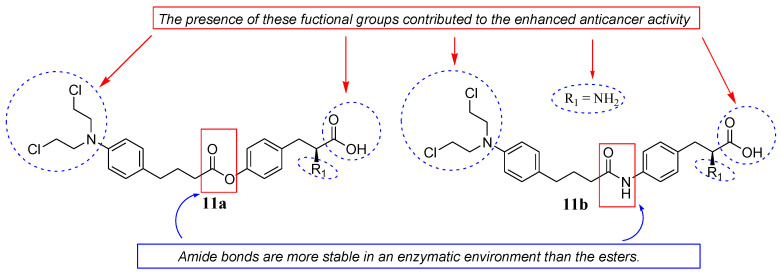
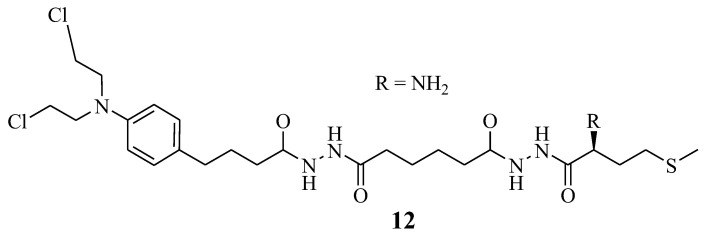
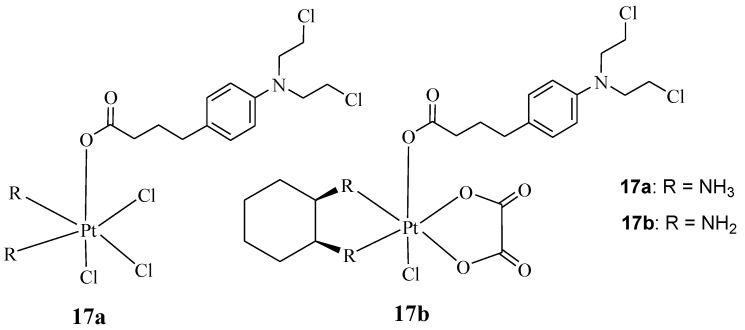
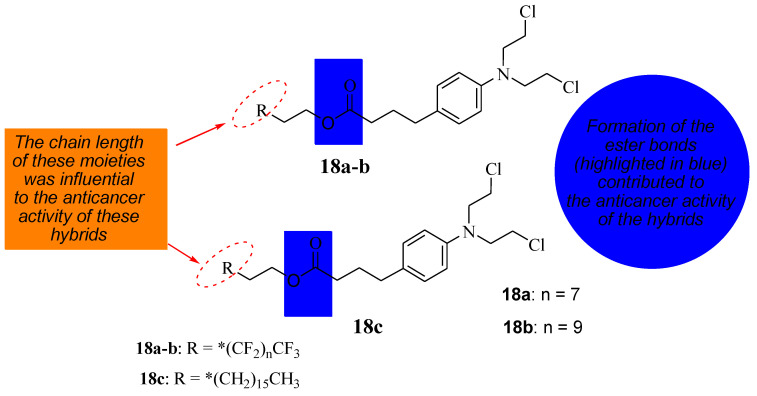
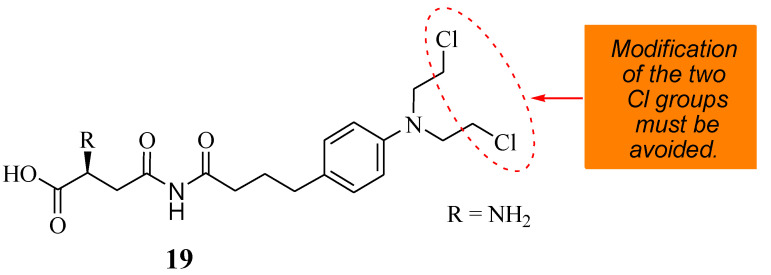
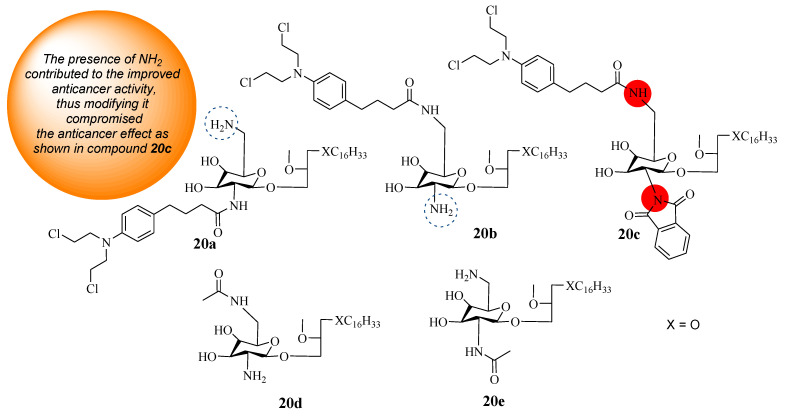
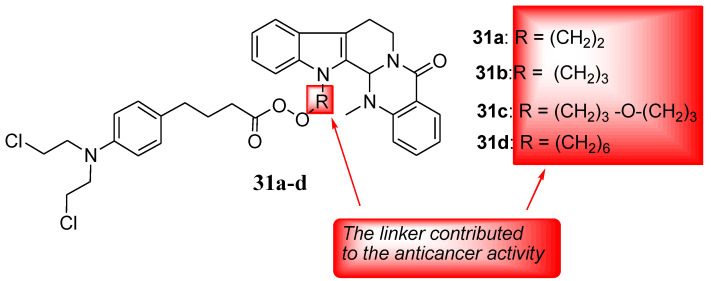
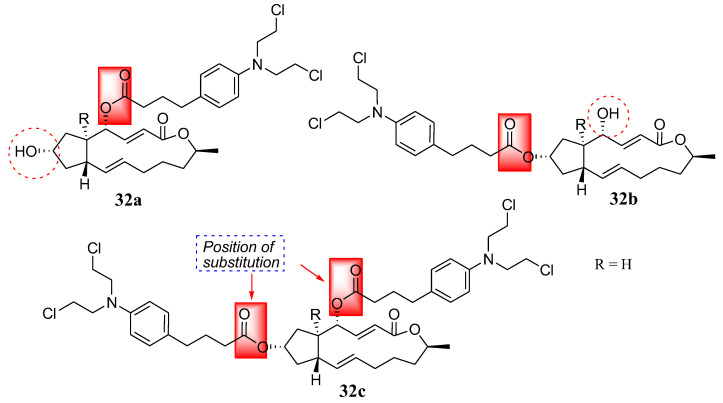
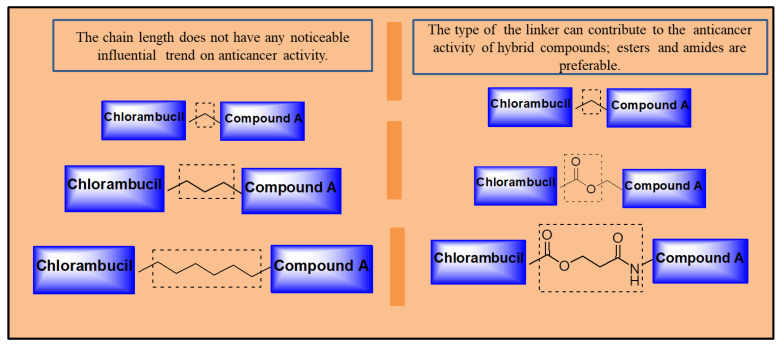
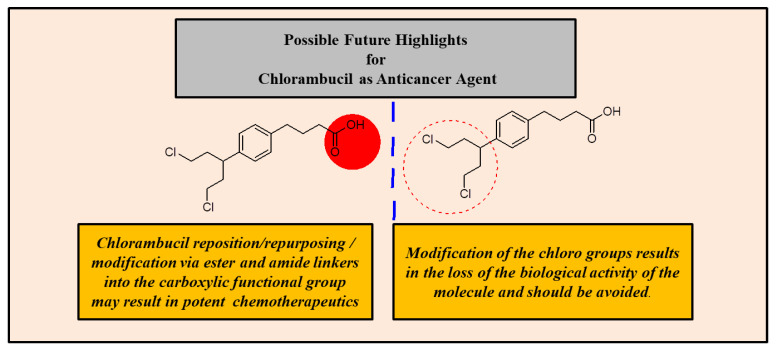
Increasing cases of cancer have been a primary concern in recent decades. Developing new chemotherapeutics is challenging and has been faced with limitations, such as multidrug resistance, poor specificity, selectivity, and toxicity. The aforementioned factors contribute to treatment failure. Hybrid compounds have features that can overcome the limitations mentioned above. Chlorambucil, an anticancer drug that is used to treat prostate and breast cancer, suffers from poor aqueous solubility and specificity, a short half-life, and severe side effects, including anaemia and bone marrow suppression. It compromises the immune system, resulting in treatment failure. Hence, its combination with other pharmacophores has been reported to result in effective anticancer agents with fewer side effects and high therapeutic outcomes. Furthermore, this review gives an update (2010 to date) on the developments of chlorambucil hybrid compounds with anticancer activity, and the structure-activity relationship (SAR), and also highlights future strategies for developing novel anticancer agents.
近年来,癌症病例不断增加一直是人们主要关注的问题。开发新的化疗药物具有挑战性,并且面临着多种药物耐药性、特异性差、选择性差和毒性大等限制。上述因素导致治疗失败。杂合化合物具有可以克服上述限制的特点。苯丁酸氮芥是一种用于治疗前列腺癌和乳腺癌的抗癌药物,但它水溶性和特异性差、半衰期短、副作用严重,包括贫血和骨髓抑制。它会损害免疫系统,导致治疗失败。因此,据报道,将其与其他药效团结合可以得到具有较少副作用和较高治疗效果的有效抗癌药物。此外,本文综述了具有抗癌活性的苯丁酸氮芥杂合化合物的最新研究进展(2010 年至今),以及构效关系(SAR),并强调了开发新型抗癌药物的未来策略。