Departments of Medical Imaging, Medicine, and Biomedical Engineering, University of Arizona, Tucson, AZ 85721, USA.
Brain Imaging and TMS Laboratory, Department of Psychology, University of Arizona, Tucson, AZ 85721, USA.
Sensors (Basel). 2023 Sep 22;23(19):8017. doi: 10.3390/s23198017.
This pilot feasibility study aimed to evaluate the effects of transcranial magnetic stimulation (TMS) on chemotherapy-related cognitive impairment (CRCI), and we report here on the first patient.
Deleterious cognitive changes due to chemotherapy or CRCI are commonly referred to as "chemo brain". With the increasing survival of cancer patients, this poorly understood and inadequately treated condition will likewise have an increasing toll on individuals and society. Since there is no approved treatment for chemo brain, we have initiated a therapeutic trial using transcranial magnetic stimulation (TMS), a non-invasive brain stimulation technique approved in many countries for the treatment of neurologic and psychiatric conditions like migraine and depression.
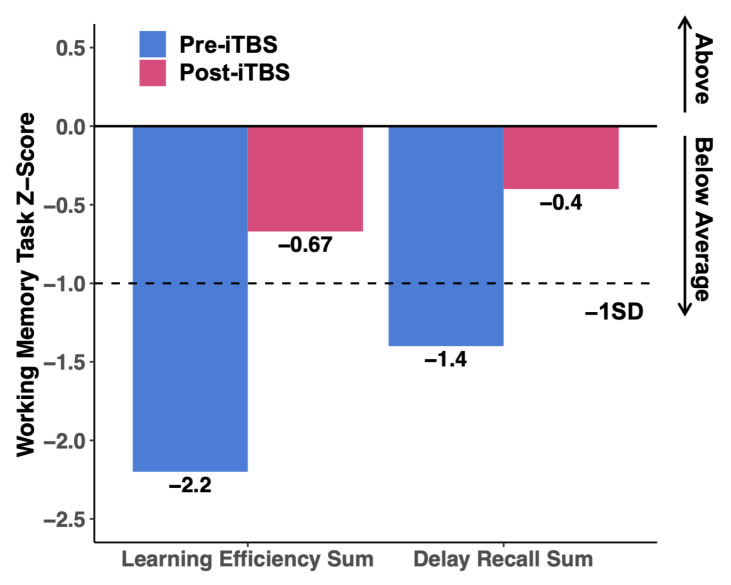
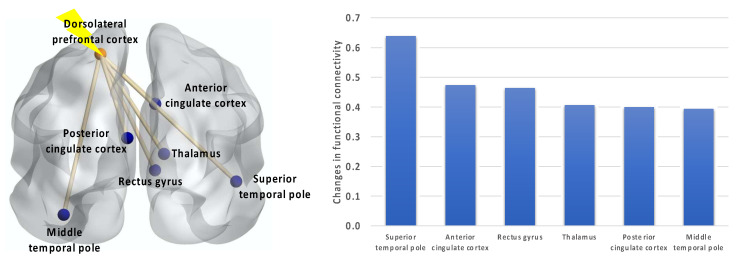
A 58-year-old woman, diagnosed 7 years prior with left breast cancer, underwent partial mastectomy with sentinel lymph node biopsy. She then received four cycles of adjuvant chemotherapy followed by radiation therapy. Afterwards, she was on tamoxifen for 4 years and then switched to aromatase inhibitors. The patient's CRCI started during chemotherapy and severely impaired her quality of life for an additional two years. In the third year after chemotherapy, the CRCI partially cleared to stabilize to the level at the time of presentation for this trial. The patient continues to have memory difficulties and decreased concentration, which makes multi-tasking very difficult to impossible. She is reliant on memory aids at work and at home. The participant underwent 10 consecutive sessions of TMS during weekdays for 2 weeks. Stimulation was directed to the left dorsolateral prefrontal cortex. After TMS, the participant significantly improved in memory function on neuropsychological testing. While she reported no subjective differences in concentration or memory, she did report an improvement in her sleep. Functional magnetic resonance imaging of the brain before and after TMS showed increased resting-state functional connectivity between the stimulation site and several brain regions. Remarkably, after 6 years of chemo brain and remaining in the same position at work due to her inability to concentrate and multi-task, she applied for and received a promotion 5-6 months after her TMS treatments.
This first patient in the phase 1 clinical trial testing of TMS for the treatment of "chemo brain" provided important lessons for feasibility and insights into mechanisms of potential benefit.
本研究旨在评估经颅磁刺激(TMS)对化疗相关认知障碍(CRCI)的影响,这是首例患者报告。
化疗引起的认知损害或 CRCI 通常被称为“化疗脑”。随着癌症患者存活率的提高,这种未被充分认识和治疗不足的情况也会对个人和社会造成越来越大的影响。由于目前尚无治疗“化疗脑”的方法,我们已经开始使用经颅磁刺激(TMS)进行治疗试验,这是一种在许多国家被批准用于治疗偏头痛和抑郁症等神经和精神疾病的非侵入性脑刺激技术。
一位 58 岁女性,7 年前被诊断为左乳腺癌,接受了部分乳房切除术和前哨淋巴结活检。然后,她接受了 4 个周期的辅助化疗,随后进行了放射治疗。之后,她服用了 4 年的他莫昔芬,然后改用芳香酶抑制剂。患者的 CRCI 在化疗期间开始,并在随后的两年内严重影响了她的生活质量。化疗结束后的第三年,CRCI 部分缓解并稳定在进行本试验时的水平。患者仍然存在记忆困难和注意力不集中,这使得多任务处理变得非常困难甚至不可能。她在工作和家庭中依赖记忆辅助工具。参与者在两周内的工作日接受了 10 次连续的 TMS 治疗。刺激部位为左侧背外侧前额叶皮层。TMS 治疗后,参与者的神经心理学测试记忆功能显著改善。尽管她报告说注意力和记忆力没有主观差异,但她确实报告说睡眠质量有所改善。TMS 前后的大脑功能磁共振成像显示,刺激部位与几个脑区之间的静息状态功能连接增加。值得注意的是,在经历了 6 年的“化疗脑”后,由于无法集中注意力和多任务处理,她仍然在同一职位上工作,在接受 TMS 治疗 5-6 个月后,她申请并获得了晋升。
这项 TMS 治疗“化疗脑”的 1 期临床试验的首例患者为可行性提供了重要经验,并深入了解了潜在获益的机制。