Special Medical Service Center, General Surgery, Zhujiang Hospital of Southern Medical University, No. 253, Middle Gongye Avenue, Haizhu District, Guangzhou, 510280, Guangdong, People's Republic of China.
Department of Breast Surgery, The First People's Hospital of Foshan, Foshan, 528000, People's Republic of China.
J Transl Med. 2023 Oct 14;21(1):721. doi: 10.1186/s12967-023-04532-6.
Triple-negative breast cancer (TNBC) development may be associated with tumor immune escape. This study explores whether the CHI3L1/MAF/CTLA4/S100A4 axis affects immune escape in TNBC through interplay with triple-negative breast cancer stem cells (TN-BCSCs).
The aim of this study is to utilize single-cell transcriptome sequencing (scRNA-seq) to uncover the molecular mechanisms by which the CHI3L1/MAF/CTLA4 signaling pathway may mediate immune evasion in triple-negative breast cancer through the interaction between tumor stem cells (CSCs) and immune cells.
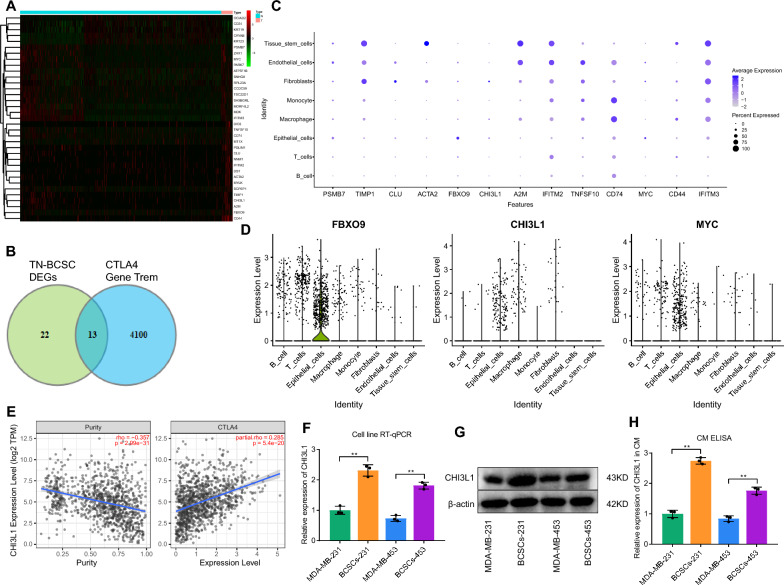
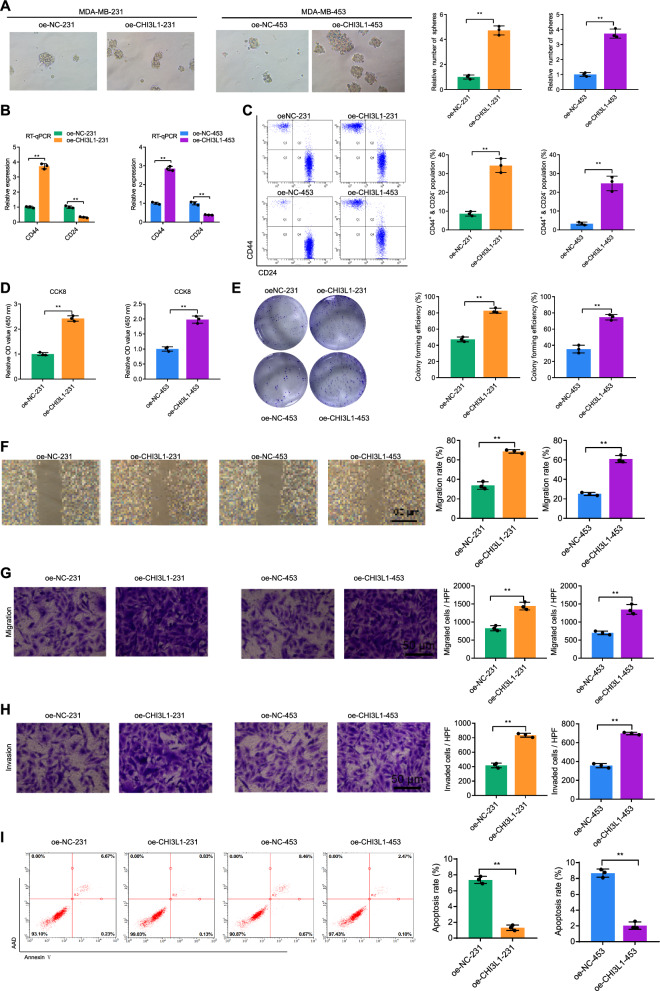
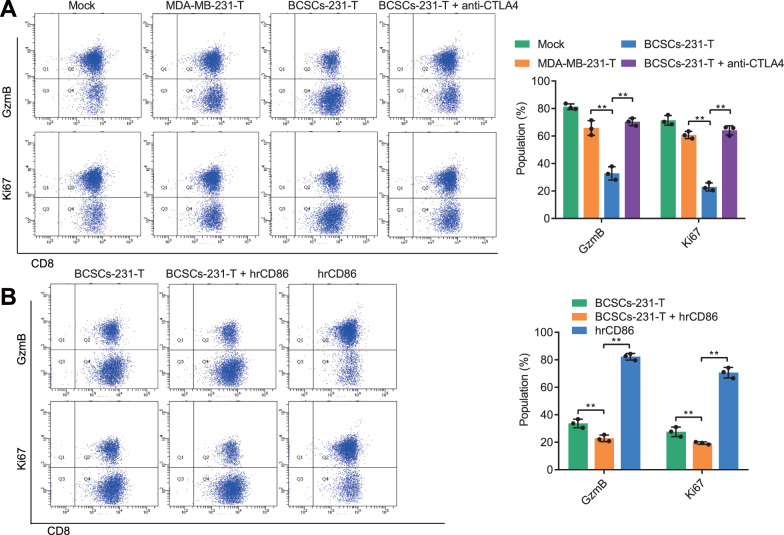
Cell subsets in TNBC tissues were obtained through scRNA-seq, followed by screening differentially expressed genes in TN-BCSCs and B.C.s (CD44 and CD24) and predicting the transcription factor regulated by CHI3L1. Effect of CHI3L1 on the stemness phenotype of TNBC cells investigated. Effects of BCSCs-231-derived CHI3L1 on CTLA4 expression in T cells were explored after co-culture of BCSCs-231 cells obtained from microsphere culture of TN-BCSCs with T cells. BCSCs-231-treated T cells were co-cultured with CD8 T cells to explore the resultant effect on T cell cytotoxicity. An orthotopic B.C. transplanted tumor model in mice with humanized immune systems was constructed, in which the Role of CHI3L1/MAF/CTLA4 in the immune escape of TNBC was explored.
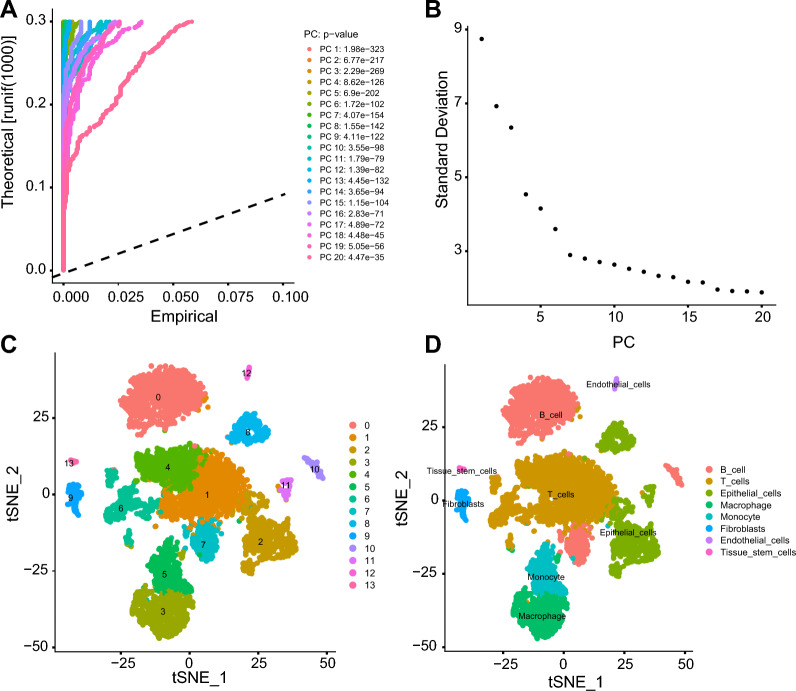
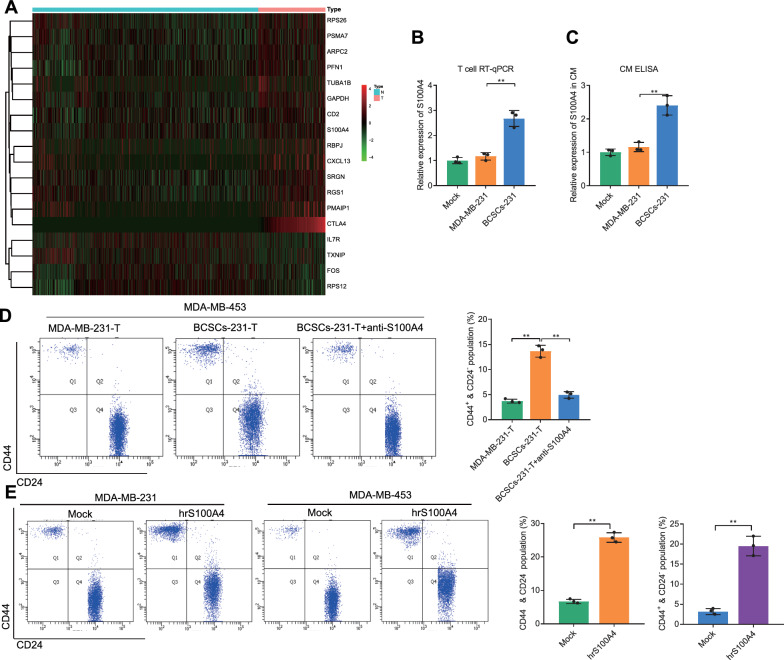
Eight cell subsets were found in the TNBC tissues, and the existence of TN-BCSCs was observed in the epithelial cell subset. CHI3L1 was related to the stemness phenotype of TNBC cells. TN-BCSC-derived CHI3L1 increased CTLA4 expression in T cells through MAF, inhibiting CD8 T cell cytotoxicity and inducing immunosuppression. Furthermore, the CTLA4 T cells might secrete S100A4 to promote the stemness phenotype of TNBC cells.
TN-BCSC-derived CHI3L1 upregulates CTLA4 expression in T cells through MAF, suppressing the function of CD8 T cells, which promotes the immune escape of TNBC.
三阴性乳腺癌(TNBC)的发展可能与肿瘤免疫逃逸有关。本研究探讨 CHI3L1/MAF/CTLA4/S100A4 轴是否通过与三阴性乳腺癌干细胞(TN-BCSC)相互作用影响 TNBC 的免疫逃逸。
本研究旨在利用单细胞转录组测序(scRNA-seq)揭示 CHI3L1/MAF/CTLA4 信号通路通过肿瘤干细胞(CSC)与免疫细胞相互作用介导三阴性乳腺癌免疫逃逸的分子机制。
通过 scRNA-seq 获取 TNBC 组织中的细胞亚群,筛选 TN-BCSC 和 B.C.(CD44 和 CD24)中差异表达的基因,并预测 CHI3L1 调控的转录因子。研究 CHI3L1 对 TNBC 细胞干性表型的影响。在 TN-BCSC 的微球培养物中分离出 BCSC-231 细胞与 T 细胞共培养后,探讨 BCSC-231 细胞来源的 CHI3L1 对 T 细胞 CTLA4 表达的影响。将 BCSC-231 处理的 T 细胞与 CD8 T 细胞共培养,探讨对 T 细胞细胞毒性的影响。构建具有人源化免疫系统的荷人原位乳腺癌移植瘤模型,探讨 CHI3L1/MAF/CTLA4 在 TNBC 免疫逃逸中的作用。
在 TNBC 组织中发现了 8 种细胞亚群,在上皮细胞亚群中观察到 TN-BCSC 的存在。CHI3L1 与 TNBC 细胞的干性表型有关。TN-BCSC 衍生的 CHI3L1 通过 MAF 增加 T 细胞中 CTLA4 的表达,抑制 CD8 T 细胞的细胞毒性并诱导免疫抑制。此外,CTLA4 T 细胞可能分泌 S100A4 来促进 TNBC 细胞的干性表型。
TN-BCSC 衍生的 CHI3L1 通过 MAF 上调 T 细胞中 CTLA4 的表达,抑制 CD8 T 细胞的功能,从而促进 TNBC 的免疫逃逸。