Department of Public and Community Health, University of West Attica, Aigaleo, Greece.
Department of Pharmacy, University of Patras, Patras, Greece.
Harm Reduct J. 2023 Oct 14;20(1):147. doi: 10.1186/s12954-023-00876-w.
Flavored e-cigarettes remain a controversial topic with regulators planning or already implementing restrictions worldwide. In this study, we examined patterns of flavor use in e-cigarettes among a convenience sample of US adult vapers.
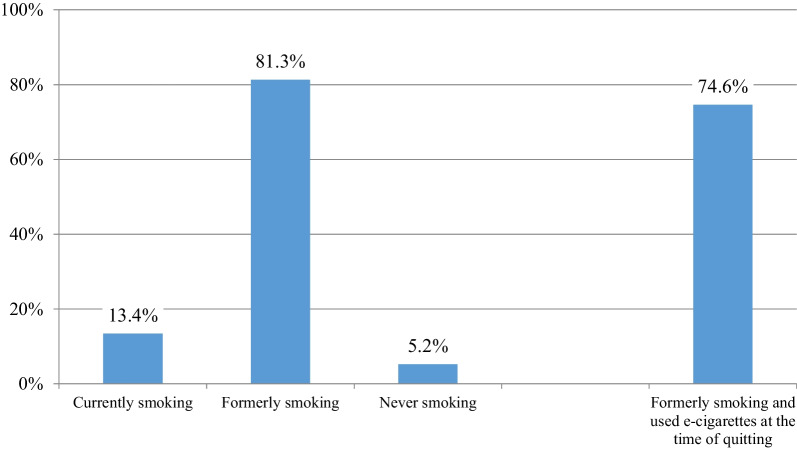
Participants aged ≥ 18 years who reported ever using an e-cigarette were included in the study (N = 69,233) and responded to an online questionnaire. Their smoking status was recorded as well as patterns of flavor use at e-cigarette use initiation, at the time of the survey and at the time of smoking cessation (for participants who used to smoke and were using e-cigarettes at the time of quitting).
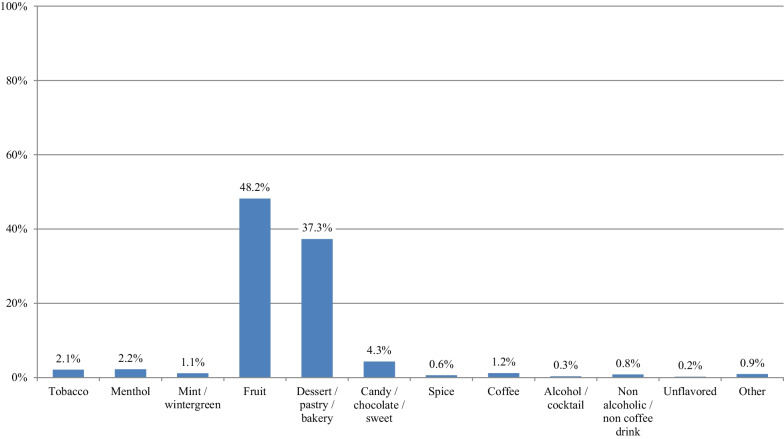
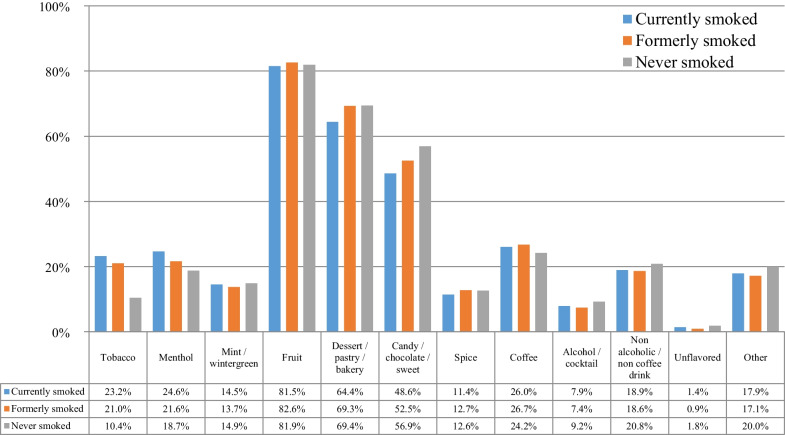
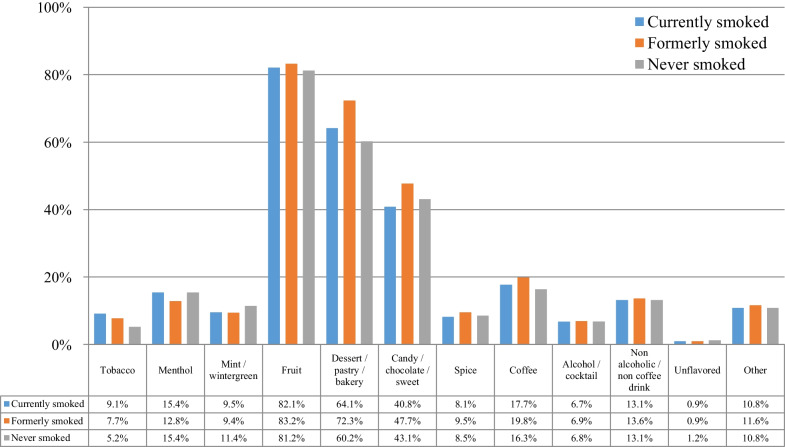
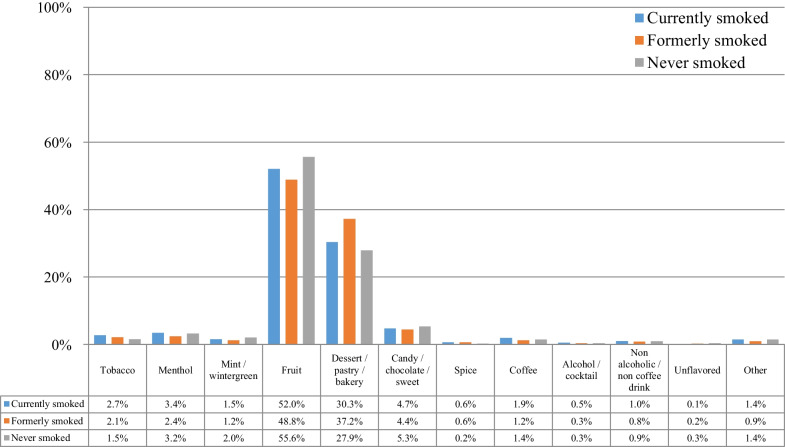
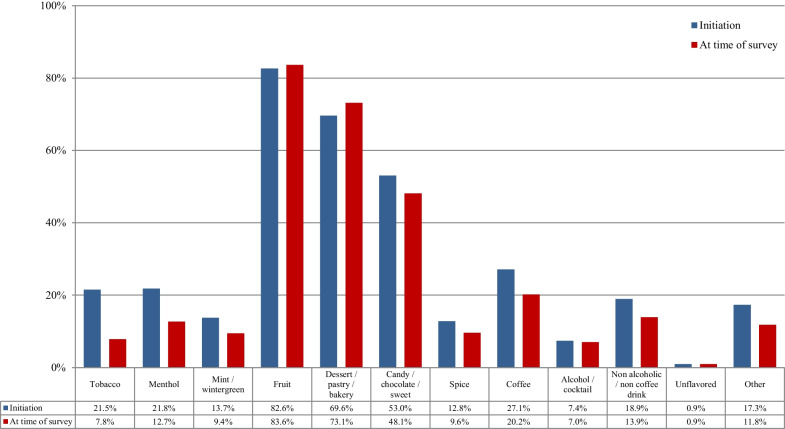
The most popular flavors at e-cigarette use initiation were fruit (82.8%), followed by dessert/pastry/bakery (68.6%) and candy/chocolate/sweet (52.2%). Slightly higher prevalence of using fruit and dessert/pastry/bakery flavors was observed in those who never smoked compared to those who were currently and formerly smoking. Tobacco flavors were used by 20.8% of the participants and was by far the least prevalent among participants who never smoked. Similar patterns were observed with participants' choices at the time of the survey, but tobacco flavor use was substantially reduced (7.7%). Only 2.1% reported tobacco as the single most often used flavor. The most prevalent flavor at the time of quitting smoking was again fruit (83.3%), followed by dessert/pastry/bakery (68.0%) and candy/chocolate/sweet (44.5%). These flavors were considered the most helpful for quitting smoking. Tobacco flavor use at the time of smoking cessation was reported by 15.0%, while 9.3% considered it helpful for quitting smoking.
Non-tobacco flavors were popular among the US adult vapers who participated in the study, and were popular choices at the time of quitting smoking for those who formerly smoked. Tobacco flavor use prevalence was low and was further reduced over time. Regulators should consider the flavor choice of adult consumers, especially those who quit smoking, when preparing legislation on flavored e-cigarettes.
调味电子烟在全球范围内引起了监管机构的争议,他们正在计划或已经实施限制措施。在这项研究中,我们调查了美国成年电子烟使用者中电子烟口味使用模式。
研究纳入了年龄≥18 岁、曾使用过电子烟的参与者(N=69233),并让他们在线回答问卷。记录参与者的吸烟状况以及电子烟使用初始、调查时和戒烟时的口味使用模式(对于曾吸烟且戒烟时使用电子烟的参与者)。
电子烟使用初始时最受欢迎的口味是水果味(82.8%),其次是甜点/糕点/烘焙味(68.6%)和糖果/巧克力/甜味(52.2%)。与当前吸烟者和既往吸烟者相比,从不吸烟者使用水果味和甜点/糕点/烘焙味的比例略高。20.8%的参与者使用烟草味,在从不吸烟者中烟草味的使用比例最低。在调查时参与者的选择中也观察到类似的模式,但烟草味的使用大幅减少(7.7%)。只有 2.1%的人报告烟草味是最常使用的口味。戒烟时最常使用的口味仍是水果味(83.3%),其次是甜点/糕点/烘焙味(68.0%)和糖果/巧克力/甜味(44.5%)。这些口味被认为对戒烟最有帮助。戒烟时报告使用烟草味的比例为 15.0%,而 9.3%的人认为烟草味有助于戒烟。
在参与研究的美国成年电子烟使用者中,非烟草口味很受欢迎,对于曾吸烟且戒烟的人来说,这些口味也是戒烟时的首选。烟草味的使用比例较低,且随着时间的推移进一步减少。监管机构在制定调味电子烟法规时,应考虑成年消费者,尤其是那些戒烟者的口味选择。