Sussex Health Outcomes Research & Education in Cancer (SHORE-C), Brighton & Sussex Medical School, University of Sussex, Falmer, Brighton, BN1 9RX, UK.
Cancer Research UK Clinical Trials Unit, Institute of Cancer and Genomic Sciences, University of Birmingham, Birmingham, B15 2TT, UK.
Trials. 2023 Oct 14;24(1):670. doi: 10.1186/s13063-023-07703-4.
The LOw RISk DCIS (LORIS) study was set up to compare conventional surgical treatment with active monitoring in women with ductal carcinoma in situ (DCIS). Recruitment to trials with a surveillance arm is known to be challenging, so strategies to maximise patient recruitment, aimed at both patients and recruiting centres, were implemented.
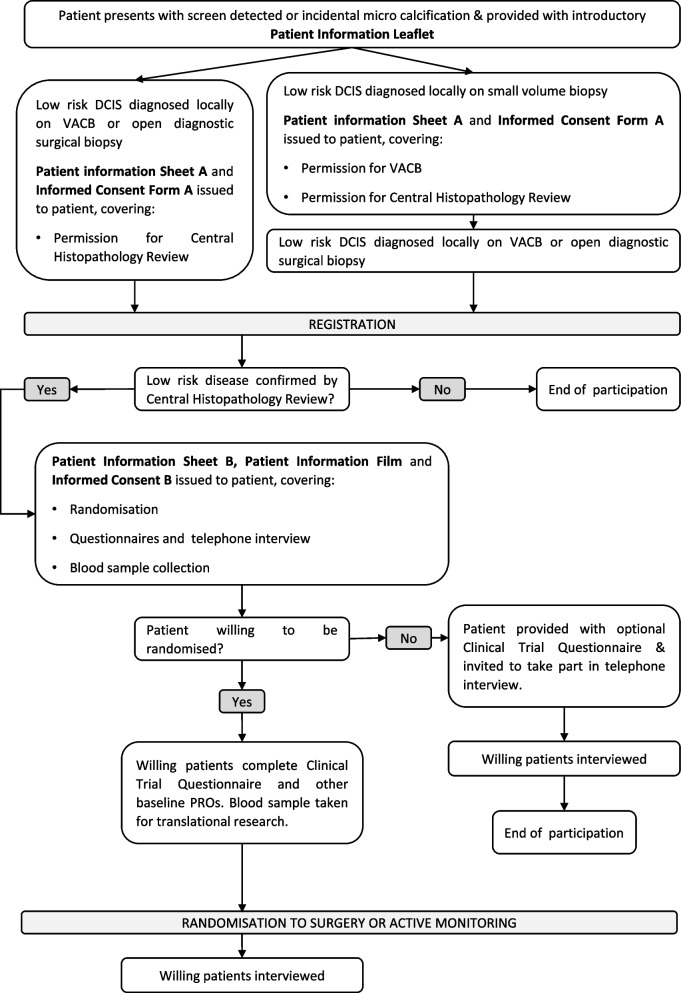
Women aged ≥ 46 years with a histologically confirmed diagnosis of non-high-grade DCIS were eligible for 1:1 randomisation to either surgery or active monitoring. Prior to randomisation, all eligible women were invited to complete: (1) the Clinical Trials Questionnaire (CTQ) examining reasons for or against participation, and (2) interviews exploring in depth opinions about the study information sheets and film. Women agreeing to randomisation completed validated questionnaires assessing health status, physical and mental health, and anxiety levels. Hospital site staff were invited to communication workshops and refresher site initiation visits to support recruitment. Their perspectives on LORIS recruitment were collected via surveys and interviews.
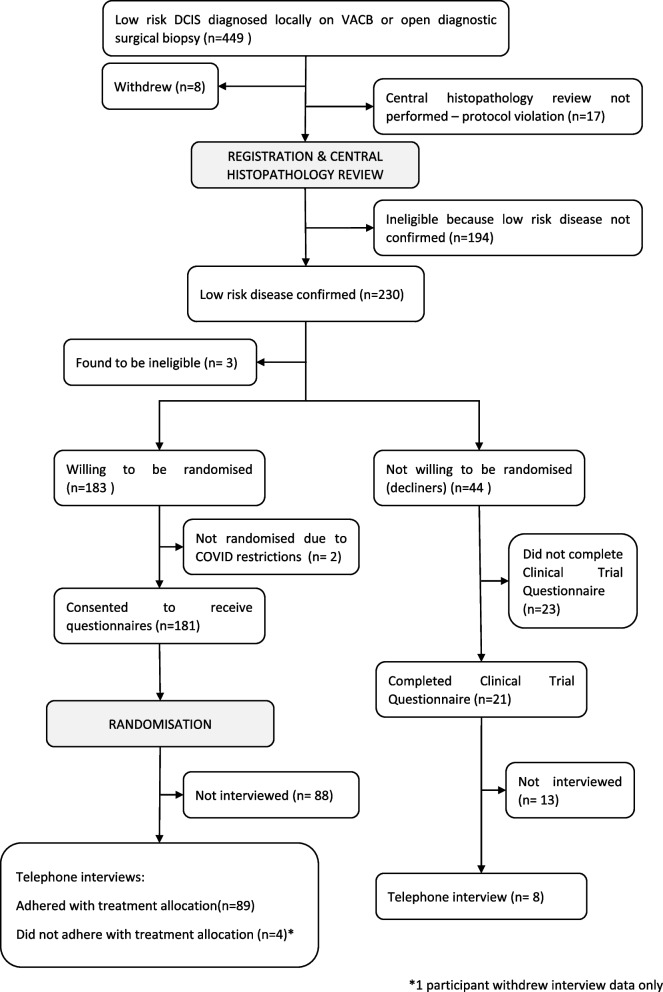
Eighty percent (181/227) of eligible women agreed to be randomised. Over 40% of participants had high anxiety levels at baseline. On the CTQ, the most frequent most important reasons for accepting randomisation were altruism and belief that the trial offered the best treatment, whilst worries about randomisation and the influences of others were the most frequent most important reasons for declining. Most women found the study information provided clear and useful. Communication workshops for site staff improved knowledge and confidence but only about half said they themselves would join LORIS if eligible. The most common recruitment barriers identified by staff were low numbers of eligible patients and patient preference.
Recruitment to LORIS was challenging despite strategies aimed at both patients and site staff. Ensuring that recruiting staff support the study could improve recruitment in similar future trials.
ISRCTN27544579, prospectively registered on 22 May 2014.
LOw RISk DCIS(LORIS)研究旨在比较导管原位癌(DCIS)女性的常规手术治疗与主动监测。已知具有监测臂的试验的入组具有挑战性,因此实施了旨在最大化患者招募的策略,既针对患者又针对招募中心。
年龄≥46 岁且经组织学证实为非高级别 DCIS 的女性有资格进行 1:1 随机分组,分别接受手术或主动监测。在随机分组之前,所有符合条件的女性都被邀请完成:(1)临床试验问卷(CTQ),检查参与或反对的原因;(2)访谈,深入探讨对研究信息表和电影的看法。同意随机分组的女性完成了评估健康状况、身心健康和焦虑水平的经过验证的问卷。医院工作人员受邀参加沟通研讨会和重新启动站点的入职访问,以支持招募。通过调查和访谈收集他们对 LORIS 招募的看法。
80%(181/227)符合条件的女性同意进行随机分组。超过 40%的参与者在基线时有较高的焦虑水平。在 CTQ 上,接受随机分组的最重要原因是利他主义和相信试验提供了最佳治疗,而对随机分组的担忧和他人的影响是拒绝的最重要原因。大多数女性认为提供的研究信息清晰有用。针对工作人员的沟通研讨会提高了他们的知识和信心,但只有一半的工作人员表示,如果自己符合条件,他们自己也会加入 LORIS。工作人员确定的最常见招募障碍是符合条件的患者数量少和患者偏好。
尽管针对患者和工作人员都实施了策略,但 LORIS 的招募仍具有挑战性。确保招募工作人员支持该研究可能会改善未来类似试验的招募。
ISRCTN27544579,于 2014 年 5 月 22 日前瞻性注册。