Black Benjamin, Hunter Samantha, Cottrell Hannah, Dar Roee, Takahashi Nicole, Ferguson Bradley J, Valter Yishai, Porges Eric, Datta Abhishek, Beversdorf David Q
Department of Pediatrics, Thompson Center for Autism and Neurodevelopment, University of Missouri, Columbia, MO, United States.
School of Medicine, University of Missouri, Columbia, MO, United States.
Front Psychiatry. 2023 Sep 28;14:1238328. doi: 10.3389/fpsyt.2023.1238328. eCollection 2023.
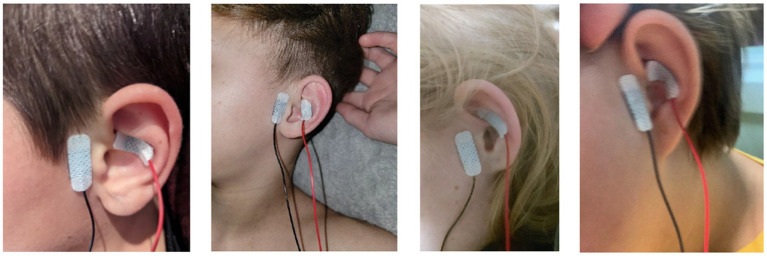
Transcutaneous auricular vagus nerve stimulation (taVNS) has potential clinical application for autism spectrum disorder (ASD). At-home sessions are necessary to allow delivery of repeated sessions, and remove burden on patients for daily visits, and reduce costs of clinic delivery. Our objective was to validate a protocol for remote supervised administration for home delivery of taVNS using specially designed equipment and platform.
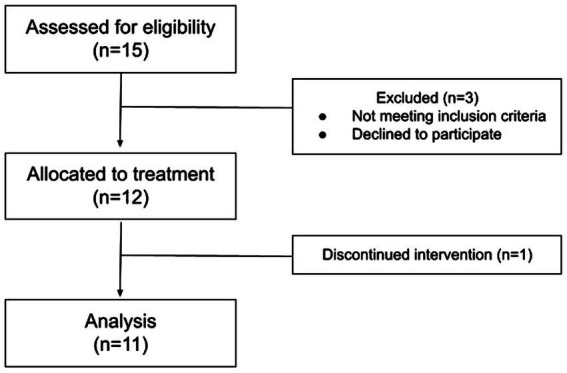
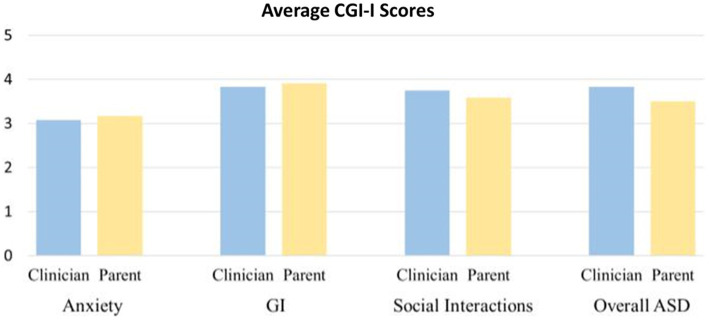
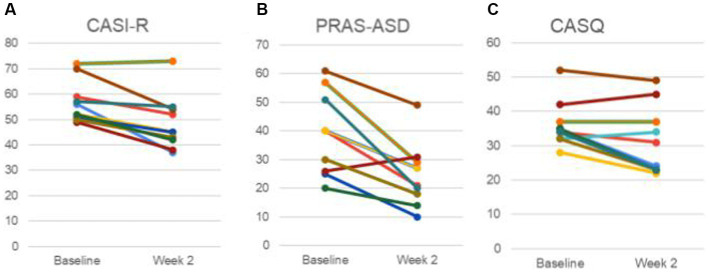
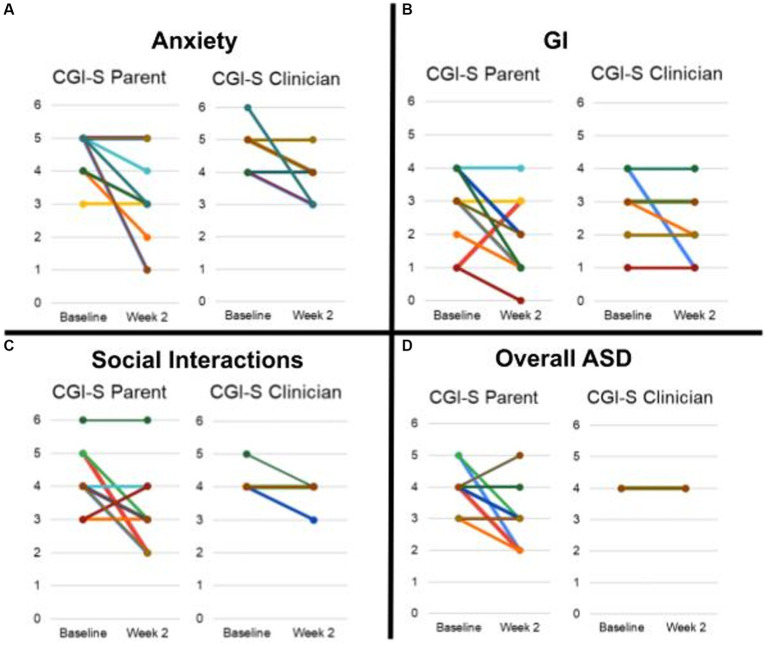
An open-label design was followed involving administration by caretakers to 12 patients with ASD (ages:7-16). Daily 1-h sessions over 2 weeks were administered under remote supervision. The primary outcome was feasibility, which was assessed by completion rate, stimulation tolerability, and confirmation of programmed stimulation delivery. The secondary measures were initial efficacy assessed by Childhood Anxiety Sensitivity Index-Revised (CASI-R), Parent Rated Anxiety Scale for Youth with ASD (PRAS-ASD), and Clinician Global Impression (CGI) scales. Sleep measures were also tracked using Cleveland Adolescent Sleep Questionnaire (CASQ).
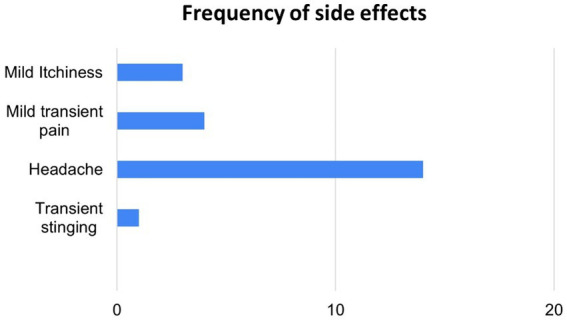
Across 132 sessions, we obtained an 88.5% completion rate. A total of 22 expected adverse events were reported with headache being the most common followed by transient pain, itchiness, and stinging at the electrode site. One subject dropped out of the study unrelated to the stimulation or the study. Average scores of anxiety (CASI-R, PRAS-ASD, and CGI) and sleepiness (CASQ) were all improved at the 2 week time point. While not powered to determine efficacy, benefits were suggested in this open label pilot.
Remotely supervised, proxy-administered, at-home delivery of taVNS is feasible in patients with ASD. Initial efficacy supports pursuing larger scale trials.
经皮耳迷走神经刺激(taVNS)在自闭症谱系障碍(ASD)方面具有潜在的临床应用价值。居家治疗对于进行重复治疗、减轻患者每日就诊负担以及降低门诊治疗成本而言是必要的。我们的目标是验证一种使用专门设计的设备和平台进行远程监督管理的方案,以实现taVNS的居家治疗。
采用开放标签设计,由照顾者对12例ASD患者(年龄7 - 16岁)进行治疗。在远程监督下,进行为期2周、每天1小时的治疗。主要结局是可行性,通过完成率、刺激耐受性以及程控刺激传递的确认来评估。次要指标是通过儿童焦虑敏感性指数修订版(CASI - R)、自闭症谱系障碍青少年家长评定焦虑量表(PRAS - ASD)和临床医生整体印象(CGI)量表评估的初始疗效。还使用克利夫兰青少年睡眠问卷(CASQ)追踪睡眠指标。
在132次治疗中,我们获得了88.5%的完成率。共报告了22例预期不良事件,其中头痛最为常见,其次是电极部位的短暂疼痛、瘙痒和刺痛。1名受试者退出研究,与刺激或研究无关。在2周时间点,焦虑(CASI - R、PRAS - ASD和CGI)和嗜睡(CASQ)的平均得分均有所改善。虽然未进行效力分析以确定疗效,但在这项开放标签试验中显示出了益处。
对于ASD患者,远程监督、代理管理的taVNS居家治疗是可行的。初始疗效支持开展更大规模的试验。