Badran Bashar W, Huffman Sarah M, Dancy Morgan, Austelle Christopher W, Bikson Marom, Kautz Steven A, George Mark S
Neuro-X Lab, Department of Psychiatry and Behavioral Sciences, Medical University of South Carolina, Charleston, SC, USA.
Brain Stimulation Division, Department of Psychiatry and Behavioral Sciences, Medical University of South Carolina, Charleston, SC, USA.
Bioelectron Med. 2022 Aug 25;8(1):13. doi: 10.1186/s42234-022-00094-y.
Although the coronavirus disease 19 (COVID-19) pandemic has now impacted the world for over two years, the persistent secondary neuropsychiatric effects are still not fully understood. These "long COVID" symptoms, also referred to as post-acute sequelae of SARS-CoV-2 infection (PASC), can persist for months after infection without any effective treatments. Long COVID involves a complex heterogenous symptomology and can lead to disability and limit work. Long COVID symptoms may be due to sustained inflammatory responses and prolonged immune response after infection. Interestingly, vagus nerve stimulation (VNS) may have anti-inflammatory effects, however, until recently, VNS could not be self-administered, at-home, noninvasively.
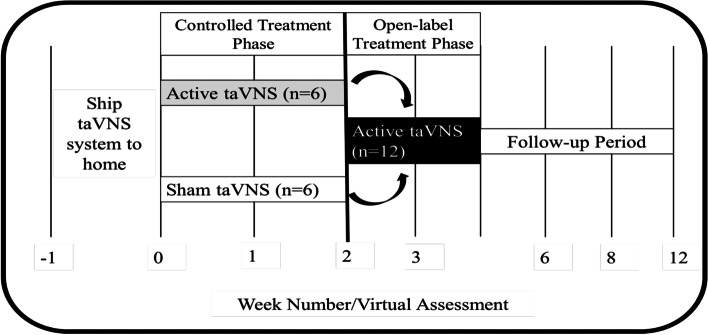
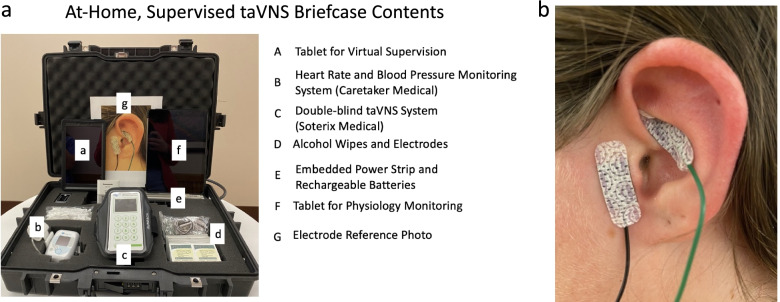
We created a double-blind, noninvasive transcutaneous auricular VNS (taVNS) system that can be self-administered at home with simultaneous remote monitoring of physiological biomarkers and video supervision by study staff. Subsequently, we carried out a pilot (n = 13) randomized, sham-controlled, trial with this system for four weeks to treat nine predefined long covid symptoms (anxiety, depression, vertigo, anosmia, ageusia, headaches, fatigue, irritability, brain fog). No in-person patient contact was needed, with informed consent, trainings, ratings, and all procedures being conducted remotely during the pandemic (2020-2021) and equipment being shipped to individuals' homes. This trial was registered on ClinicalTrials.gov under the identifier: NCT04638673 registered November 20, 2020.
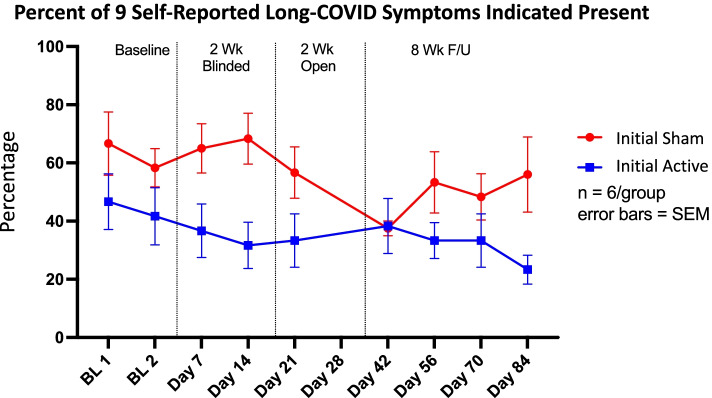
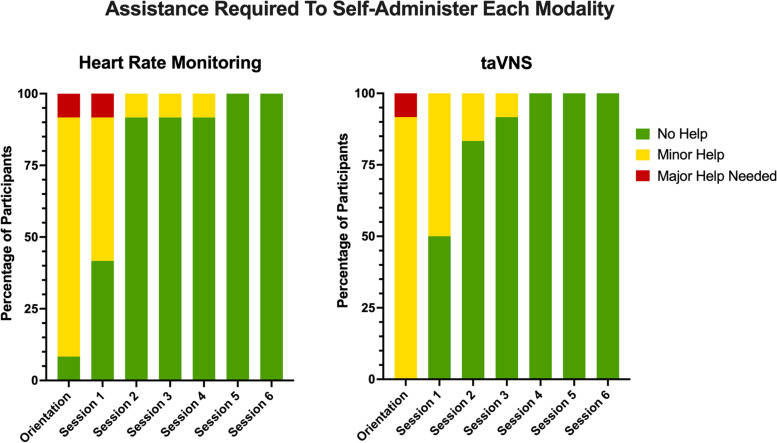
Four-weeks of at-home self-administered taVNS (two, one-hour sessions daily, delivered at suprathreshold intensities) was feasible and safe. Although our trial was not powered to determine efficacy as an intervention in a heterogenous population, the trends in the data suggest taVNS may have a mild to moderate effect in reducing mental fatigue symptoms in a subset of individuals.
This innovative study demonstrates the safety and feasibility of supervised self-administered taVNS under a fully contactless protocol and suggests that future studies can safely investigate this novel form of brain stimulation at-home for a variety of neuropsychiatric and motor recovery applications.
尽管新型冠状病毒肺炎(COVID-19)大流行至今已影响全球两年多,但其次生性神经精神影响仍未完全明确。这些“长新冠”症状,也被称为严重急性呼吸综合征冠状病毒2感染后急性后遗症(PASC),在感染后可持续数月,且尚无有效治疗方法。长新冠涉及复杂的异质性症状群,可导致残疾并限制工作。长新冠症状可能归因于感染后持续的炎症反应和延长的免疫反应。有趣的是,迷走神经刺激(VNS)可能具有抗炎作用,然而,直到最近,VNS还无法在家中自行非侵入性使用。
我们创建了一种双盲、非侵入性经皮耳迷走神经刺激(taVNS)系统,该系统可在家中自行使用,同时由研究人员对生理生物标志物进行远程监测并进行视频监督。随后,我们使用该系统进行了一项试点(n = 13)随机、假对照试验,为期四周,以治疗九种预先定义的长新冠症状(焦虑、抑郁、眩晕、嗅觉丧失、味觉丧失、头痛、疲劳、易怒、脑雾)。在大流行期间(2020 - 2021年),无需与患者进行面对面接触,在获得知情同意、培训、评分以及所有程序均通过远程进行,设备被运送到个人家中。该试验已在ClinicalTrials.gov上注册,标识符为:NCT04638673,于2020年11月20日注册。
在家中自行进行四周的taVNS(每天两次,每次一小时,以阈上强度进行)是可行且安全的。尽管我们的试验没有足够的效力来确定其作为异质性人群干预措施的疗效,但数据趋势表明,taVNS可能对减轻一部分个体的精神疲劳症状有轻度至中度效果。
这项创新性研究证明了在完全无接触方案下监督自行使用taVNS的安全性和可行性,并表明未来的研究可以安全地在家中研究这种新型脑刺激形式,用于各种神经精神和运动恢复应用。