Division of Endocrinology, Diabetes and Hypertension, Brigham and Women´s Hospital, Harvard Medical School, Boston, MA.
Hypertension. 2023 Dec;80(12):2665-2673. doi: 10.1161/HYPERTENSIONAHA.123.21229. Epub 2023 Oct 17.
Disease-causing mutations in gene occur in aldosterone-producing adenomas and familial hyperaldosteronism. We determined whether single nucleotide polymorphisms in gene associate with higher aldosterone resulting in salt sensitivity of blood pressure (BP) and increased BP in men and women.
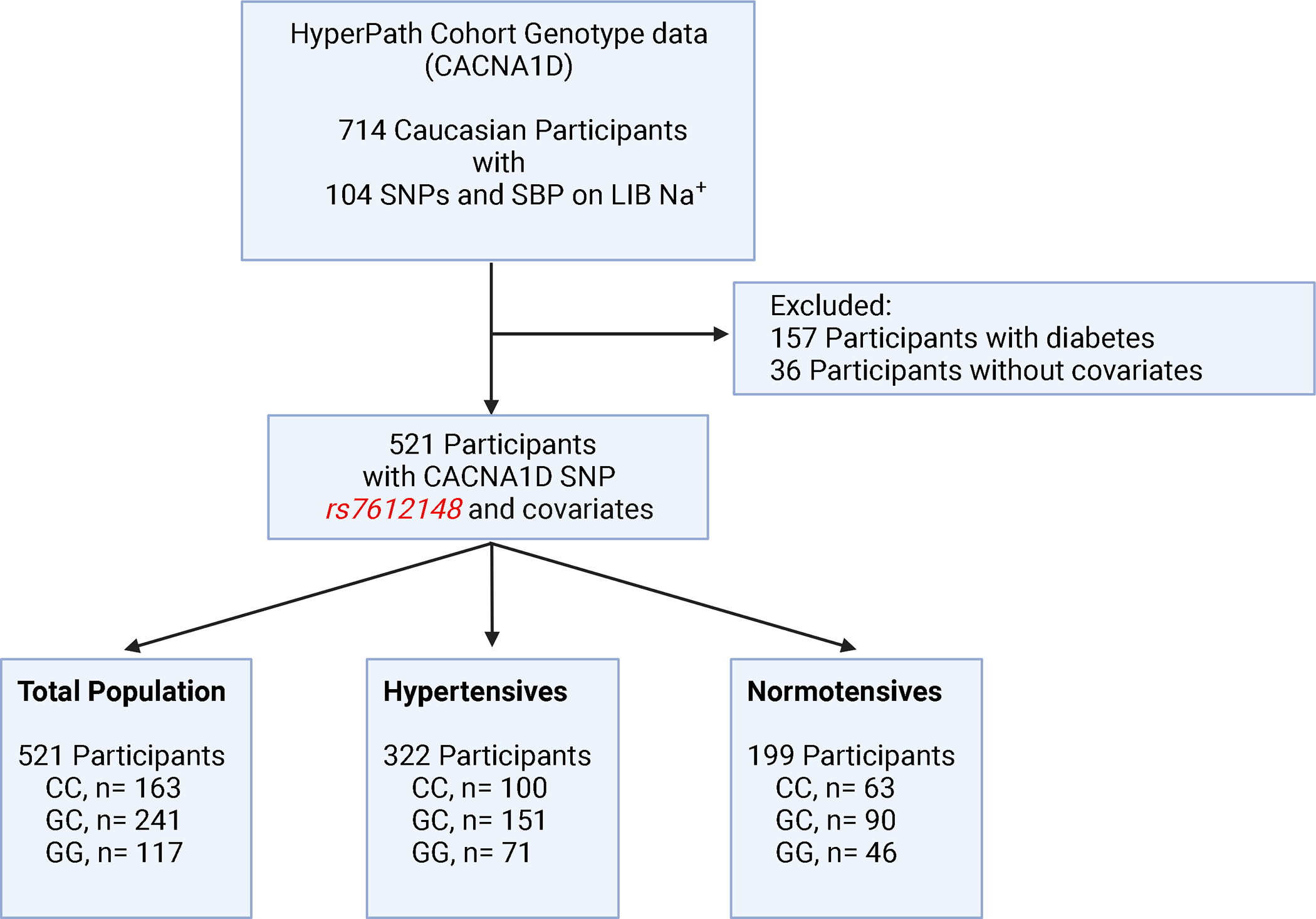
Data were obtained from the HyperPATH (International Hypertension Pathotypes) cohort, where participants completed a cross-over intervention of liberal and restricted sodium diets. Multi-Ethnic Genotyping Array identified 104 single nucleotide polymorphisms that met quality control. Single nucleotide polymorphism is rs7612148 strongly associated with systolic BP and was selected for study in 521 White participants in 3 scenarios ([1] hypertensives; [2] normotensives; [3] total population=hypertensives+normotensives) using multivariate regression analysis.
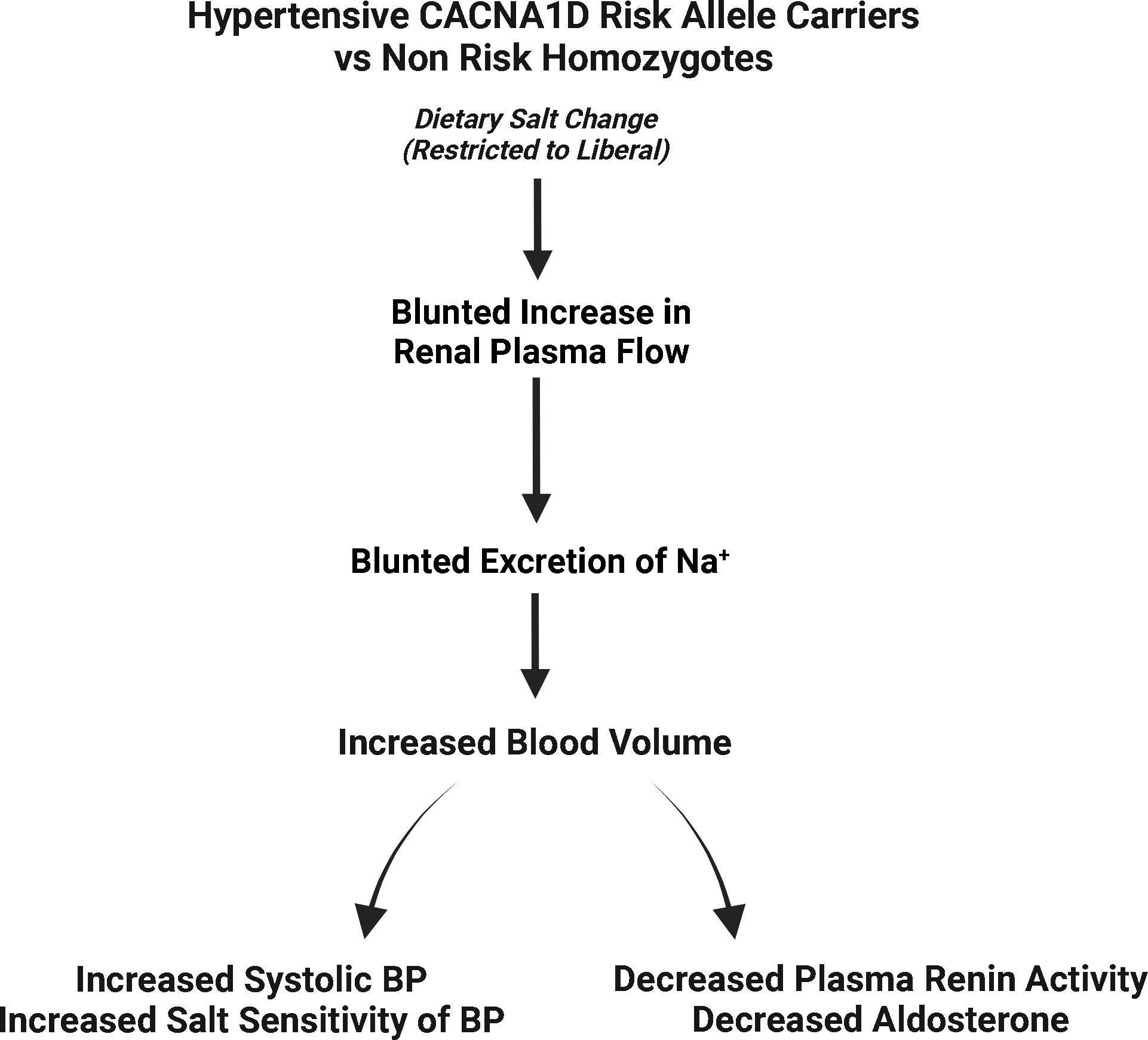
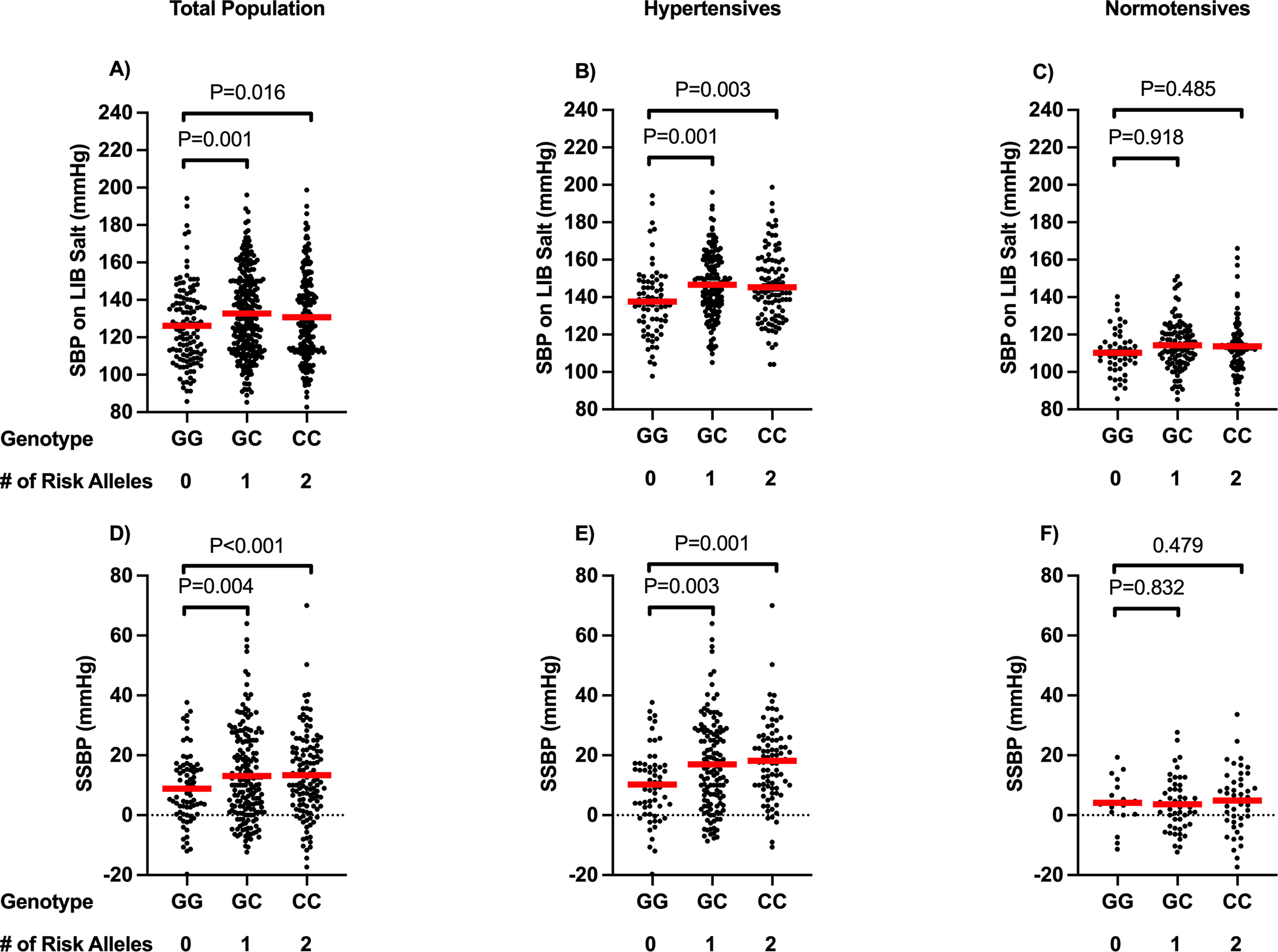
In the total population and hypertensives, but not normotensives, risk allele carriers (CC, GC), as compared with nonrisk allele homozygotes (GG), exhibited higher salt sensitivity of BP and, on liberal sodium diet, higher systolic BP, lower baseline and angiotensin II-stimulated aldosterone, and lower plasma renin activity. On restricted sodium diet, BP was similar across genotypes, suggesting sodium restriction corrected/neutralized the genotype effect on BP. Because increased aldosterone did not seem to drive the increased salt sensitivity of BP and increased BP on liberal sodium diet, we assessed renal plasma flow. Renal plasma flow increase from restricted to liberal sodium diets was blunted in risk allele homozygotes in the total population and in hypertensives. A replication study in another cohort HyperPATH B (International Hypertension Pathotypes Cohort B) confirmed BP-genotype associations.
rs7612148 risk allele associated with increased BP and salt sensitivity of BP, likely due to an impaired ability to increase renal plasma flow in response to a liberal sodium diet and not to excess aldosterone.
基因中的致病突变发生在醛固酮产生性腺瘤和家族性醛固酮增多症中。我们确定基因中的单核苷酸多态性是否与更高的醛固酮相关,导致血压(BP)的盐敏感性增加,并增加男性和女性的 BP。
数据来自 HyperPATH(国际高血压表型)队列,其中参与者完成了自由和限制钠饮食的交叉干预。多民族基因分型阵列确定了 104 个符合质量控制要求的单核苷酸多态性。单核苷酸多态性 rs7612148 与收缩压强烈相关,在 521 名白种参与者的 3 种情况下([1]高血压患者;[2]血压正常者;[3]总人群=高血压患者+血压正常者),使用多元回归分析进行了研究。
在总人群和高血压患者中,但在血压正常者中,与非风险等位基因纯合子(GG)相比,风险等位基因携带者(CC、GC)表现出更高的 BP 盐敏感性,并且在自由钠饮食时,收缩压更高,基础和血管紧张素 II 刺激的醛固酮水平更低,血浆肾素活性更低。在限制钠饮食时,各基因型之间的 BP 相似,表明钠限制纠正/中和了 BP 基因型的影响。由于增加的醛固酮似乎并没有导致 BP 的盐敏感性增加和自由钠饮食时的 BP 升高,我们评估了肾血浆流量。在总人群和高血压患者中,风险等位基因纯合子从限制钠饮食到自由钠饮食时,肾血浆流量的增加减弱。另一项队列研究 HyperPATH B(国际高血压表型队列 B)证实了 BP-基因型的关联。
rs7612148 风险等位基因与 BP 升高和 BP 的盐敏感性相关,可能是由于在自由钠饮食时增加肾血浆流量的能力受损,而不是由于醛固酮过多。