Department of General, Visceral and Thoracic Surgery, University Hospital Hamburg-Eppendorf, Hamburg, Germany.
Department of General, Visceral and Thoracic Surgery, St. Elisabethen-Klinikum Ravensburg, Academic Teaching Hospital University of Ulm, Ravensburg, Germany.
BJS Open. 2023 Sep 5;7(5). doi: 10.1093/bjsopen/zrad102.
Early postoperative mobilization is considered a key element of enhanced recovery after surgery protocols. The aim of this study was to summarize the effect of early postoperative mobilization following gastrointestinal operations on patient recovery, mobility, the morbidity rate and duration of hospital stay.
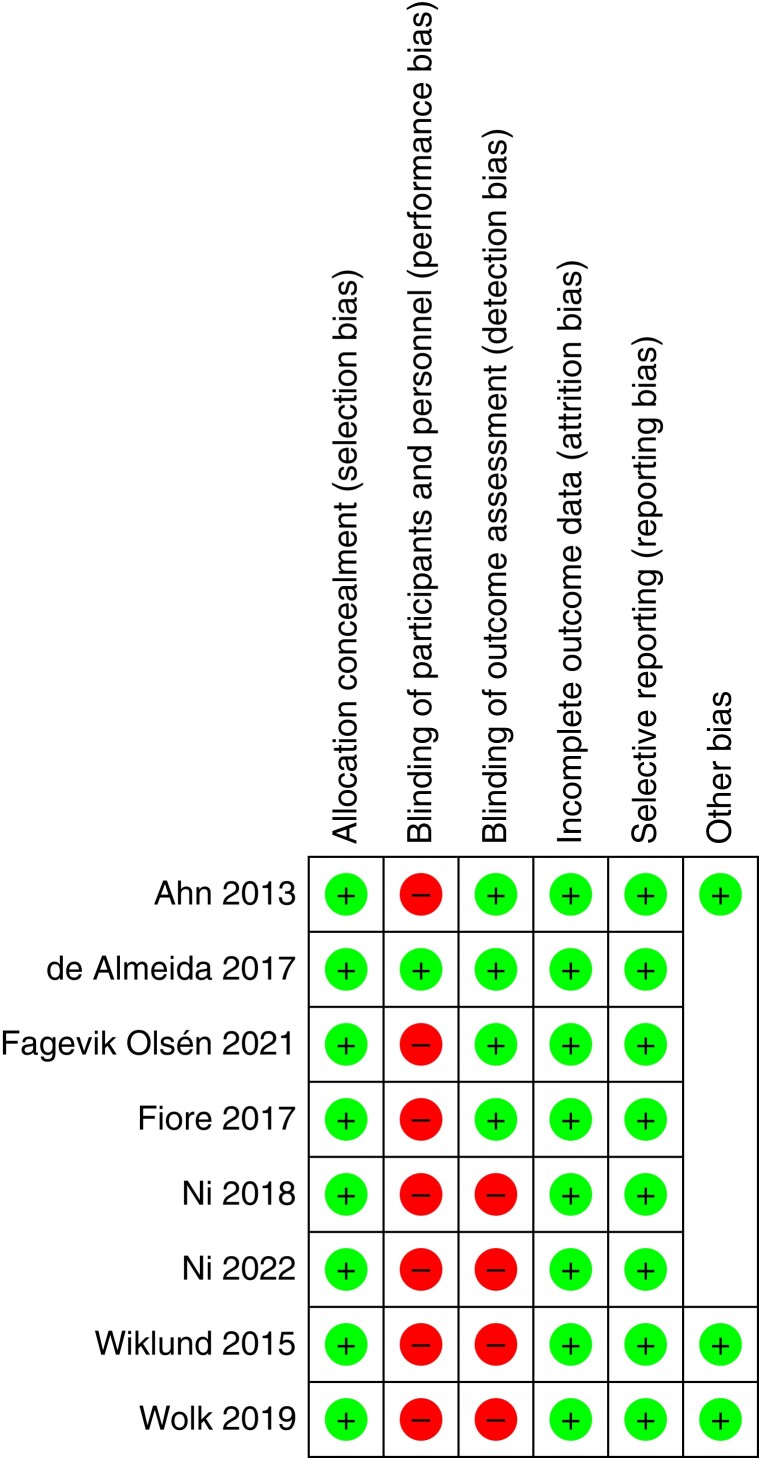
A systematic literature search was conducted in December, 2022, using PubMed, Web of Science and the Cochrane Central Register of Controlled Trials. Controlled trials reporting the effects of early postoperative mobilization after gastrointestinal surgery were included. The risk of bias was assessed using a modified Downs and Black tool and the Cochrane Collaboration tool for randomized trials. The outcomes of interest were gastrointestinal recovery (defined passage of first flatus or bowel movements), mobility (step count on postoperative day 3), the morbidity rate and duration of hospital stay.
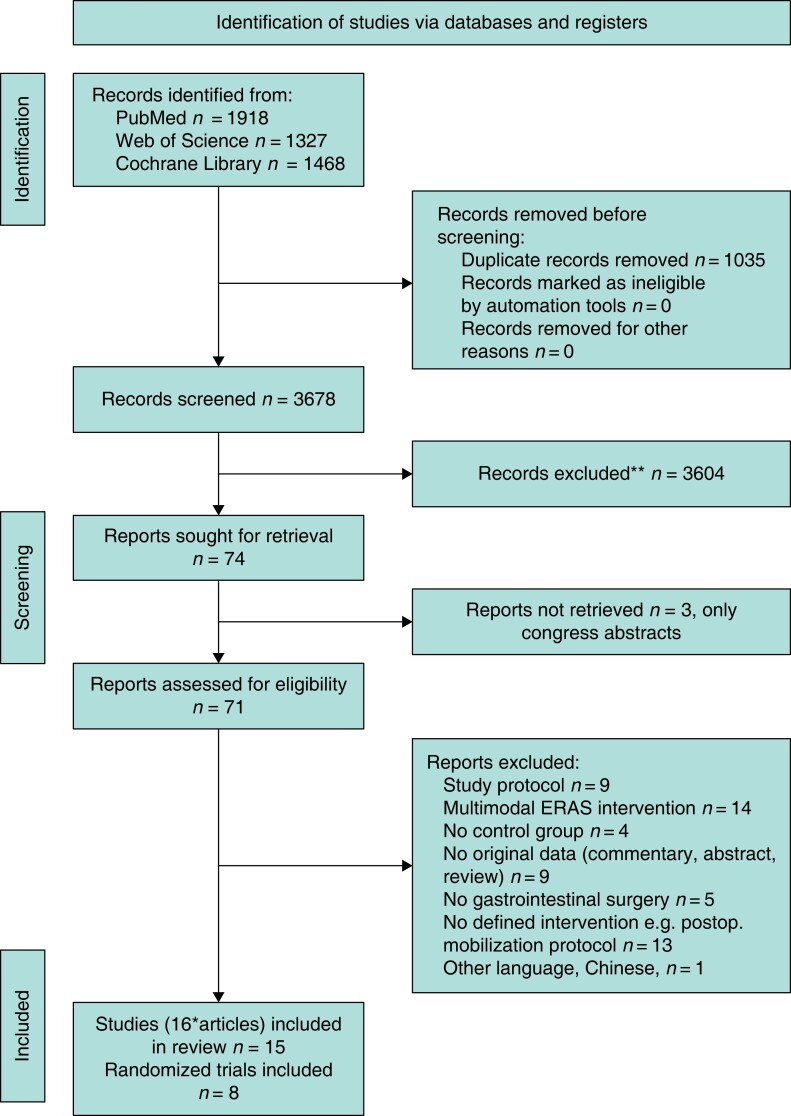
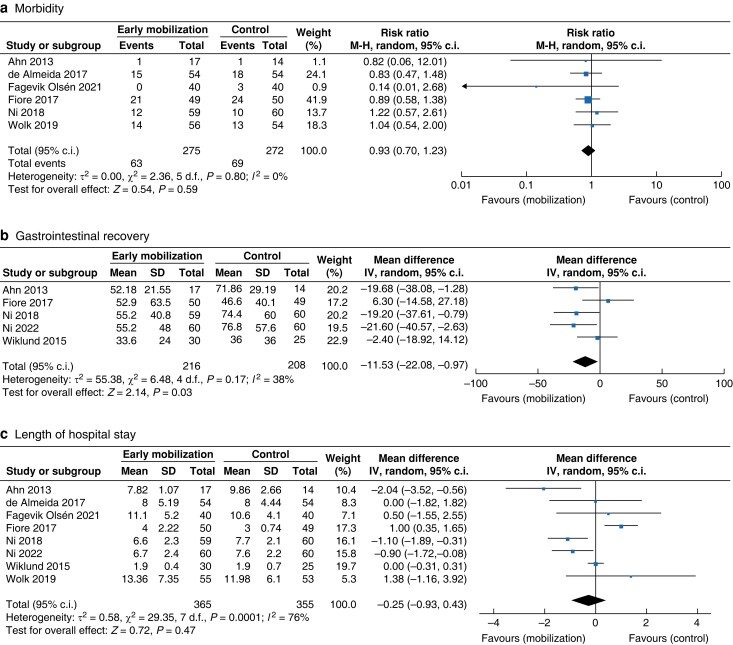
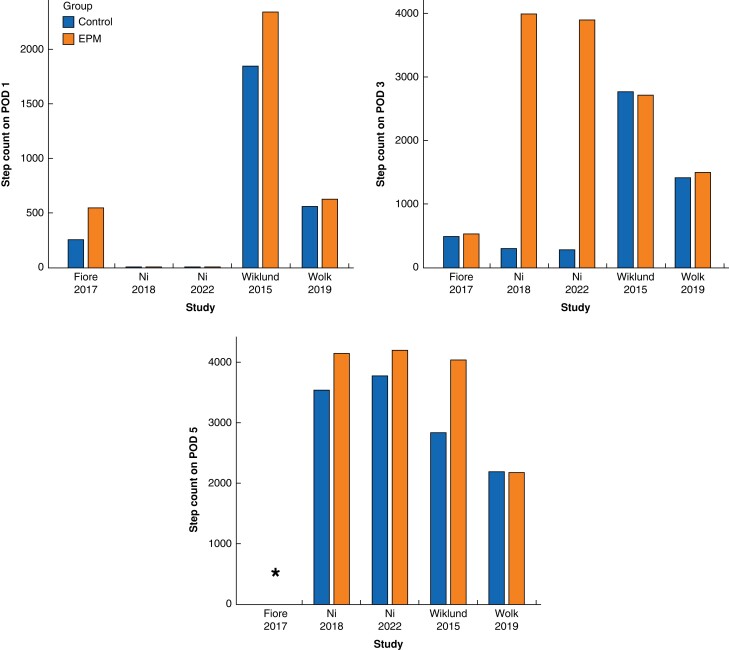
After elimination of duplicates, 3678 records were identified, and 71 full-text articles were screened. Finally, 15 studies (eight RCTs) reporting on 3538 patients were included. Most trials evaluated early postoperative mobilization after different gastrointestinal operations, including upper gastrointestinal (n = 8 studies), hepatopancreatobiliary (n = 10 studies) and colorectal resections (n = 10 studies). The investigated early postoperative mobilization protocols, operative techniques (minimally invasive or open) and outcome parameters were heterogeneous between the studies. Early postoperative mobilization seemed to significantly accelerate clinical gastrointestinal recovery (mean difference, hours: -11.53 (-22.08, -0.97), P = 0.03). However, early postoperative mobilization did not significantly improve the morbidity rate (risk ratio: 0.93 (0.70, 1.23), P = 0.59), postoperative mobility of patients (step count mean difference: 1009 (-803, 2821), P = 0.28) or shorten the duration of hospital stay (mean difference, days: -0.25 (-0.99,0.43), P = 0.47) in randomized trials.
There is a large heterogeneity among the study cohorts, operations and interventions. The available evidence currently does not support specific early postoperative mobilization protocols as an isolated element to further reduce the morbidity rate and duration of hospital stay. Further well-designed trials are required to identify effective early postoperative mobilization protocols.
术后早期活动被认为是加速康复外科方案的关键要素。本研究旨在总结胃肠手术后早期活动对患者康复、活动能力、发病率和住院时间的影响。
于 2022 年 12 月在 PubMed、Web of Science 和 Cochrane 对照试验中心注册库进行系统文献检索,纳入报告胃肠手术后早期活动影响的对照试验。使用改良 Downs 和 Black 工具和 Cochrane 协作随机试验工具评估偏倚风险。主要结局为胃肠恢复(首次排气或排便)、活动能力(术后第 3 天的步数)、发病率和住院时间。
剔除重复文献后,共识别出 3678 条记录,筛选出 71 篇全文文章。最终纳入 15 项研究(8 项 RCT),共 3538 例患者。大多数试验评估了不同胃肠手术后的早期术后活动,包括上消化道(n=8 项研究)、肝胆胰(n=10 项研究)和结直肠切除术(n=10 项研究)。研究之间术后活动方案、手术技术(微创或开放)和结局参数存在异质性。早期术后活动似乎能显著加快临床胃肠恢复(平均差值,小时:-11.53(-22.08,-0.97),P=0.03)。然而,早期术后活动并不能显著降低发病率(风险比:0.93(0.70,1.23),P=0.59)、患者术后活动能力(步数平均差值:1009(-803,2821),P=0.28)或缩短住院时间(平均差值,天:-0.25(-0.99,0.43),P=0.47)。
研究队列、手术和干预措施存在较大异质性。目前的证据并不支持特定的早期术后活动方案作为降低发病率和住院时间的单一因素。需要进一步进行设计良好的试验来确定有效的早期术后活动方案。