Neuro-Robotics Laboratory, Graduate School of Biomedical Engineering, Tohoku University, Sendai, Japan.
Presence Media Research Group, Hiroshi Ishiguro Laboratory, Advanced Telecommunications Research Institute International, Kyoto, Japan.
Sci Rep. 2023 Oct 18;13(1):17752. doi: 10.1038/s41598-023-44621-6.
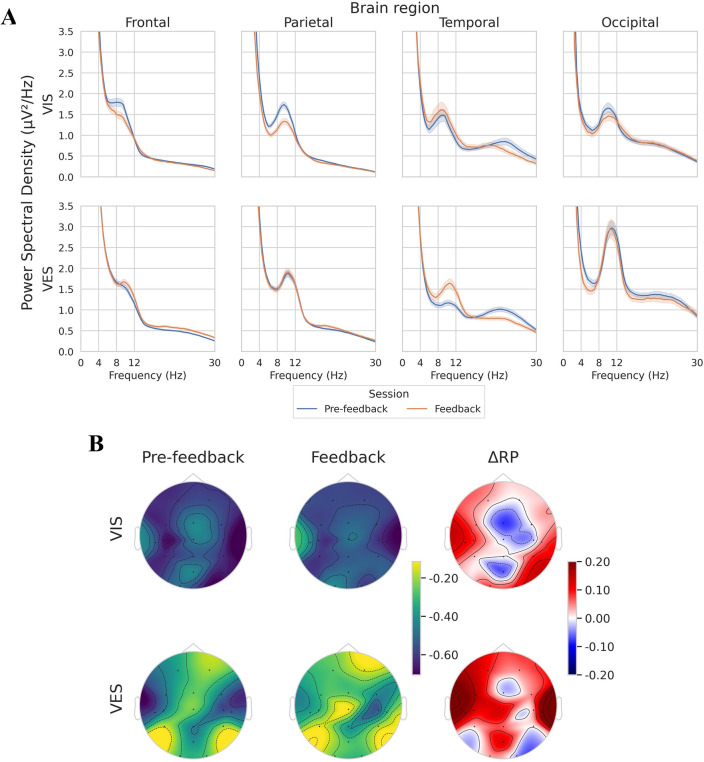
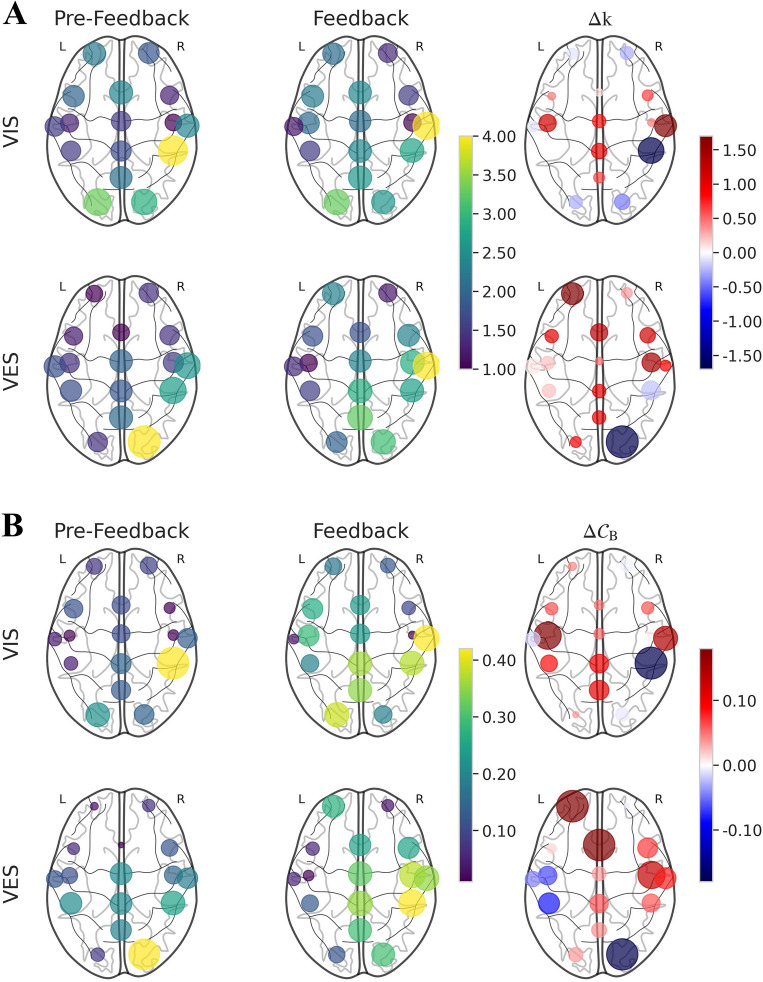
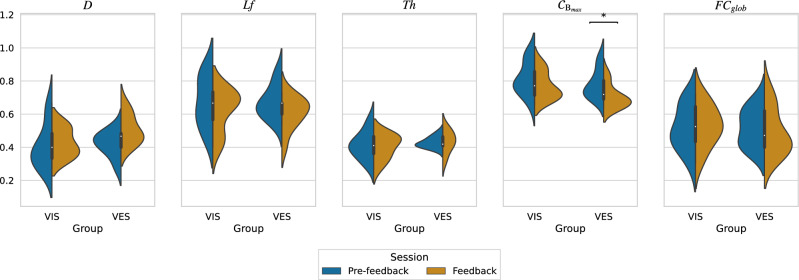
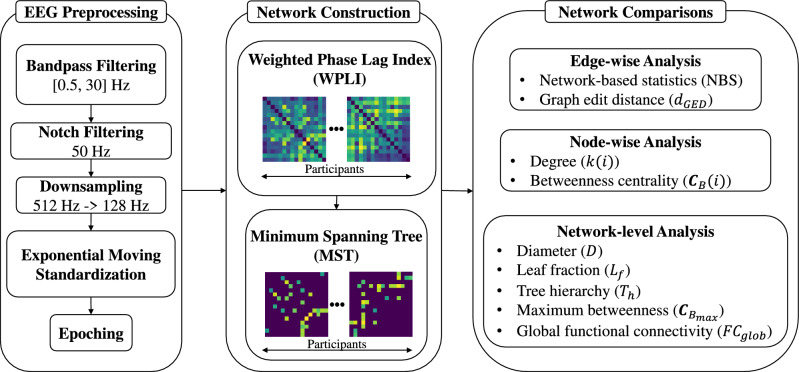
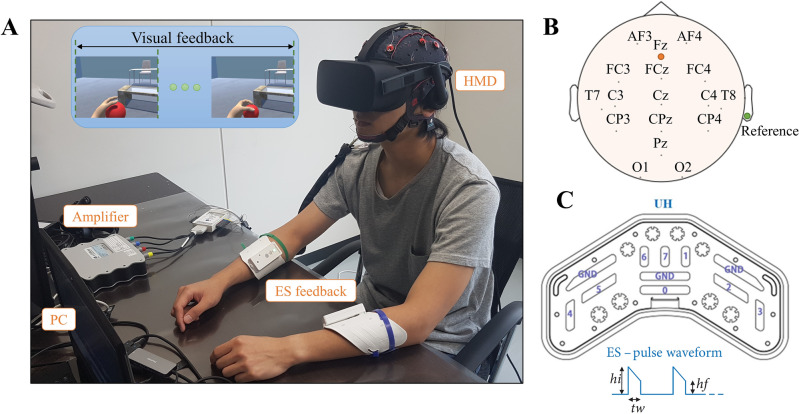
The use of neurofeedback is an important aspect of effective motor rehabilitation as it offers real-time sensory information to promote neuroplasticity. However, there is still limited knowledge about how the brain's functional networks reorganize in response to such feedback. To address this gap, this study investigates the reorganization of the brain network during motor imagery tasks when subject to visual stimulation or visual-electrotactile stimulation feedback. This study can provide healthcare professionals with a deeper understanding of the changes in the brain network and help develop successful treatment approaches for brain-computer interface-based motor rehabilitation applications. We examine individual edges, nodes, and the entire network, and use the minimum spanning tree algorithm to construct a brain network representation using a functional connectivity matrix. Furthermore, graph analysis is used to detect significant features in the brain network that might arise in response to the feedback. Additionally, we investigate the power distribution of brain activation patterns using power spectral analysis and evaluate the motor imagery performance based on the classification accuracy. The results showed that the visual and visual-electrotactile stimulation feedback induced subject-specific changes in brain activation patterns and network reorganization in the [Formula: see text] band. Thus, the visual-electrotactile stimulation feedback significantly improved the integration of information flow between brain regions associated with motor-related commands and higher-level cognitive functions, while reducing cognitive workload in the sensory areas of the brain and promoting positive emotions. Despite these promising results, neither neurofeedback modality resulted in a significant improvement in classification accuracy, compared with the absence of feedback. These findings indicate that multimodal neurofeedback can modulate imagery-mediated rehabilitation by enhancing motor-cognitive communication and reducing cognitive effort. In future interventions, incorporating this technique to ease cognitive demands for participants could be crucial for maintaining their motivation to engage in rehabilitation.
神经反馈的使用是有效运动康复的一个重要方面,因为它提供实时的感觉信息,以促进神经可塑性。然而,对于大脑的功能网络如何响应这种反馈而重新组织,我们仍然知之甚少。为了弥补这一空白,本研究调查了在接受视觉刺激或视觉电触觉刺激反馈时,运动想象任务中大脑网络的重新组织。这项研究可以为医疗保健专业人员提供对大脑网络变化的更深入了解,并有助于开发基于脑机接口的运动康复应用的成功治疗方法。我们检查个体边缘、节点和整个网络,并使用最小生成树算法使用功能连接矩阵构建大脑网络表示。此外,还使用图分析来检测大脑网络中可能因反馈而出现的显著特征。此外,我们还使用功率谱分析研究大脑激活模式的功率分布,并根据分类精度评估运动想象性能。结果表明,视觉和视觉电触觉刺激反馈在[公式:见文本]频段引起了被试特定的大脑激活模式和网络重新组织的变化。因此,视觉电触觉刺激反馈显著改善了与运动相关指令和更高层次认知功能相关的大脑区域之间信息流的整合,同时降低了大脑感觉区域的认知工作量,并促进了积极的情绪。尽管取得了这些有希望的结果,但与没有反馈相比,两种神经反馈模式都没有显著提高分类精度。这些发现表明,多模态神经反馈可以通过增强运动认知交流和减少认知努力来调节想象介导的康复。在未来的干预中,对于参与者来说,将这项技术融入到减轻认知需求中可能对维持他们参与康复的动机至关重要。