Department of Pharmacology and Toxicology, Virginia Commonwealth University, Richmond, 23298, USA.
Sci Rep. 2023 Oct 18;13(1):17805. doi: 10.1038/s41598-023-44857-2.
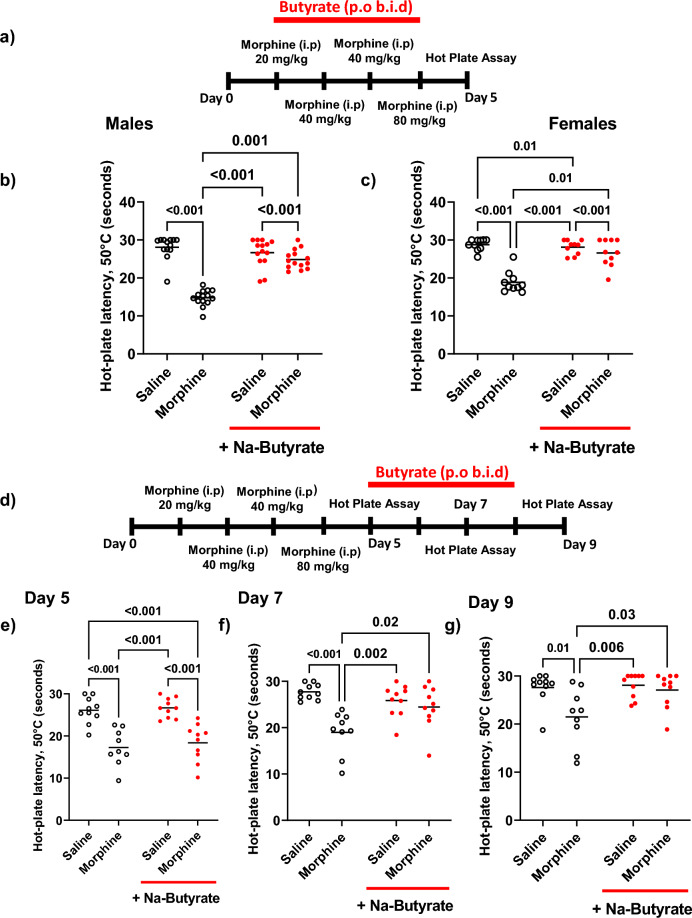
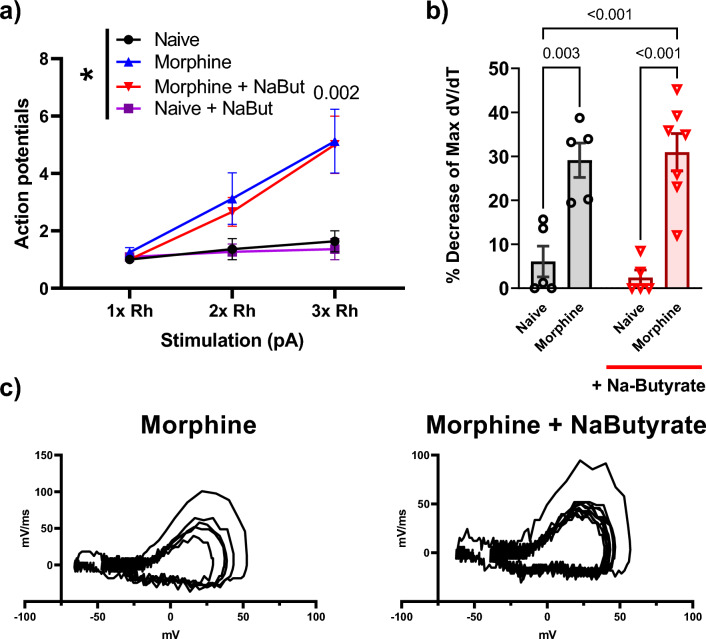
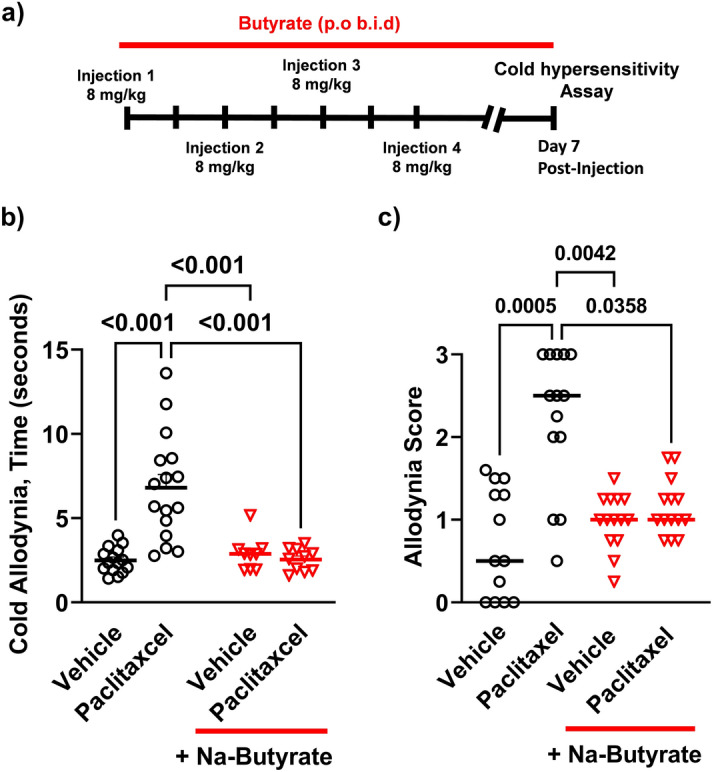
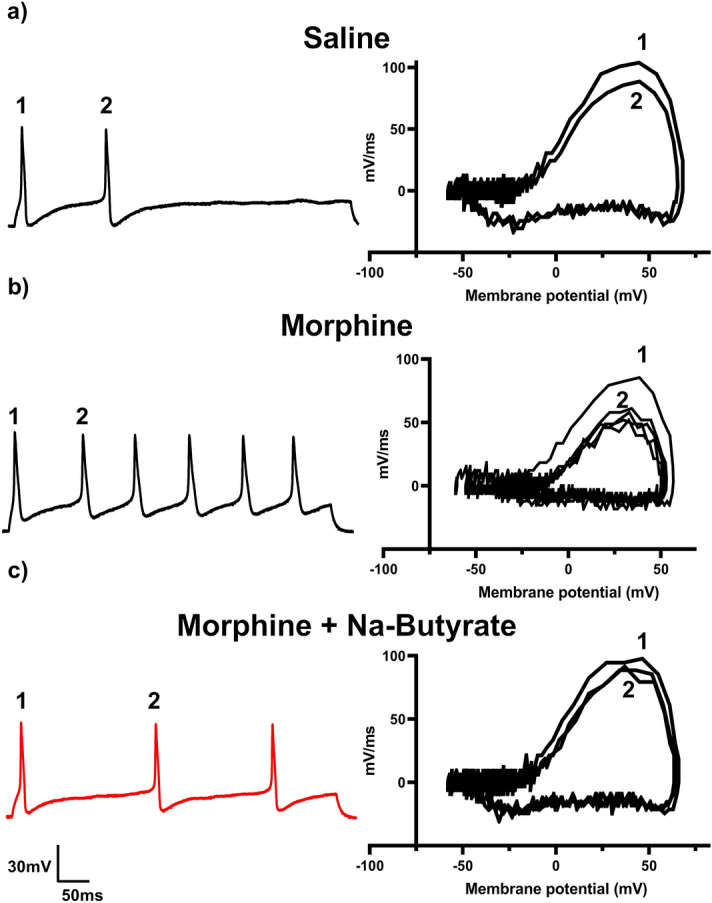
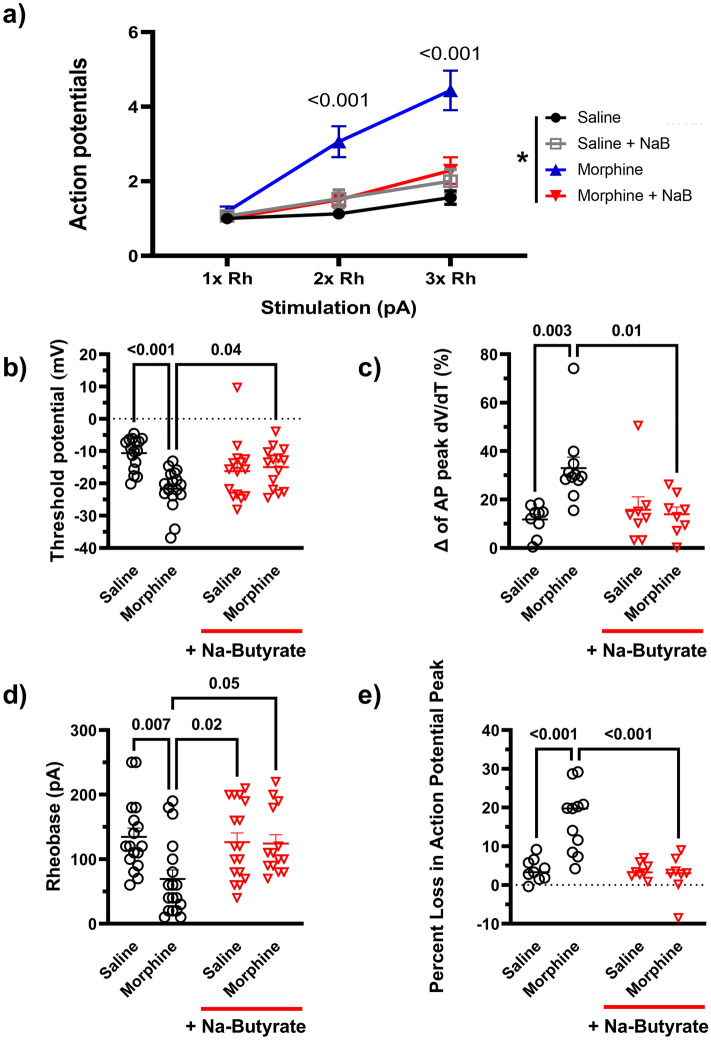
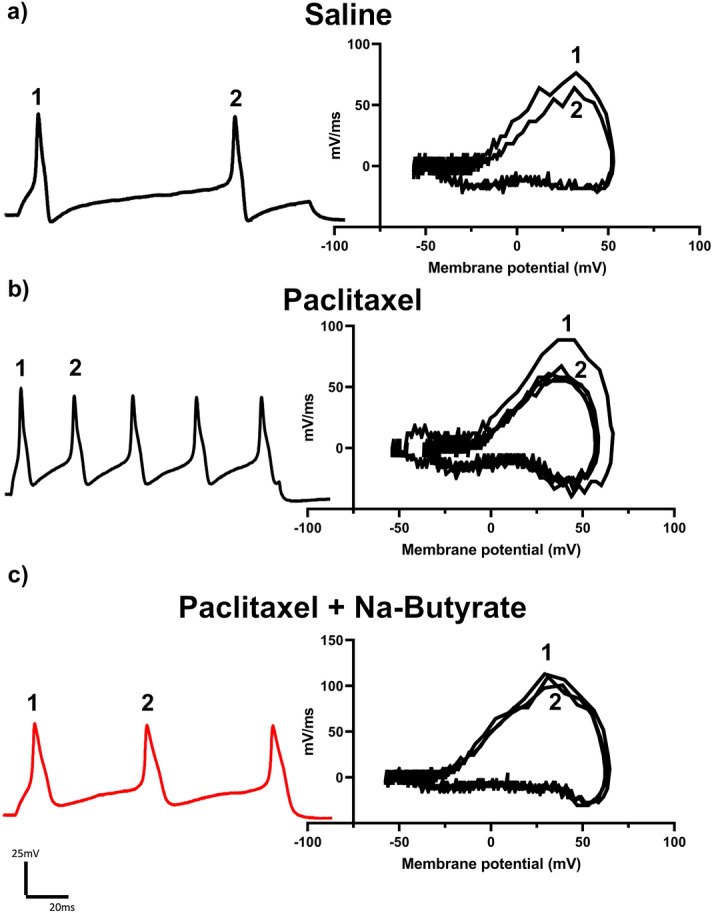
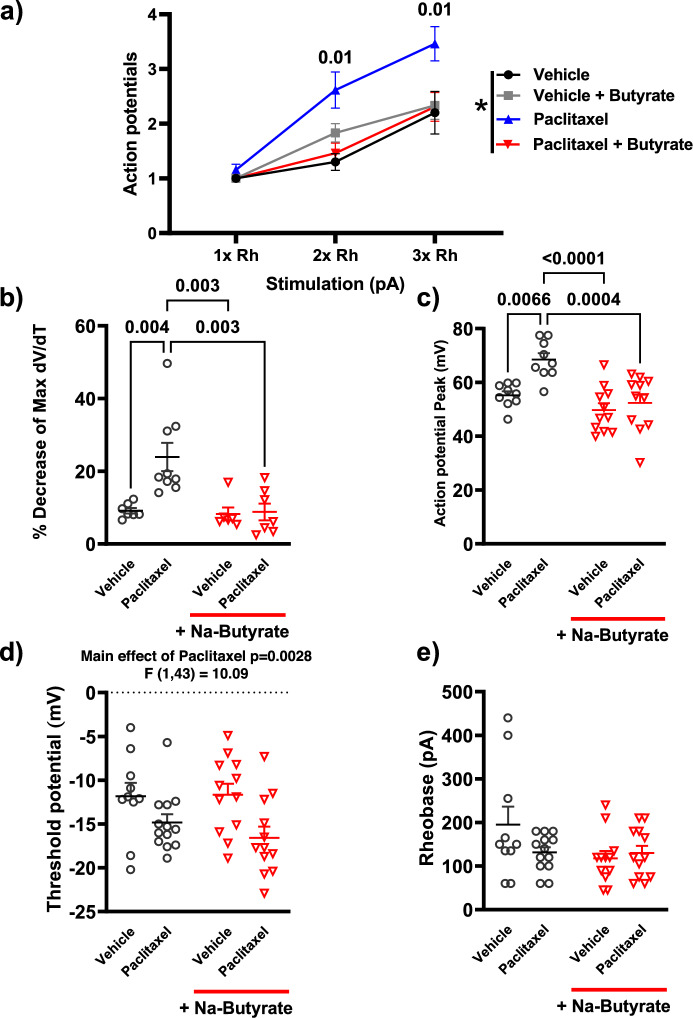
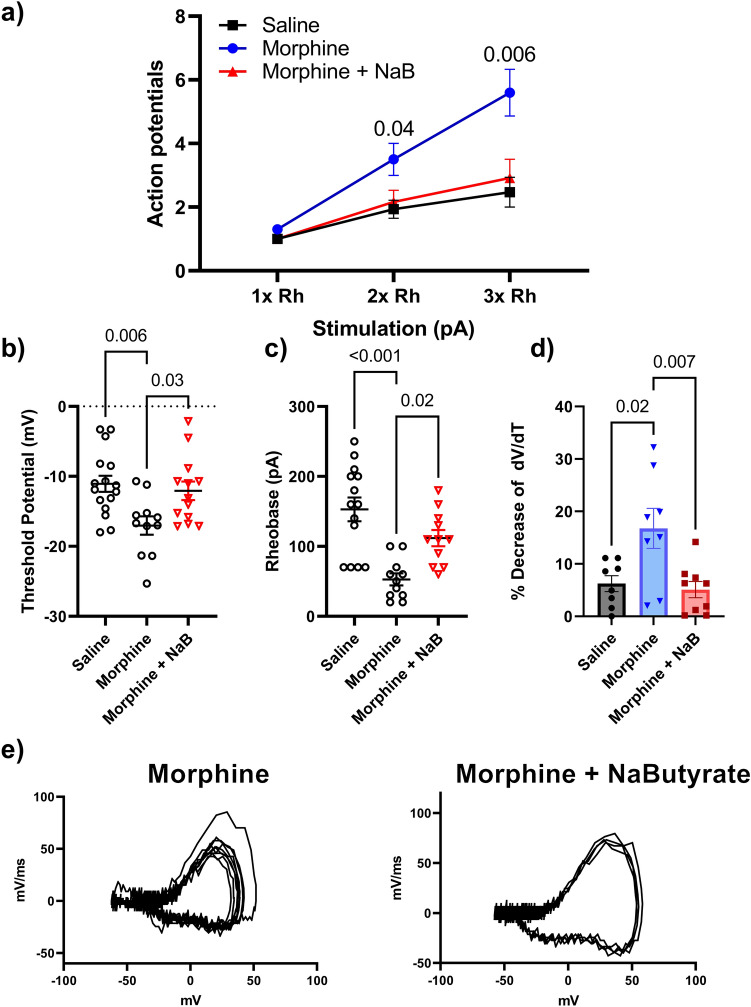
Nociceptive hypersensitivity is a significant side effect with the chronic administration of opioids as well as chemotherapeutics. Both opioid-induced hypersensitivity (OIH) and chemotherapy-induced hypersensitivity (CIH) are characterized by an increased sensitivity to painful stimuli which can significantly reduce the quality of life for individuals on either drug(s). Here we demonstrate the nociceptive hypersensitivity associated with repeated administration of morphine (opioid) and paclitaxel (chemotherapeutic) treatment can be reversed by oral supplementation with the short-chain fatty acid (SCFA) sodium butyrate (NaBut). In two separate mouse behavioral models for nociceptive hypersensitivity, we found that thermal hyperalgesia (for OIH) and cold allodynia (for CIH) were prevented by treatment with oral butyrate (p.o, b.i.d). Electrophysiological recordings of small diameter dorsal root ganglia (DRG) neurons from morphine and paclitaxel treated mice showed an increase in neuronal hyperexcitability in both drug models which was likewise prevented by oral butyrate treatment. Using colonic conditioned media obtained from excised colon segments we found that gut mediators of morphine treated mice can induce hyperexcitability in naïve DRG neurons, but such enhanced excitability is not present when animals are co-treated with NaBut suggesting gut derived mediators modulate neuronal hyperexcitability. In-vitro NaBut treatment did not prevent morphine-induced excitability, suggesting an indirect role of butyrate in modulating neuronal hypersensitivity. These data taken together suggest that gut derived mediators affect opioid and chemotherapeutic-induced neuronal hypersensitivity that is prevented by the SCFA butyrate.
伤害感受性过敏是慢性阿片类药物和化疗药物治疗的一个重要副作用。阿片类药物诱导的过敏(OIH)和化疗诱导的过敏(CIH)均表现为对疼痛刺激的敏感性增加,这会显著降低使用这两种药物的个体的生活质量。在这里,我们证明了重复给予吗啡(阿片类药物)和紫杉醇(化疗药物)治疗引起的伤害感受性过敏,可以通过口服补充短链脂肪酸(SCFA)丁酸钠(NaBut)来逆转。在两种用于伤害感受性过敏的独立小鼠行为模型中,我们发现,口服丁酸钠(p.o,b.i.d)治疗可预防热痛觉过敏(用于 OIH)和冷感觉过敏(用于 CIH)。从小鼠的背根神经节(DRG)神经元记录的电生理记录显示,吗啡和紫杉醇处理的小鼠的神经元过度兴奋增加,口服丁酸钠治疗同样可以预防这种过度兴奋。使用从切除的结肠段获得的结肠条件培养基,我们发现,吗啡处理的小鼠的肠道介质可以诱导未成熟的 DRG 神经元过度兴奋,但当动物同时用 NaBut 治疗时,这种增强的兴奋性不存在,这表明肠道来源的介质调节神经元过度兴奋。体外 NaBut 处理不能预防吗啡引起的兴奋,这表明丁酸钠在调节神经元过敏反应中具有间接作用。这些数据表明,肠道来源的介质影响阿片类药物和化疗药物诱导的神经元过敏反应,而 SCFA 丁酸钠可以预防这种反应。