Laboratoire des Plantes Aromatiques et Médicinales, Centre de Biotechnologie de Borj-Cédria, Hammem-Lif, Tunisia.
J Food Drug Anal. 2017 Apr;25(2):391-402. doi: 10.1016/j.jfda.2016.10.001. Epub 2016 Nov 5.
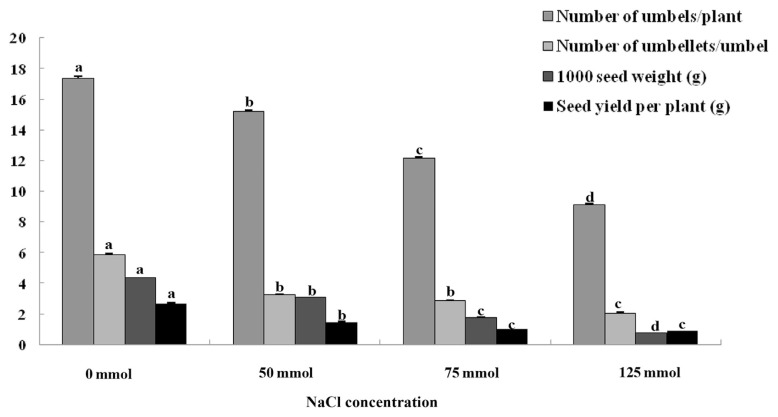
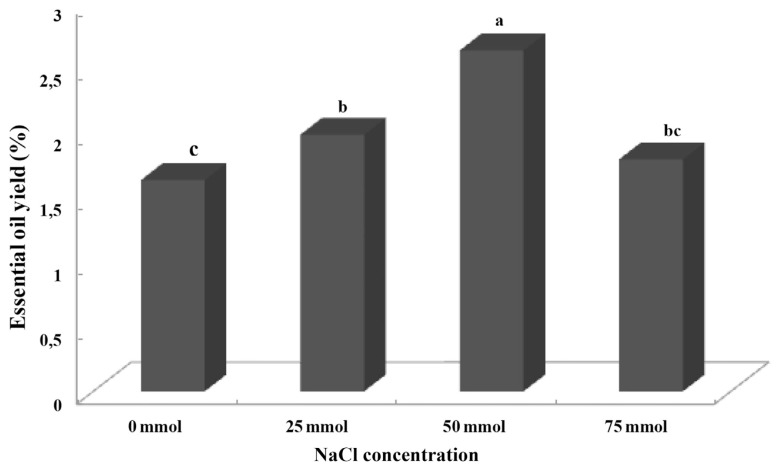
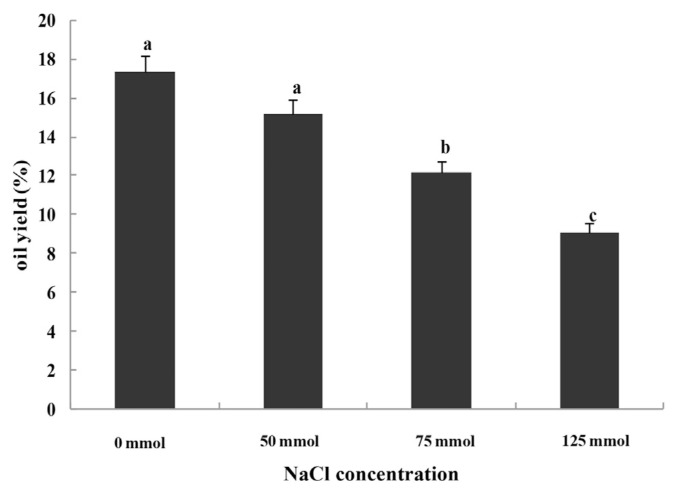
In this study, the effects of salinity on growth, fatty acid, essential oil, and phenolic composition of cumin (Cuminum cyminum L.) seeds as well as the antioxidant activities of their extracts were investigated. Plants were treated with different concentrations of NaCl treatment: 0, 50, 75, and 125 mmoL. Plant growth was significantly reduced with the severity of saline treatment. This also caused important reductions in the seed yield and yield components. Besides, NaCl treatments affected fatty acid composition. Petroselinic and linoleic acids proportions diminished consistently with the increase in NaCl concentration, whereas palmitic acid proportion increased. Furthermore, NaCl enhanced essential oil production in C. cyminum seeds and induced marked changes on the essential oil quality. Essential oil chemotype was modified from γ-terpinene/1-phenyl-1,2 ethanediol in control to γ-terpinene/β-pinene in salt stressed plants. Total polyphenol content was higher in treated seeds, and salinity improved the amount of individual phenolic compounds. Moreover, antioxidant activities of the extracts were determined by four different test systems, namely 2,2-diphenyl-1-picrylhydrazyl, β-carotene/linoleic acid chelating, and reducing power assays. The highest antioxidant activities were reveled in severe stressed plants. In this case, cumin seeds produced under saline conditions may function as a potential source of essential oil and antioxidant compounds, which could support the utilization of this plant in a large field of applications such as food industry.
本研究探讨了盐胁迫对孜然(Cuminum cyminum L.)种子生长、脂肪酸、精油和酚类成分的影响,以及其提取物的抗氧化活性。将植物分别用不同浓度的 NaCl 处理:0、50、75 和 125mmol。随着盐胁迫程度的增加,植物生长显著降低,种子产量和产量构成也显著降低。此外,NaCl 处理还影响了脂肪酸组成。随着 NaCl 浓度的增加,芹菜烯和亚油酸的比例持续下降,而棕榈酸的比例增加。此外,NaCl 促进了 C. cyminum 种子精油的产生,并诱导了精油质量的显著变化。精油化学型从对照中的γ-萜品烯/1-苯基-1,2-乙二醇改变为盐胁迫植物中的γ-萜品烯/β-蒎烯。处理种子中的总多酚含量较高,且盐度提高了各酚类化合物的含量。此外,通过四种不同的测试系统(2,2-二苯基-1-苦基肼、β-胡萝卜素/亚油酸螯合和还原力测定)测定了提取物的抗氧化活性。在重度胁迫的植物中表现出最高的抗氧化活性。在这种情况下,在盐胁迫条件下生产的孜然种子可能是精油和抗氧化化合物的潜在来源,这可以支持该植物在食品工业等多个应用领域的利用。