Charlet-Faure Claire, Thulesen Annemette Præstegaard, Rogowska-Wrzesinska Adelina
Department of Biochemistry and Molecular Biology, University of Southern Denmark, Campusvej 55, Odense M DK-5230, Denmark.
Faculté des Sciences Site St Charles Aix Marseille Université, 3 place Victor Hugo, Marseille 13331, France.
MethodsX. 2023 Oct 6;11:102415. doi: 10.1016/j.mex.2023.102415. eCollection 2023 Dec.
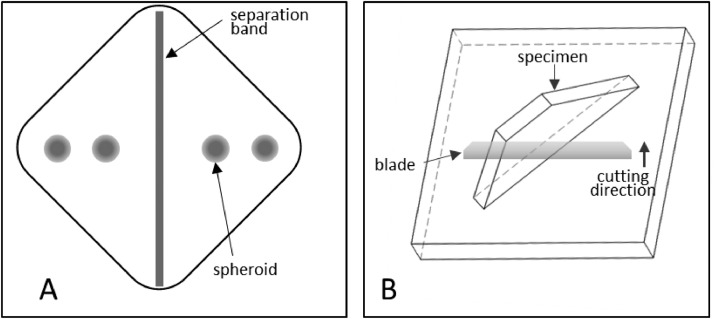
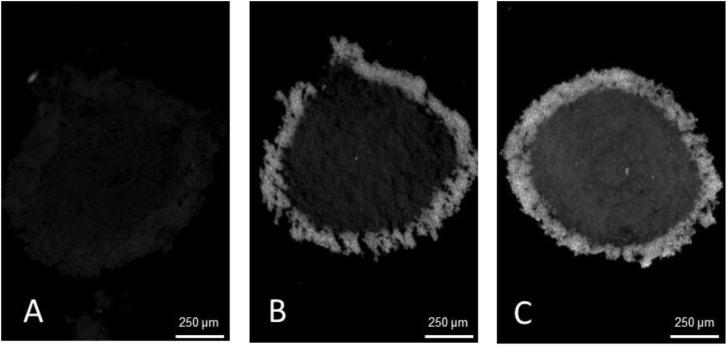
This article presents a modified protocol for embedding and sectioning spheroids and organoids, which are increasingly used in research due to their ability to emulate living tissue. The modifications aim to reduce the distortion and damage of these fragile structures during the embedding and sectioning process. The new method involves using optimized embedding containers, a modified embedding protocol, and optimized temperatures for cryosectioning. A heat-induced antigen retrieval protocol was tested and found to significantly increase immunostaining intensity without compromising spheroid integrity. The combined approach allowed for the creation of thinner cryosections, leading to clearer and more detailed images. The results suggest that the modified protocol could be widely adopted to enhance the imaging of spheroids and organoids.•Paraformaldehyde fixation of spheroids•Antigen retrieval treatment of spheroids•Embedding in freezing medium and cryosectioning.
本文介绍了一种用于包埋和切片球体及类器官的改良方案,由于它们能够模拟活组织,因此在研究中越来越常用。这些改良旨在减少在包埋和切片过程中这些脆弱结构的变形和损伤。新方法包括使用优化的包埋容器、改良的包埋方案以及用于冷冻切片的优化温度。测试了一种热诱导抗原修复方案,发现该方案可显著提高免疫染色强度,同时不损害球体完整性。这种组合方法能够制作更薄的冷冻切片,从而得到更清晰、更详细的图像。结果表明,改良方案可被广泛采用以增强球体和类器官的成像。
•球体的多聚甲醛固定
•球体的抗原修复处理
•包埋于冷冻介质并进行冷冻切片。