Section of Infectious Diseases, Department of Internal Medicine, School of Medicine, Yale University, New Haven, Connecticut, United States of America.
College of Veterinary Medicine, Jilin University, Changchun, China.
PLoS Biol. 2023 Oct 20;21(10):e3002331. doi: 10.1371/journal.pbio.3002331. eCollection 2023 Oct.
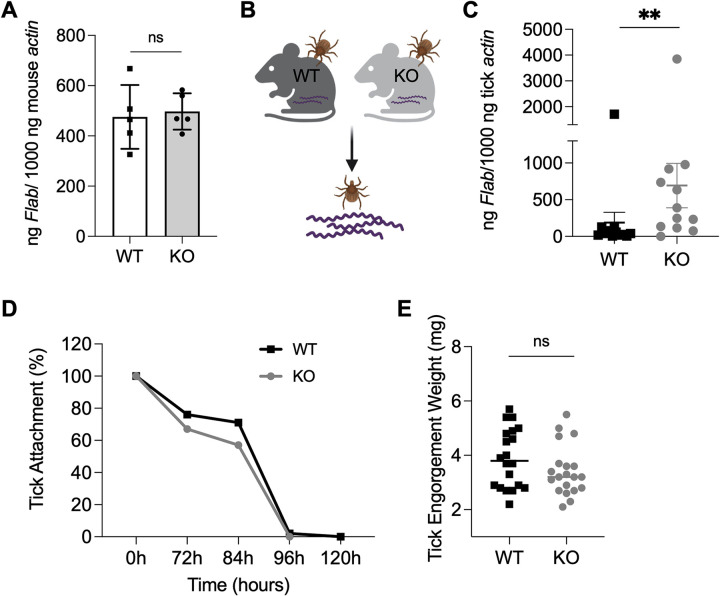
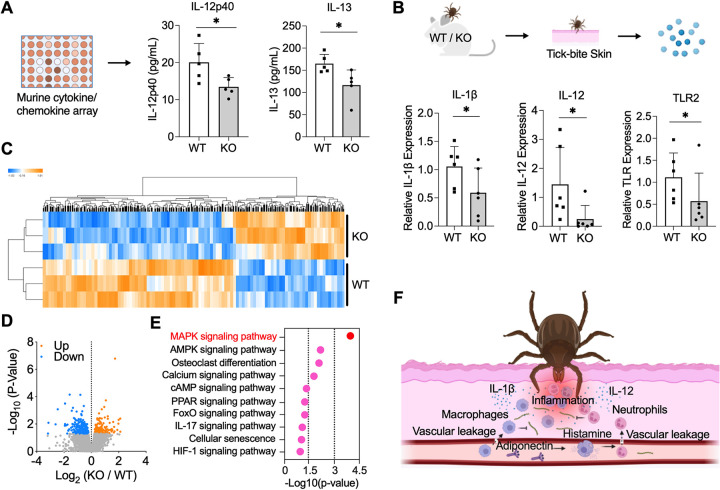
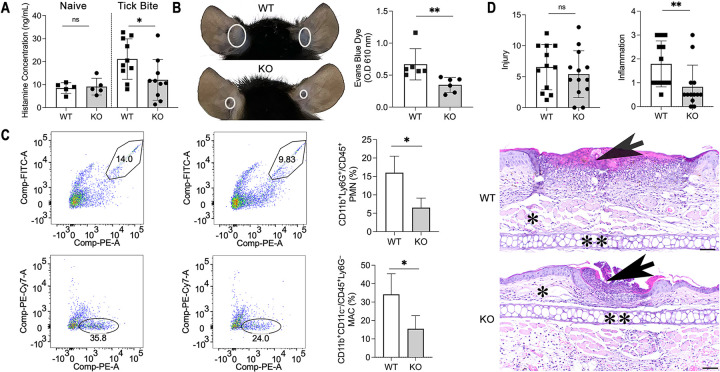
Arthropod-borne pathogens cause some of the most important human and animal infectious diseases. Many vectors acquire or transmit pathogens through the process of blood feeding. Here, we report adiponectin, the most abundant adipocyte-derived hormone circulating in human blood, directly or indirectly inhibits acquisition of the Lyme disease agent, Borrelia burgdorferi, by Ixodes scapularis ticks. Rather than altering tick feeding or spirochete viability, adiponectin or its associated factors induces host histamine release when the tick feeds, which leads to vascular leakage, infiltration of neutrophils and macrophages, and inflammation at the bite site. Consistent with this, adiponectin-deficient mice have diminished pro-inflammatory responses, including interleukin (IL)-12 and IL-1β, following a tick bite, compared with wild-type animals. All these factors mediated by adiponectin or associated factors influence B. burgdorferi survival at the tick bite site. These results suggest a host adipocyte-derived hormone modulates pathogen acquisition by a blood-feeding arthropod.
节肢动物传播的病原体可引起一些最重要的人类和动物传染病。许多媒介通过血液摄取或传播病原体。在这里,我们报告脂联素,它是循环血液中含量最丰富的脂肪细胞来源的激素,直接或间接抑制了伊蚊传播的莱姆病病原体伯氏疏螺旋体的获取。脂联素或其相关因子不会改变蜱的进食或螺旋体的活力,但当蜱进食时会诱导宿主组胺释放,导致血管渗漏、中性粒细胞和巨噬细胞浸润以及叮咬部位炎症。与此一致的是,与野生型动物相比,脂联素缺乏的小鼠在被蜱叮咬后,促炎反应(包括白细胞介素(IL)-12 和 IL-1β)减少。所有这些由脂联素或相关因子介导的因素都影响了叮咬部位伯氏疏螺旋体的存活。这些结果表明,宿主脂肪细胞来源的激素调节了节肢动物血液传播的病原体的获取。