Department of Psychiatry and Neuroscience Institute, University of Cape Town, Cape Town, South Africa.
Norwegian Centre for Mental Disorders Research, KG Jebsen Centre for Psychosis Research, Division of Mental Health and Addiction, Oslo University Hospital and Institute of Clinical Medicine, University of Oslo, Oslo, Norway.
Mol Psychiatry. 2023 Sep;28(9):4011-4019. doi: 10.1038/s41380-023-02292-9. Epub 2023 Oct 20.
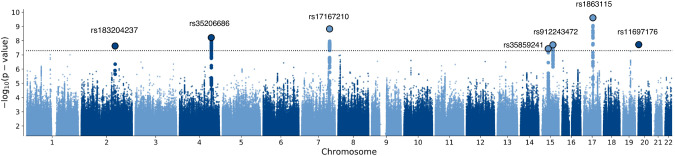
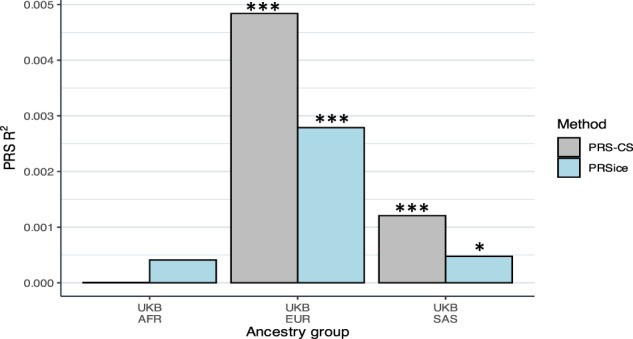
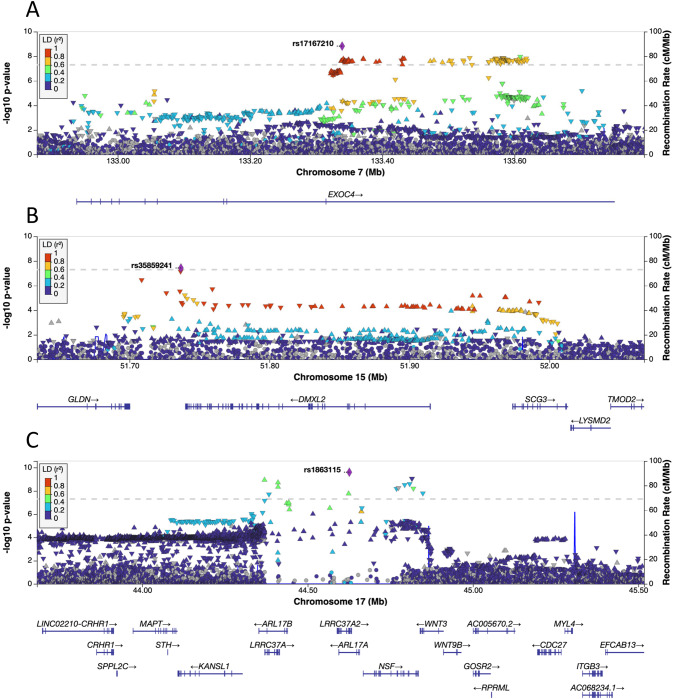
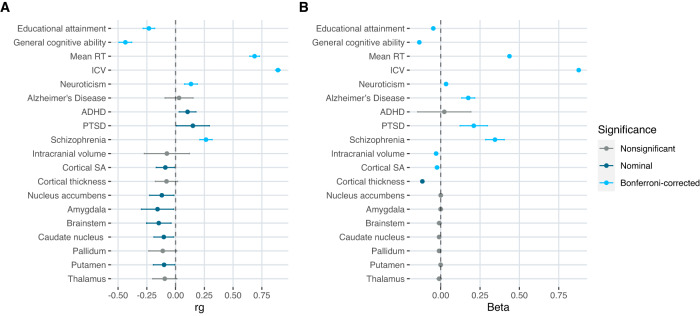
Reaction time variability (RTV), reflecting fluctuations in response time on cognitive tasks, has been proposed as an endophenotype for many neuropsychiatric disorders. There have been no large-scale genome-wide association studies (GWAS) of RTV and little is known about its genetic underpinnings. Here, we used data from the UK Biobank to conduct a GWAS of RTV in participants of white British ancestry (n = 404,302) as well as a trans-ancestry GWAS meta-analysis (n = 44,873) to assess replication. We found 161 genome-wide significant single nucleotide polymorphisms (SNPs) distributed across 7 genomic loci in our discovery GWAS. Functional annotation of the variants implicated genes involved in synaptic function and neural development. The SNP-based heritability (h) estimate for RTV was 3%. We investigated genetic correlations between RTV and selected neuropsychological traits using linkage disequilibrium score regression, and found significant correlations with several traits, including a positive correlation with mean reaction time and schizophrenia. Despite the high genetic correlation between RTV and mean reaction time, we demonstrate distinctions in the genetic underpinnings of these traits. Lastly, we assessed the predictive ability of a polygenic score (PGS) for RTV, calculated using PRSice and PRS-CS, and found that the RTV-PGS significantly predicted RTV in independent cohorts, but that the generalisability to other ancestry groups was poor. These results identify genetic underpinnings of RTV, and support the use of RTV as an endophenotype for neurological and psychiatric disorders.
反应时变异性(RTV)反映了认知任务中反应时间的波动,它被认为是许多神经精神疾病的一种内表型。目前还没有针对 RTV 的大规模全基因组关联研究(GWAS),对其遗传基础也知之甚少。在这里,我们使用英国生物库的数据,对具有白种英国人种背景的参与者进行了 RTV 的全基因组关联研究(n = 404,302),并进行了跨人种的 GWAS 荟萃分析(n = 44,873)以评估复制情况。我们在发现 GWAS 中发现了 161 个全基因组显著的单核苷酸多态性(SNP),分布在 7 个基因组位点上。对变体的功能注释表明,这些变体涉及突触功能和神经发育的基因。基于 SNP 的 RTV 遗传率(h)估计值为 3%。我们使用连锁不平衡评分回归法研究了 RTV 与选定神经心理学特征之间的遗传相关性,发现与多种特征存在显著相关性,包括与平均反应时间呈正相关,与精神分裂症呈正相关。尽管 RTV 和平均反应时间之间存在很高的遗传相关性,但我们证明了这些特征的遗传基础存在差异。最后,我们评估了使用 PRSice 和 PRS-CS 计算的 RTV 多基因评分(PGS)的预测能力,并发现 RTV-PGS 可显著预测独立队列中的 RTV,但对其他人群的泛化能力较差。这些结果确定了 RTV 的遗传基础,并支持将 RTV 作为神经和精神疾病的内表型。