Masood Motasim, Grimm Stefan, El-Bahrawy Mona, Yagüe Ernesto
Department of Surgery and Cancer, Faculty of Medicine, Imperial College London, Du Cane Road, London W12 0NN, UK.
Department of Medicine, Faculty of Medicine, Imperial College London, Du Cane Road, London W12 0NN, UK.
Cancers (Basel). 2020 Dec 21;12(12):3862. doi: 10.3390/cancers12123862.
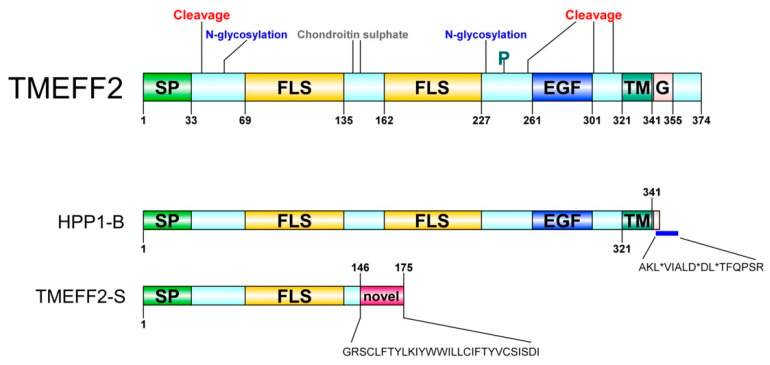
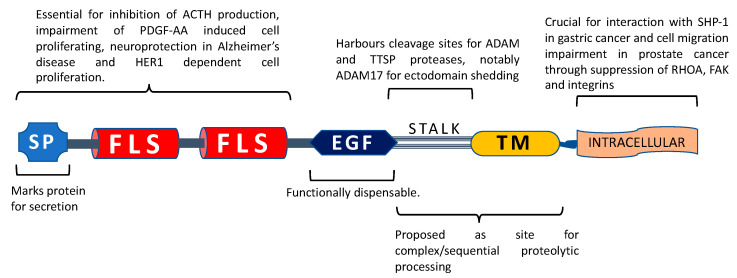
Transmembrane protein with an EGF-like and two Follistatin-like domains 2 (TMEFF2) is a 374-residue long type-I transmembrane proteoglycan which is proteolytically shed from the cell surface. The protein is involved in a range of functions including metabolism, neuroprotection, apoptosis, embryonic development, onco-suppression and endocrine function. is methylated in numerous cancers, and an inverse correlation with the stage, response to therapy and survival outcome has been observed. Moreover, methylation increases with breast, colon and gastric cancer progression. is methylated early during oncogenesis in breast and colorectal cancer, and the detection of methylated free-circulating DNA has been suggested as a potential diagnostic tool. The TMEFF2 downregulation signature equals and sometimes outperforms the Gleason and pathological scores in prostate cancer. is downregulated in glioma and cotricotropinomas, and it impairs the production of adrenocorticotropic hormone in glioma cells. Interestingly, through binding the amyloid β protein, its precursor and derivatives, TMEFF2 provides neuroprotection in Alzheimer's disease. Despite undergoing extensive investigation over the last two decades, the primary literature regarding TMEFF2 is incoherent and offers conflicting information, in particular, the oncogenic vs. onco-suppressive role of TMEFF2 in prostate cancer. For the first time, we have compiled, contextualised and critically analysed the vast body of TMEFF2-related literature and answered the apparent discrepancies regarding its function, tissue expression, intracellular localization and oncogenic vs. onco-suppressive role.
具有表皮生长因子样和两个卵泡抑素样结构域的跨膜蛋白2(TMEFF2)是一种由374个氨基酸残基组成的I型跨膜蛋白聚糖,可从细胞表面进行蛋白水解脱落。该蛋白参与多种功能,包括代谢、神经保护、细胞凋亡、胚胎发育、肿瘤抑制和内分泌功能。在多种癌症中发生甲基化,并且已观察到其与癌症分期、治疗反应和生存结果呈负相关。此外,随着乳腺癌、结肠癌和胃癌的进展,TMEFF2甲基化增加。在乳腺癌和结直肠癌的肿瘤发生早期,TMEFF2就会发生甲基化,检测甲基化的游离循环DNA已被提议作为一种潜在的诊断工具。在前列腺癌中,TMEFF2下调特征等同于甚至有时优于Gleason评分和病理评分。在胶质瘤和促肾上腺皮质激素瘤中,TMEFF2表达下调,并且它会损害胶质瘤细胞中促肾上腺皮质激素的产生。有趣的是,通过结合淀粉样β蛋白及其前体和衍生物,TMEFF2在阿尔茨海默病中提供神经保护作用。尽管在过去二十年中进行了广泛的研究,但关于TMEFF2的主要文献并不连贯,提供了相互矛盾的信息,特别是TMEFF2在前列腺癌中的致癌与抑癌作用。我们首次汇编、梳理并批判性地分析了大量与TMEFF2相关的文献,并回答了关于其功能、组织表达、细胞内定位以及致癌与抑癌作用的明显差异。