Institute of Specific Prophylaxis and Tropical Medicine, Center for Pathophysiology, Infectiology and Immunology, Medical University of Vienna, 1090, Vienna, Austria.
Hirszfeld Institute of Immunology and Experimental Therapy, Polish Academy of Sciences, Wroclaw, Poland.
Cell Commun Signal. 2023 Oct 20;21(1):297. doi: 10.1186/s12964-023-01329-4.
E. coli O83 (Colinfant Newborn) is a Gram-negative (G-) probiotic bacterium used in the clinic. When administered orally, it reduces allergic sensitisation but not allergic asthma. Intranasal administration offers a non-invasive and convenient delivery method. This route bypasses the gastrointestinal tract and provides direct access to the airways, which are the target of asthma prevention. G- bacteria such as E. coli O83 release outer membrane vesicles (OMVs) to communicate with the environment. Here we investigate whether intranasally administered E. coli O83 OMVs (EcO83-OMVs) can reduce allergic airway inflammation in mice.
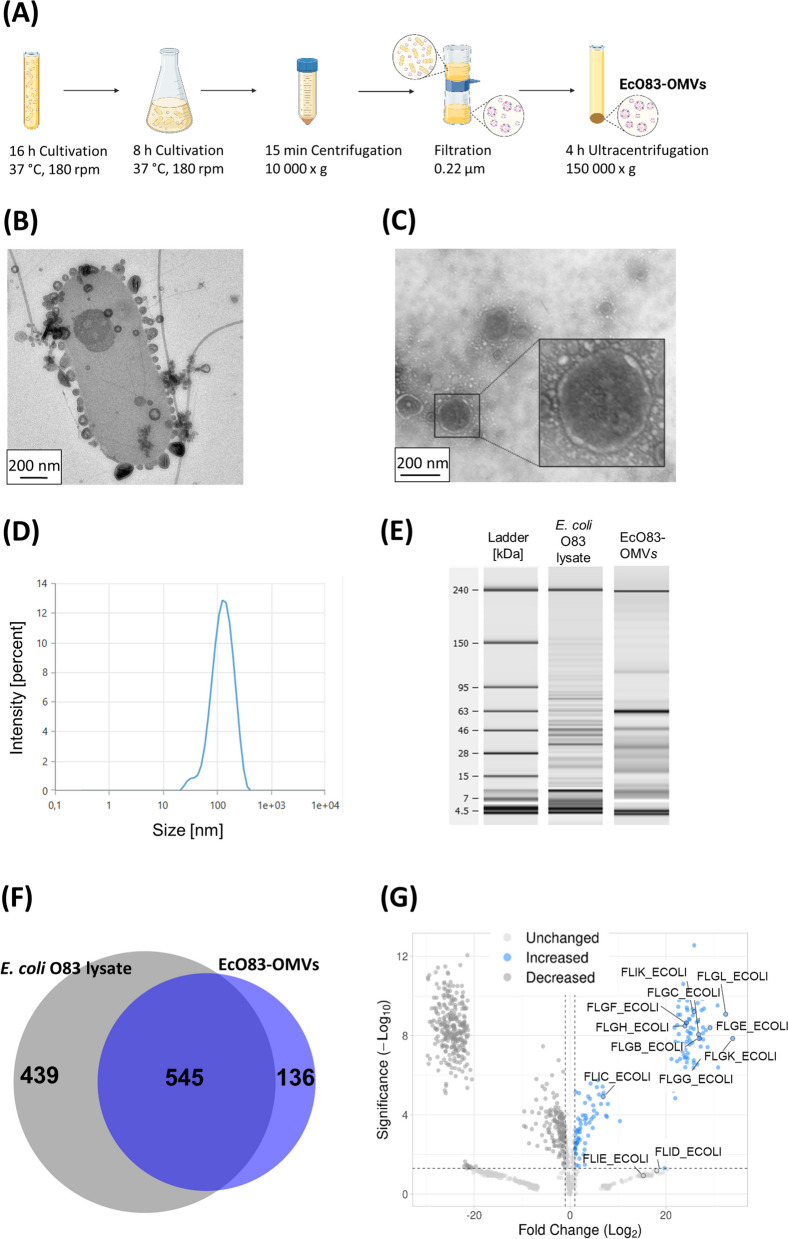
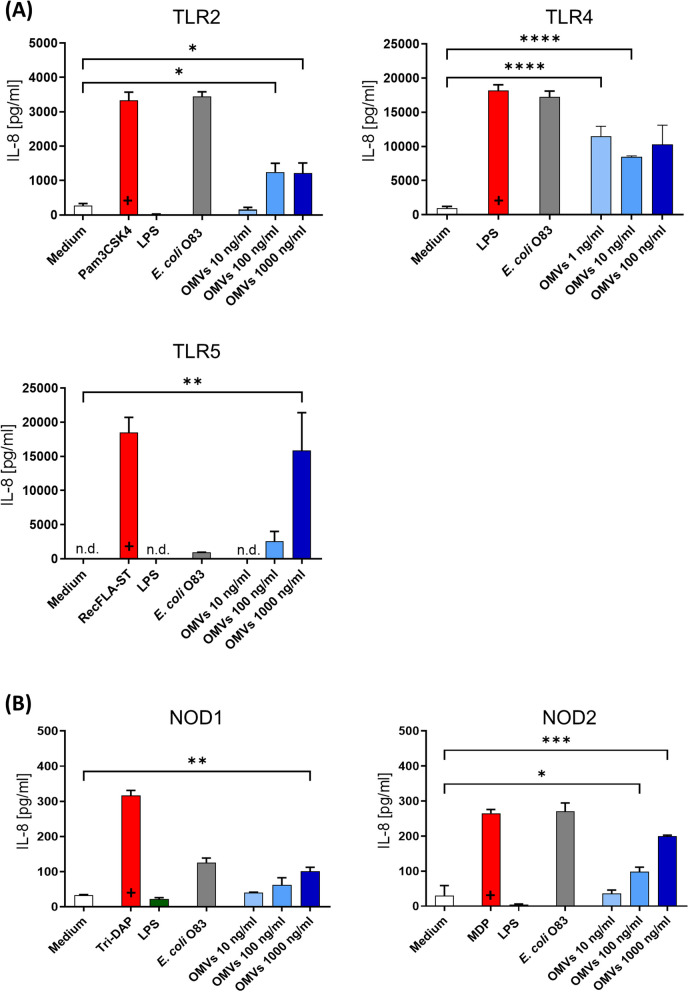
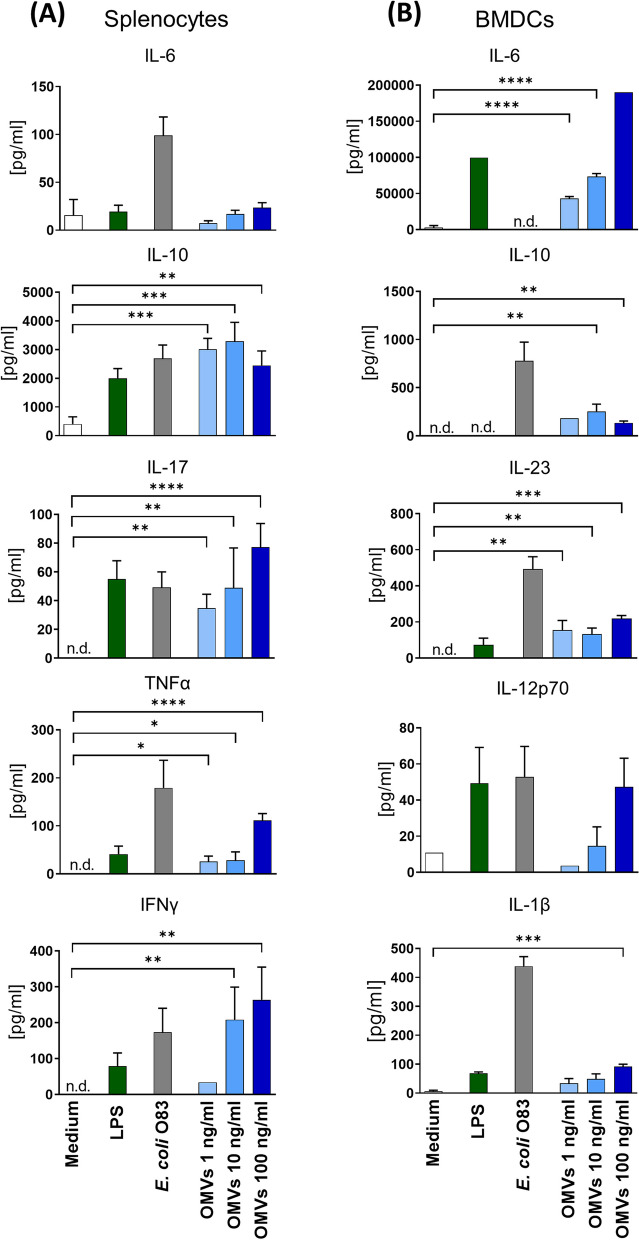
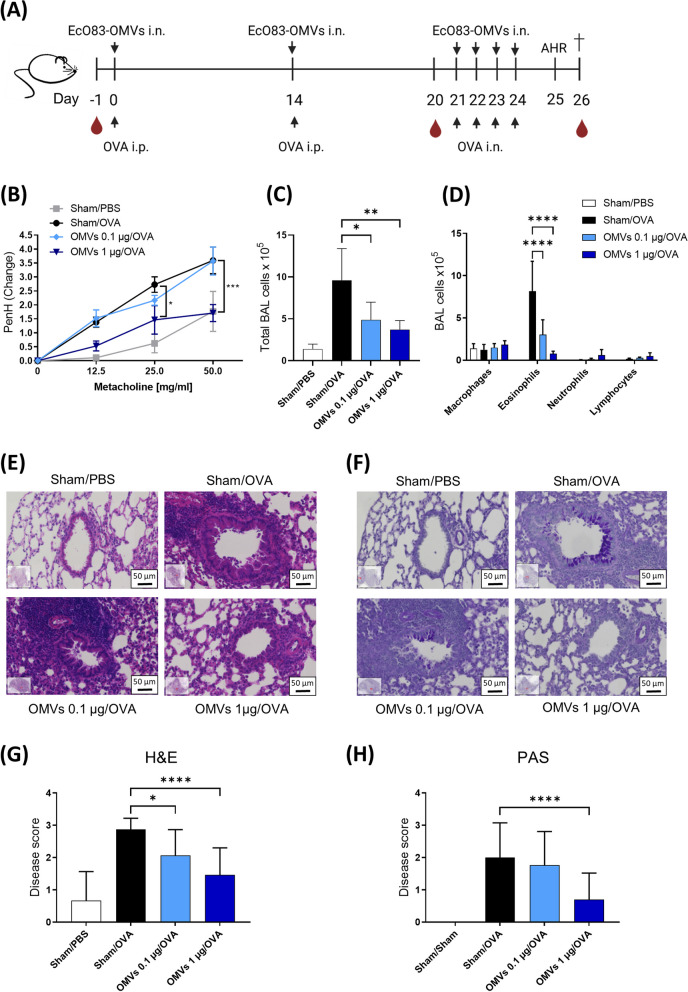
EcO83-OMVs were isolated by ultracentrifugation and characterised their number, morphology (shape and size), composition (proteins and lipopolysaccharide; LPS), recognition by innate receptors (using transfected HEK293 cells) and immunomodulatory potential (in naïve splenocytes and bone marrow-derived dendritic cells; BMDCs). Their allergy-preventive effect was investigated in a mouse model of ovalbumin-induced allergic airway inflammation.
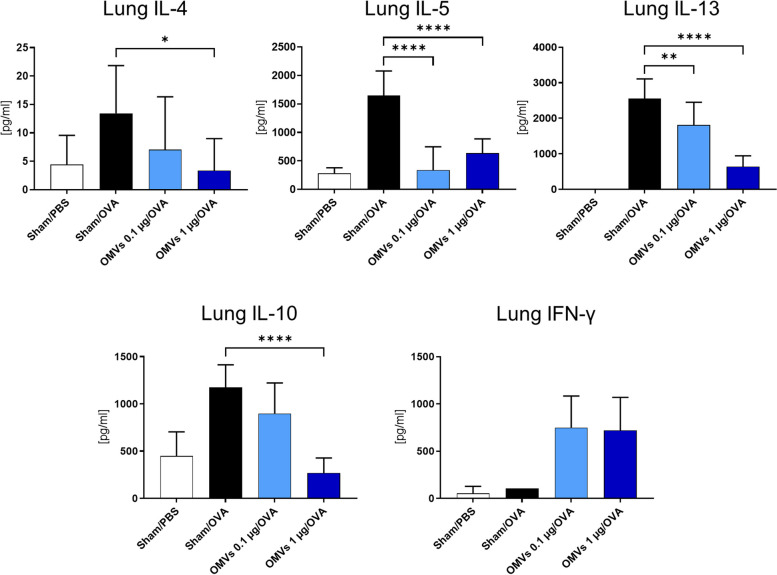
EcO83-OMVs are spherical nanoparticles with a size of about 110 nm. They contain LPS and protein cargo. We identified a total of 1120 proteins, 136 of which were enriched in OMVs compared to parent bacteria. Proteins from the flagellum dominated. OMVs activated the pattern recognition receptors TLR2/4/5 as well as NOD1 and NOD2. EcO83-OMVs induced the production of pro- and anti-inflammatory cytokines in splenocytes and BMDCs. Intranasal administration of EcO83-OMVs inhibited airway hyperresponsiveness, and decreased airway eosinophilia, Th2 cytokine production and mucus secretion.
We demonstrate for the first time that intranasally administered OMVs from probiotic G- bacteria have an anti-allergic effect. Our study highlights the advantages of OMVs as a safe platform for the prophylactic treatment of allergy. Video Abstract.
大肠杆菌 O83(Colinfant Newborn)是一种革兰氏阴性(G-)益生菌,用于临床。口服给药时,它可降低过敏致敏作用,但不能预防过敏性哮喘。鼻腔给药提供了一种非侵入性和方便的给药方法。该途径绕过胃肠道并直接进入气道,这是预防哮喘的目标。大肠杆菌 O83 等 G-细菌会释放外膜囊泡(OMVs)以与环境进行通讯。在这里,我们研究了鼻腔给予大肠杆菌 O83 OMVs(EcO83-OMVs)是否可以减少小鼠的过敏性气道炎症。
通过超速离心分离 EcO83-OMVs,并对其数量、形态(形状和大小)、组成(蛋白质和脂多糖;LPS)、先天受体识别(使用转染的 HEK293 细胞)和免疫调节潜能(在幼稚脾细胞和骨髓来源的树突状细胞;BMDCs)进行了表征。在卵清蛋白诱导的过敏性气道炎症小鼠模型中研究了其预防过敏的作用。
EcO83-OMVs 是约 110nm 的球形纳米颗粒。它们含有 LPS 和蛋白质货物。我们总共鉴定了 1120 种蛋白质,其中 136 种在 OMVs 中比亲代细菌更丰富。鞭毛蛋白占主导地位。OMVs 激活了模式识别受体 TLR2/4/5 以及 NOD1 和 NOD2。EcO83-OMVs 诱导脾细胞和 BMDCs 产生促炎和抗炎细胞因子。鼻腔给予 EcO83-OMVs 抑制气道高反应性,并减少气道嗜酸性粒细胞浸润、Th2 细胞因子产生和粘液分泌。
我们首次证明,益生菌 G-细菌的鼻腔给予 OMVs 具有抗过敏作用。我们的研究强调了 OMVs 作为预防过敏治疗的安全平台的优势。