Institute of Biochemistry and Technical Biochemistry, Department of Biochemistry, University of Stuttgart, Allmandring 31, 70569, Stuttgart, Germany.
Institute of Human Genetics, University of Ulm and Ulm University Medical Center, Albert-Einstein-Allee 11, 89081, Ulm, Germany.
Epigenetics Chromatin. 2023 Oct 21;16(1):41. doi: 10.1186/s13072-023-00515-5.
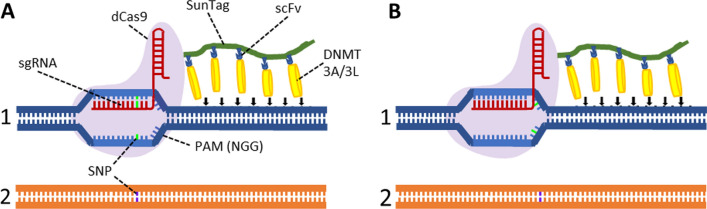
Epigenome editing refers to the targeted reprogramming of genomic loci using an EpiEditor which may consist of an sgRNA/dCas9 complex that recruits DNMT3A/3L to the target locus. Methylation of the locus can lead to a modulation of gene expression. Allele-specific DNA methylation (ASM) refers to the targeted methylation delivery only to one allele of a locus. In the context of diseases caused by a dominant mutation, the selective DNA methylation of the mutant allele could be used to repress its expression but retain the functionality of the normal gene.
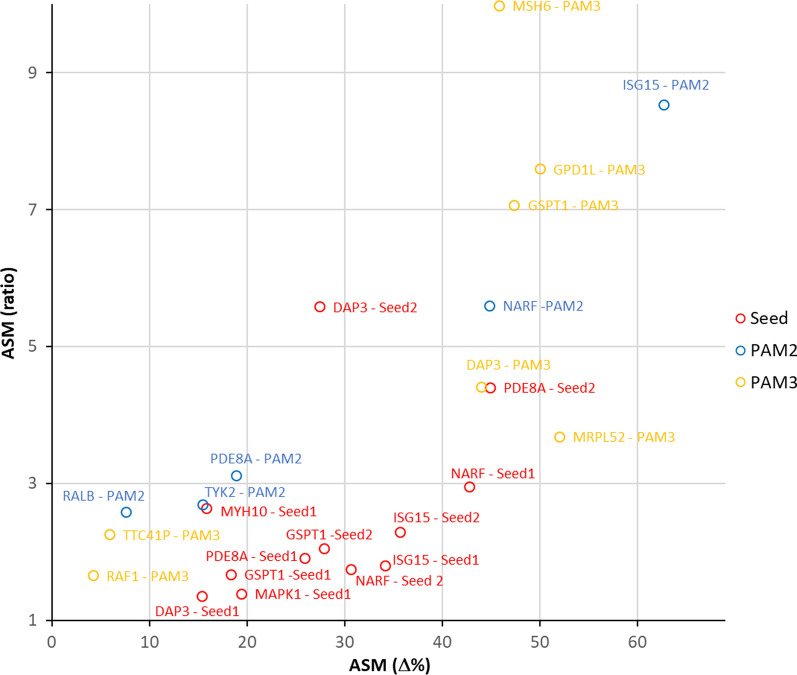
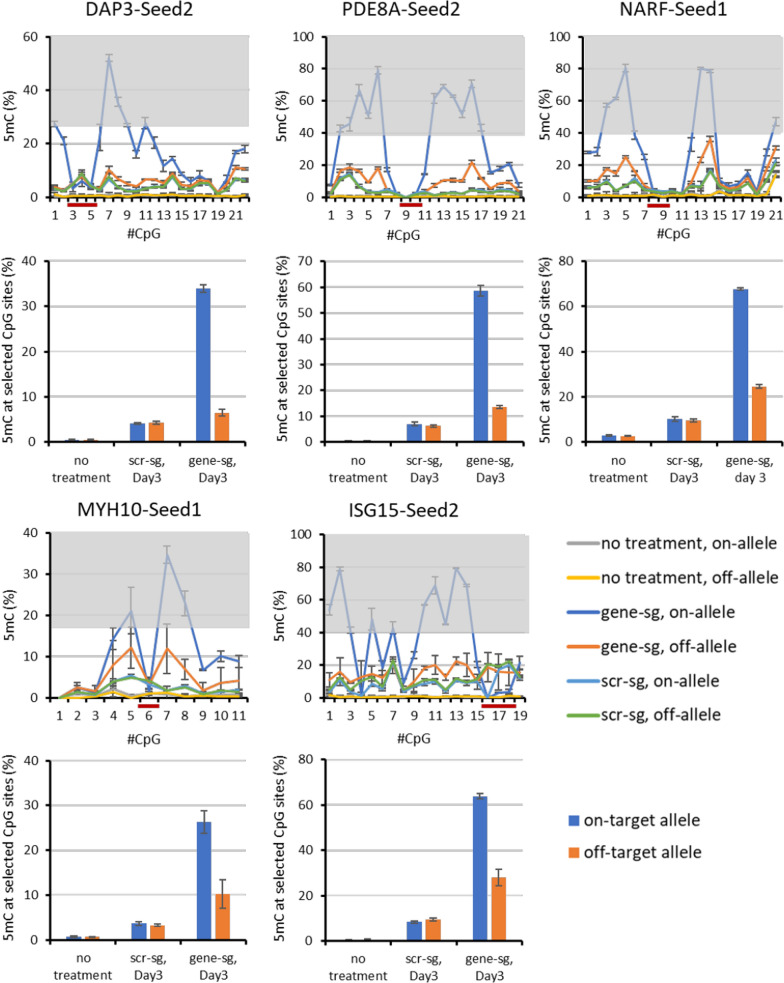
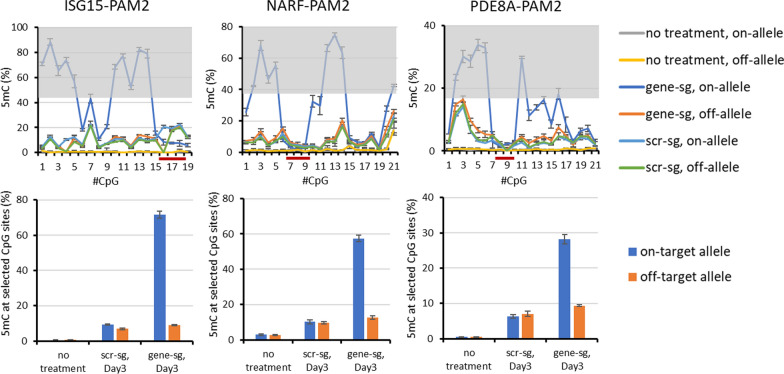
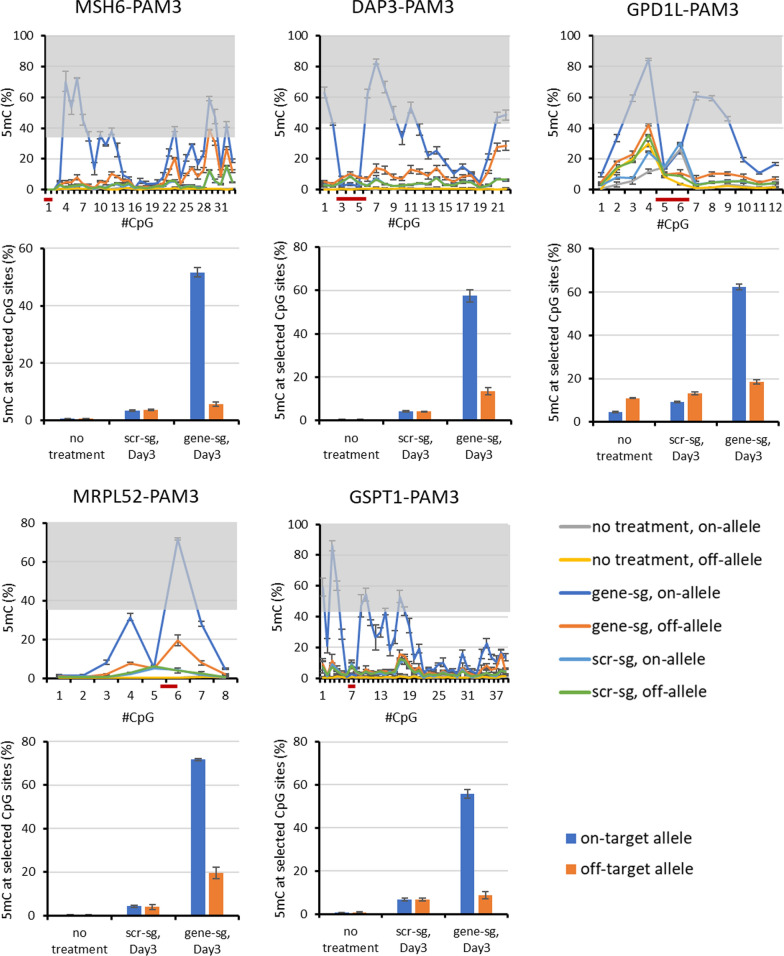
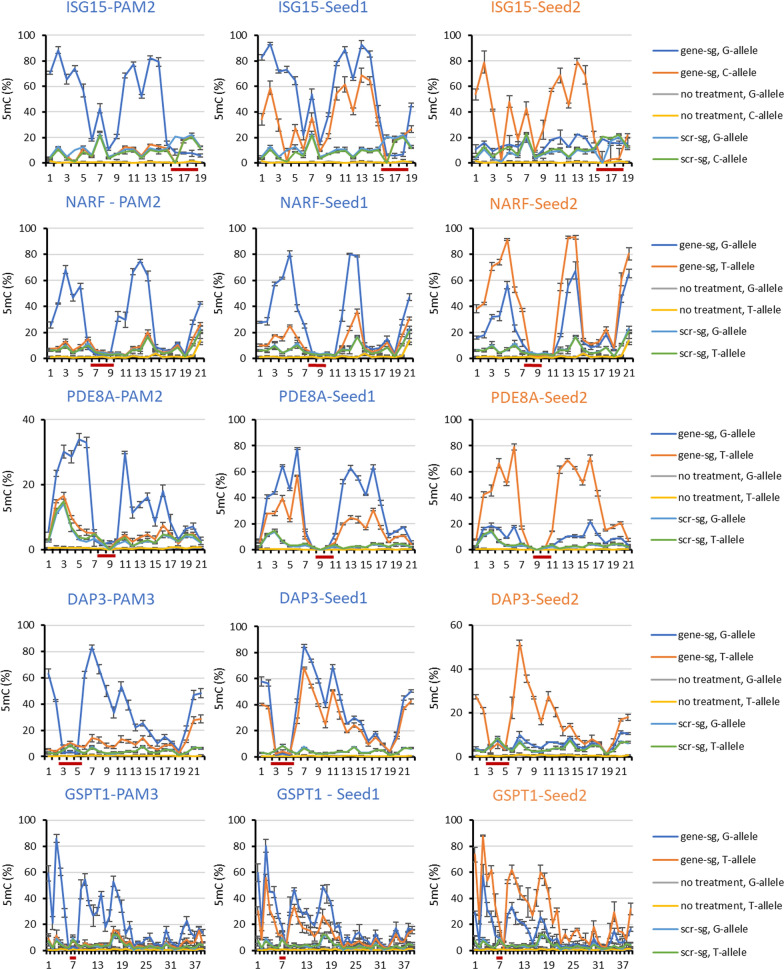
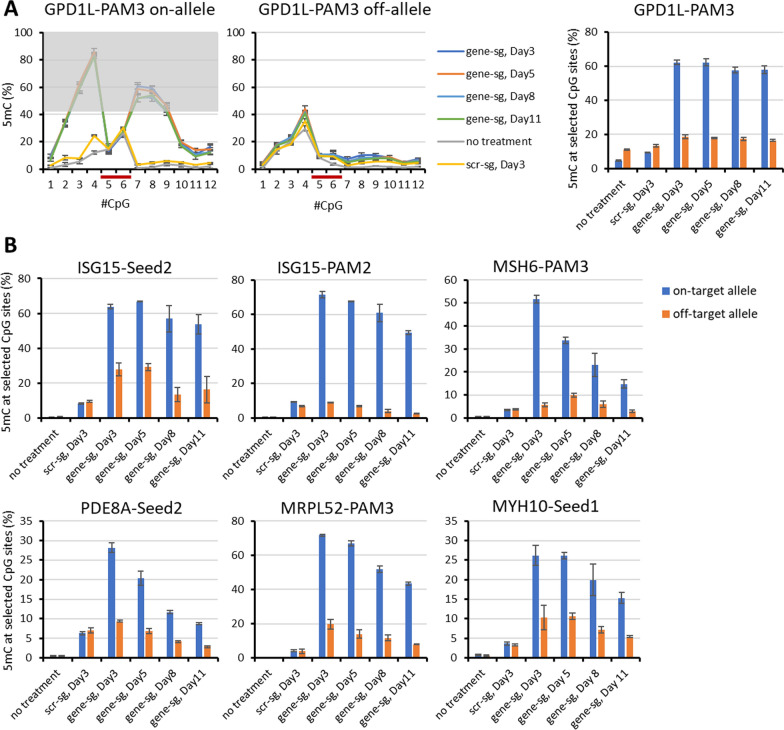
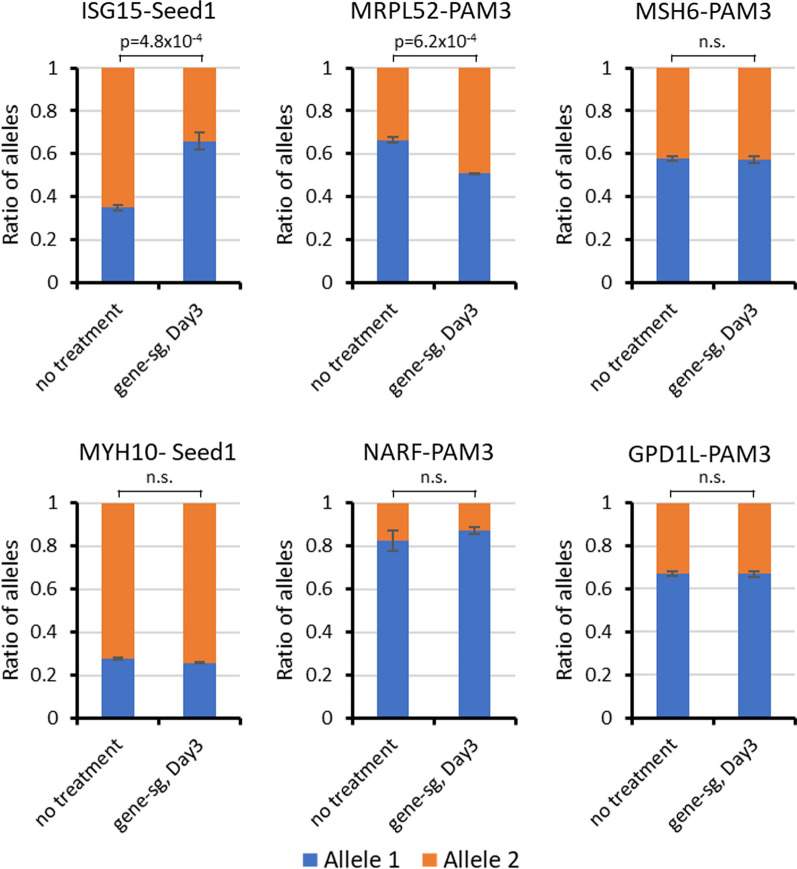
To set up allele-specific targeted DNA methylation, target regions were selected from hypomethylated CGIs bearing a heterozygous SNP in their promoters in the HEK293 cell line. We aimed at delivering maximum DNA methylation with highest allelic specificity in the targeted regions. Placing SNPs in the PAM or seed regions of the sgRNA, we designed 24 different sgRNAs targeting single alleles in 14 different gene loci. We achieved efficient ASM in multiple cases, such as ISG15, MSH6, GPD1L, MRPL52, PDE8A, NARF, DAP3, and GSPT1, which in best cases led to five to tenfold stronger average DNA methylation at the on-target allele and absolute differences in the DNA methylation gain at on- and off-target alleles of > 50%. In general, loci with the allele discriminatory SNP positioned in the PAM region showed higher success rate of ASM and better specificity. Highest DNA methylation was observed on day 3 after transfection followed by a gradual decline. In selected cases, ASM was stable up to 11 days in HEK293 cells and it led up to a 3.6-fold change in allelic expression ratios.
We successfully delivered ASM at multiple genomic loci with high specificity, efficiency and stability. This form of super-specific epigenome editing could find applications in the treatment of diseases caused by dominant mutations, because it allows silencing of the mutant allele without repression of the expression of the normal allele thereby minimizing potential side-effects of the treatment.
表观基因组编辑是指使用 EpiEditor 靶向重编程基因组位点,EpiEditor 可能由 sgRNA/dCas9 复合物组成,该复合物将 DNMT3A/3L 募集到靶位点。该位点的甲基化可导致基因表达的调节。等位基因特异性 DNA 甲基化 (ASM) 是指仅向基因座的一个等位基因靶向递送甲基化。在由显性突变引起的疾病的情况下,可以使用突变等位基因的选择性 DNA 甲基化来抑制其表达,但保留正常基因的功能。
为了建立等位基因特异性靶向 DNA 甲基化,我们从 HEK293 细胞系中启动子中带有杂合 SNP 的低甲基化 CGIs 中选择了靶区。我们旨在在靶向区域中以最高的等位基因特异性实现最大的 DNA 甲基化。在 sgRNA 的 PAM 或种子区域中放置 SNP,我们设计了 24 种靶向 14 个不同基因座中单个等位基因的 sgRNA。我们在多个情况下实现了有效的 ASM,例如 ISG15、MSH6、GPD1L、MRPL52、PDE8A、NARF、DAP3 和 GSPT1,在最佳情况下,导致靶向等位基因的平均 DNA 甲基化增加五到十倍,并且在靶向和非靶向等位基因上的 DNA 甲基化增益的绝对差异>50%。一般来说,具有位于 PAM 区域的等位基因鉴别 SNP 的基因座显示出更高的 ASM 成功率和更好的特异性。转染后第 3 天观察到最高的 DNA 甲基化,随后逐渐下降。在选定的情况下,ASM 在 HEK293 细胞中稳定 11 天,并导致等位基因表达比率的 3.6 倍变化。
我们成功地在多个基因组位点上以高特异性、高效率和稳定性进行了 ASM。这种形式的超特异性表观基因组编辑可应用于由显性突变引起的疾病的治疗,因为它允许沉默突变等位基因,而不会抑制正常等位基因的表达,从而最大限度地减少治疗的潜在副作用。